 Videos
 Photos


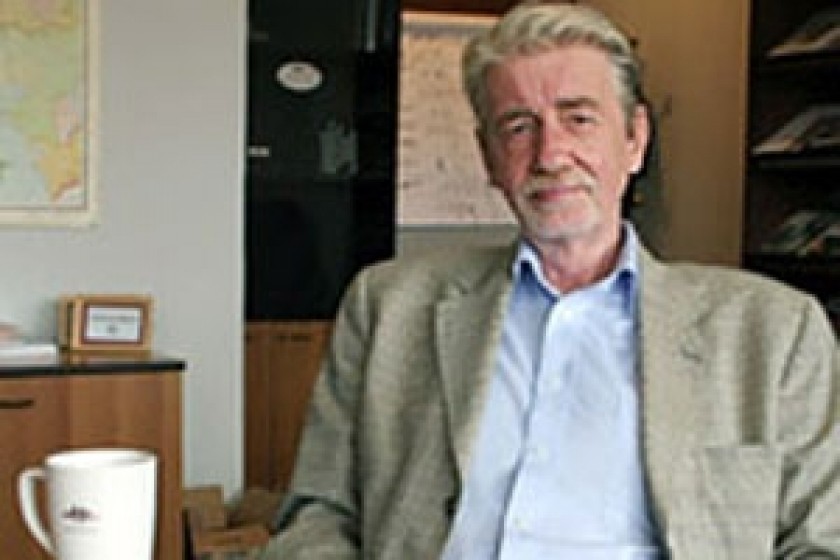
An Interview with Kjell Engebretsen, Country Director, Norwegian Refugee Council (NRC)
The Norwegian Refugee Council (NRC) has worked for displaced persons since 1946. The NRC is a private foundation, and one of the largest humanitarian organizations in Norway. NRC has specialized in international activities for refugees and displaced persons. The work of the NRC in Armenia began in 1995, aiming at easing the plight of 360,000 ethnic Armenians who were forced to flee Azerbaijan, mostly in late 1988.
Kjell Engebretsen has been Country Director of the NRC since July 2005 and will stay in Armenia until August 2006.
ONNIK KRIKORIAN: Perhaps I could start with asking you about your history with the Norwegian Refugee Council. Where were you stationed before Armenia?
KJELL ENGEBRETSEN: I haven't been stationed anywhere before. I'm a civil servant from Norway and for the twelve years before coming to Armenia I was a member of the Norwegian Parliament. Then, when I quit parliament, I had the opportunity to come to this part of the world. As I had been a member of the Standing Committee on Foreign Affairs and this region was my responsibility, when I had the chance to come to Armenia, I took it.
OK: When I interviewed your predecessor, Tim Straight, about a year and a half ago, he mentioned that a survey on Internally Displaced Persons (IDPs) was going to be taken in Armenia in cooperation with the Armenian Government. This is a new focus for the NRC, and I wondered has the survey been held and what were the findings?
KE: It was held and the result was that the figures for the number of IDPs in Armenia decreased considerably from 70,000 to 8,000.
OK: That's quite a decrease. We're talking about th ose regions of Armenia bordering Azerbaijan where there's still a problem with landmines as well as a lack of infrastructure and investment so what's the reason for this reduction?
KE: That's still a problem, but I don't know what the reason is for this reduction. However, I would suspect that the explanation is the same when it comes to refugees and the population in general. A lot of people flee the country for a while. They go to Russia or the United States and we hope that they'll come back one day.
OK: So what you're saying is that this reduction to 8,000 is not necessarily because IDPs have moved back to the border regions, but because many have left for abroad?
KF: I think that's the main explanation. They've gone somewhere else.
OK: There's been a survey on IDPs, but another contentious issue is the number of refugees [from Azerbaijan] in the country. We're still working with the figure of over 250,000, but I've heard anecdotal evidence that it might be as low as 80-90,000. It's significantly smaller as well. Does anybody know?
KF: No one knows, but UNHCR is holding a survey now and I think that the number of refugees in Armenia will also be lowered quite a lot as well. The Government has its figure, but we think that it's too high and UNHCR is absolutely certain that this number will go down after the survey is completed this year.
OK: At the moment there's a lot of talk about the return of IDPs in Azerbaijan and refugees in Armenia to their former homes in and around Nagorno Karabakh once a peace deal is signed. Most recently, the U.S. Assistant Secretary of State referred to this issue and the Parliamentary Assembly of the Council of Europe (PACE) is also including the matter on its agenda. Is the Norwegian Refugee Council and UNHCR involved in this matter?
KE: No, in Armenia we are not. However, our office in Baku is looking into this very carefully, of course. It should happen, but the situation in Azerbaijan is very different from that in Armenia because here we're still struggling with the economy, whereas Azerbaijan has become very, very rich. If something were to happen regarding Nagorno Karabakh or the areas surrounding it, that would have to happen after some kind of peace deal.
OK: When some people talk of the return of IDPs to territory surrounding Nagorno Karabakh, and we're talking about Azerbaijanis and Kurds, some Armenians don't understand why there should be the "right to return" included in any peace deal. Maybe this is a political question, perhaps, but in your opinion, why is it important that refugees and IDPs have the "right to return?"
KE: Well, lets put Nagorno Karabakh aside and talk about the area surrounding it. As far as I understand, and this is accepted by Armenia as well, that land is considered to be an occupied area -- a security zone around Karabakh. If there was an agreement then I guess that this area surrounding Karabakh would be given back to the Azeris. I don't know much about this, but I think that this would be the situation.
If this happened, then of course the people that lived there would be entitled to return to their homes. That's the way I see it.
OK: At the moment, what is the Norwegian Refugee Council doing in Armenia. Are you now focusing more on the issue of IDPs in the border regions rather than refugees?
KE: The Government in Armenia has now started its own programme when it comes to housing and shelter for refugees -- what they call the certificate programme which I'm sure you're aware of. So, UNHCR and the NRC are now concerned with building houses in the rest of the country, but not in the Kotayk region and not in Yerevan because we hope that the Government's certificate programme will help in these areas.
This year I don't think we'll have many refugee families still living in containers and that's what we're concentrating on now. We're also planning to do something for IDPs and especially the people that fled from Artsvashen.
OK: Right, the Armenian enclave in Azerbaijan across the border from Chambarak?
KE: Yes, they fled to Chambarak and a lot of the families live in old Molokan houses that need repairing. We're planning to repair somewhere between 70-100 houses up there, where we work with both UNHCR and UNDP. That's what the NRC is doing now in Armenia.
OK: How many houses has the NRC now built in Armenia?
KF: Approximately 1,050. Something like that.
OK: So do you now feel that Armenia has significantly less of a refugee problem than it's had in the past? If so, what else does the NRC do in Armenia?
KF: Yes, I'm sure. With NRC having built approximately 1,050 houses, and UNHCR having constructed some 5,000, that has helped a lot. And, of course, the Government now has its certificate programme so many refugees have been able to buy homes themselves. So, I think much of this problem has been solved now and there's not such a great difference between the situation of the population and refugees any more.
In other areas we cooperate to some extent with local organizations such as Mission Armenia. That means that when we're building houses as we did in Silikyan with approximately 120 houses, we'll also build playgrounds, community centers and so on. At the same time, Mission Armenia concerns themselves with health care there, and taking care of the elderly.
We prepare for that, but afterwards, Mission Armenia takes over although we are working with them to build a home for the elderly in Yerevan. However, we're a small partner. It's mainly the Swiss.
Regarding the work of the NRC in Armenia, I think that it's very important that we've been allowed to work in Armenia for all these years. However, because we're working on a specific mandate and we're not involved in general development work such as poverty reduction, I think that the NRC will leave Armenia in 2007.
That's up to the NRC's headquarters in Oslo, of course, but I think we will now start to develop an exit strategy to leave Armenia next year. I'm not sure, but I think that's the situation. That doesn't mean that the Norwegian Government has forgotten Armenia, of course, and I know that the Norwegian Foreign Ministry wants to stay on both sides of the border.
Norway is investing a lot of money into Azerbaijan because of oil and gas whereas Armenia has neither. It's a problem for us to do that in Azerbaijan, but to disappear from Armenia so one way or another, Norway will find some area to cooperate with the Armenian Government.
OK: There's been some recent privatization of hotels and other buildings where refugees and IDPs lived. What's happened to those refugees?
KE: Yes, we have discussed this the Department for Migration and Refugees (DMR), and UNHCR is concerning itself with this problem. I would think that these people are included in the Government's certificate programme. Of course, the problem with a certificate programme is that the certificates might not be enough to purchase a home.
That will always be a problem when the price for property is increasing, especially in Yerevan. I think that the Government has a problem in resolving this issue in the proper way, but I can see that they're trying and I'm convinced that they will succeed in the end. Another problem, though, is that some refugees in Yerevan are not willing to move a little outside of the center.
I can understand that because it's easier to find work or to gain an income when you're in the center of Yerevan, and if you have children, you don't want to have to send them to a new school and so on. I think that this certificate programme will enable them to buy an apartment in the area where they are already living and that this is the proper way to do it.
Interview by Onnik Krikorian
Write a comment