 Videos
 Photos


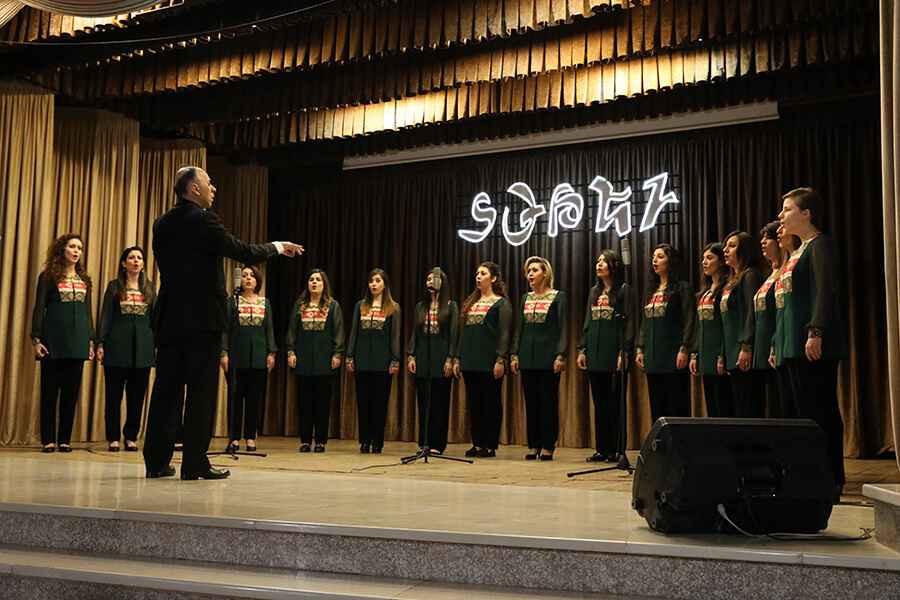
Faithful to the Homeland Song: The Journey of Julfa’s Hamik and the Tatev Choir
There was no border checkpoint in Meghri. The independent Republic of Armenia was turning one year old when Iranian-Armenian musician Hamik Alexandrian from New Julfa first set foot in his homeland, a place he had previously seen only in calendar photographs, mostly featuring the Armenian Genocide Memorial in Yerevan.
The road to Armenia’s capital passed through Kars: Kars–Leninakan (now Gyumri)–Yerevan. The final destination was the Komitas State Conservatory of Yerevan, whose existence had somehow reached New Julfa by word of mouth.
Thirty years have passed. He is again in New Julfa, standing before the choir he founded – the Tatev Choir. Twenty-six years ago, Bishop Koryun of the New Julfa diocese suggested Hamik create a community choir.
They were not easy years. Many members left, emigrated, married, and started new lives elsewhere. Yet Tatev continues to fill Armenian churches and halls with music.
Hamik could have left too. Invitations came from Tehran, Armenia, and abroad. Attractive professional offers. Prospects for a better life. But his roots in New Julfa run deep, centuries deep. As he says, all his grandfathers were from Julfa.
He chose to stay and, as written in the choir’s charter, to “foster love for ecclesiastical and national music and spread that culture among youth.” He dedicated himself entirely to the community.
Childhood and Post-Revolution Youth
He was five when he first picked up a melodica. Soon he was playing at community gatherings, school programs, and wherever New Julfa needed music. With no formal training he listened, memorized, and played.
His parents later bought him a keyboard. In third grade, guided by a local teacher, he began taking music lessons.
After the 1979 revolution in Iran, the newly established Islamic Republic declared music haram. Yet despite nationwide restrictions and persecution of some musicians, music never fell silent in the Armenian community.
“Generally, appearing on stage at seven or eight was rare in the 1970s. Then, the revolution brought the hardest years, but I kept playing. We held concerts in schools. My mother, a preschool teacher, taught the children songs and I accompanied them. My instrument was bigger than me.”
Later, the Ararat Union, the community’s main gathering place, received a piano as a gift, to young Hamik’s delight. It became his main instrument. Most of his days were spent at the keys. Returning from school, before his mother even warmed lunch, he would sit down to play, hands unwashed. “Daytime was for music, nighttime for schoolwork.”
From the Army to the Conservatory
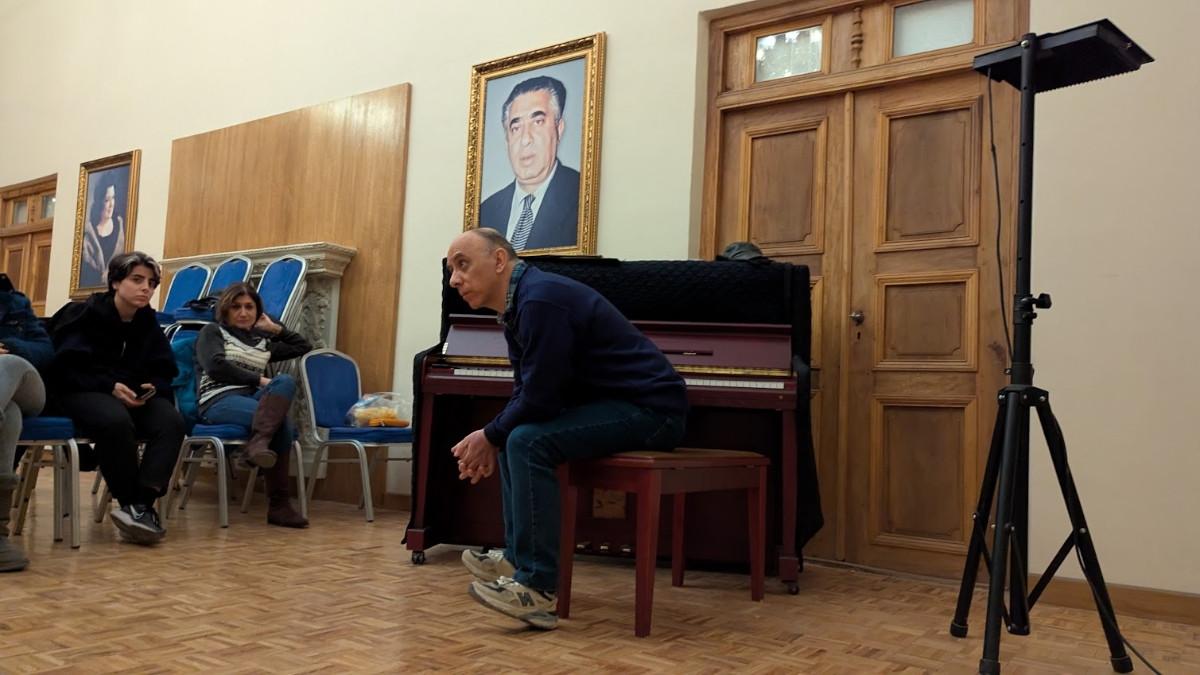
There were no long pauses in his musical life, even during military service. The Islamic authorities allowed him to work with music.
“They gave me a Persian band. I performed on stage. For revolution celebrations, I organized programs, played, taught.”
After demobilization he told his father: “I’m going to Armenia. There’s no other way.” He had long decided to go. He says. “I was very Armenian. From family to scouts to school, that’s what we were taught.”
“How will you go?” his father asked. Getting a passport was difficult, and Iran-Armenia relations were just forming. Still, he managed.
“Why did you come?” a professor at the Komitas Conservatory asked him, a man Hamik still remembers warmly.
“For music.” He didn’t even know what professional specializations existed. “I only knew I couldn’t live without music ー life was music,” recalls the conductor of the Tatev Choir. This was where the foundation of Tatev was laid.
After testing Hamik, the professor delivered his verdict:: “Absolute pitch! Conducting.”
The first months felt “like paradise.” He recalls a Persian saying: “What does a blind man want? Two bright eyes.” For Hamik, those two were Armenia and music.
But paradise didn’t last. The “dark and cold years” arrived. “The ruble changed. There was no bread, no gasoline, no electricity, no water…” the musician recalls.
Music as a Means of Preserving Armenian Identity
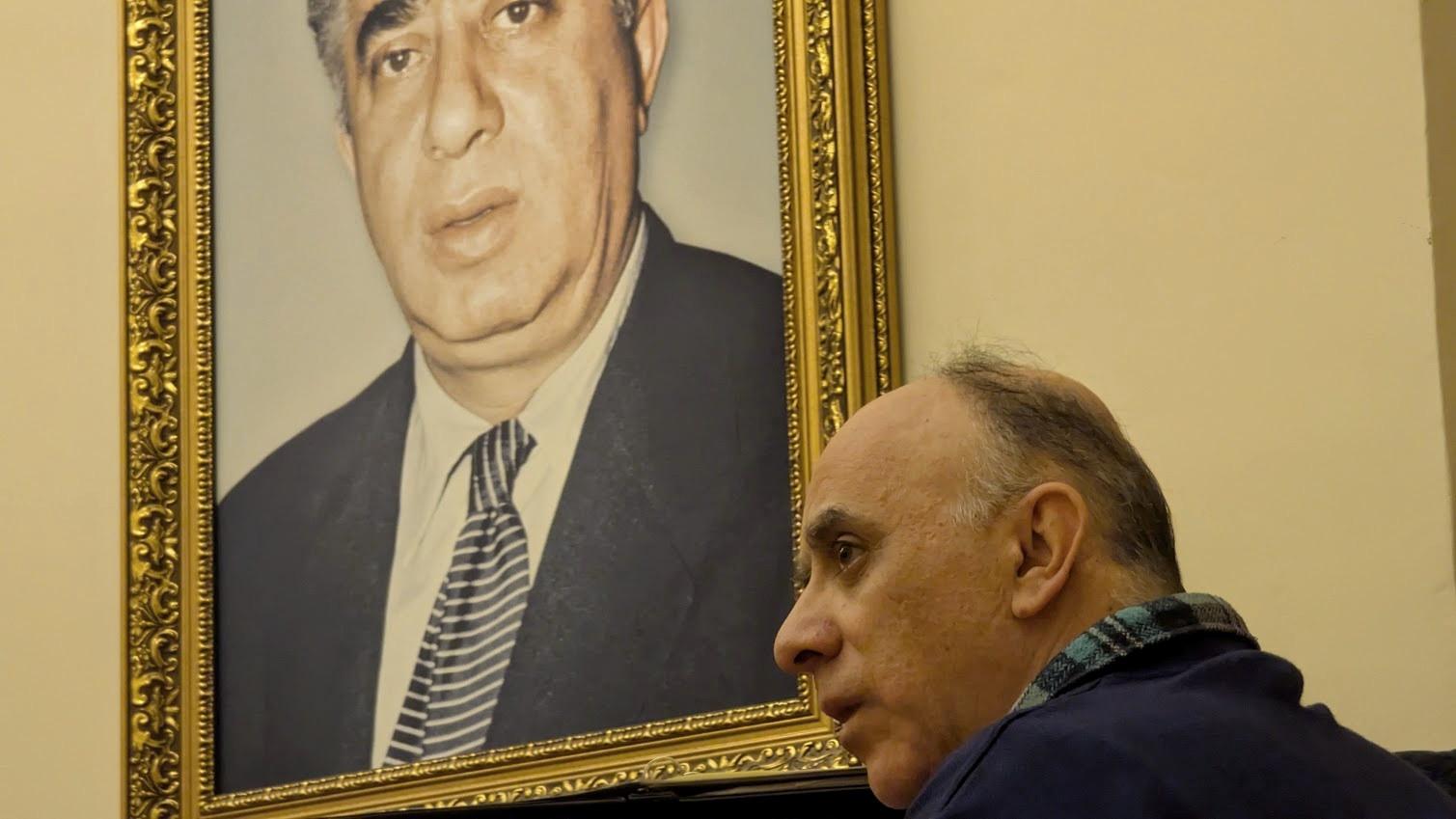
“If you don’t have a mission to preserve Armenian identity, you are just an ordinary musician,” Hamik says, noting that the greatest influences on him have been Komitas, Arno Babajanian, and Aram Khachaturian.
Although he listened to and admired Armenian musicians on the radio before coming to Armenia, the conservatory played a major role in deepening his love for Armenian music.
“It wouldn’t have been the same if I had studied at one of Austria’s prestigious institutions… Whatever I do now, you will surely hear Armenianness in it.”
Hamik adds that when he introduces young people to the greats of Armenian culture, the Armenian spirit takes root in their hearts and stays with them in memory for years. He sees this as his mission.
The young man from Julfa studied in Yerevan for nine years — from choral conducting to symphonic conducting, as well as piano, vocal performance, and composition. During those years, Hamik did not lose touch with his hometown. In the summers he worked with the community’s Komitas Church Choir.
He says when the Tatev Choir was founded, the community was very active and crowded, but over the years people left. There were many moments when dissolving the choir seemed inevitable, especially during continuous waves of emigration. Nevertheless, it continues to operate.
“It’s hard,” he says, pointing jokingly to his bald head. “They don’t know notes, don’t know how to sing. With newcomers you start from zero. They don’t love memorizing notes. But they learn to sing, have good voices, become excellent choir singers, then they leave. Generational change, generational change, for twenty-five years…”
The choir has never repeated the same piece twice in concerts. They have learned around 400 songs across genres. They hold two to three concerts yearly and sing at church liturgies.
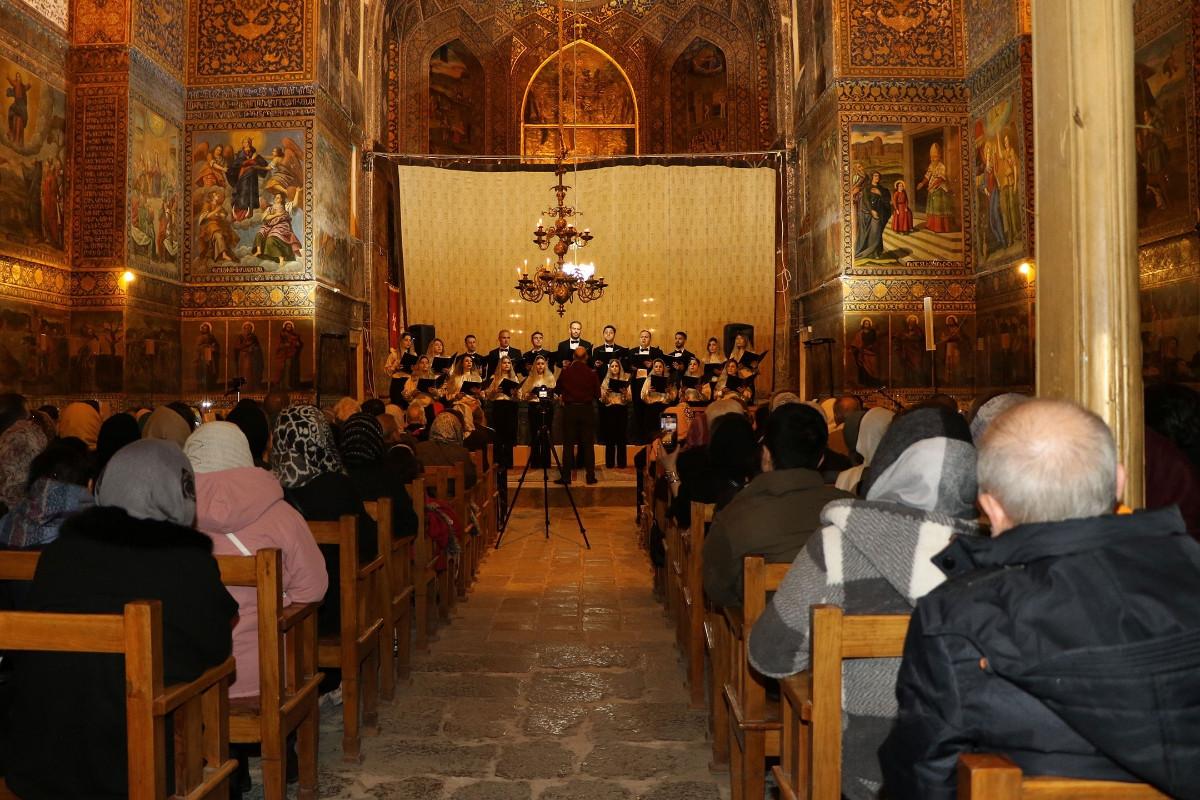
The 25th anniversary concert took place at Isfahan's St. Bethlehem Church featuring Christmas hymns. Now, they are preparing a new program.
Tatev has indirectly created Armenian families. Dozens of couples formed there. Hamik met his wife Arsine in the choir. She teaches music and sings in the choir. Together they raise two music-loving children.
Looking back, he sees this as a hidden part of the choir’s mission. In the diaspora, a choir is not only about songs but about connections. People gather, meet, put down roots.
Years later Hamik continued his education in France, then returned home again.
Today, his photograph hangs in New Julfa’s music museum alongside Varoujan Partevi, Loris Tjeknavorian, Tigran Mansurian, Vigen Derderian and other greats, while Tatev prepares for its next major concert.
Photos by Nazenik Saroyan and from Hamik Alexandrian’s personal archive
Write a comment