 Videos
 Photos


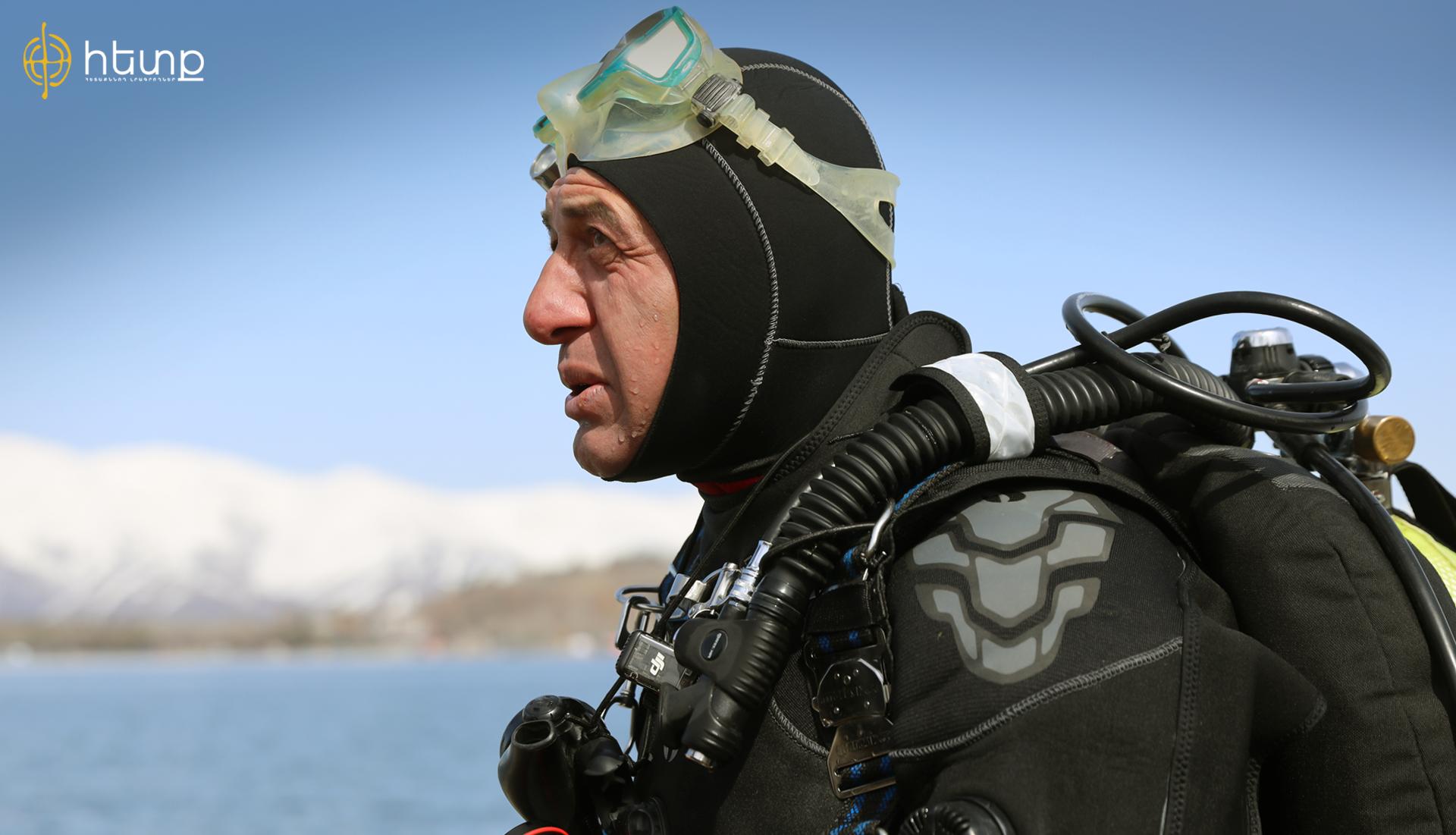
Exploring Sevan’s Depths: Local Diver Says It’s Like Landing on the Moon
Vahe Melkonyan has been exploring the depths of Armenian’s Lake Sevan for the past twenty-two years.
Melkonyan, 47, hails from the neighboring town of Sevan, and says he prefers the quiet that surrounds him when he dives in the lake, weighed down by a suit, air tanks and breathing apparatus that weighs some fifty-five kilos.
Melkonyan recalls his dive on the eve of December 31, 2019. While others were glued to their TV’s, awaiting the New Year, he grabbed his diving equipment and heading for the lake, not forgetting to take his Santa Claus hat.
Melkonyan, checking his watch, entered the water at 11:50 pm, recording the memorable event on video.
“Night diving is very interesting. Life under the lake is active. It’s a completely different world. When I dive the same place during the day, it’s not the same. The movement and activity of animals are different,” Melkonyan tells Hetq.
Meeting him on the lake shore, we ask him what about the water conditions. He’s taking out his diving apparatus from his blue Opel car, preparing for his second dive of the day.
“It’s very good. The water is calm, resembling a mirror. It is waiting for me with great pleasure. Yesterday, for example, it was not like this,” Melkonyan says.
He tells us that he dives even during storms or when the waves are big.
“I will do my job. It doesn't matter to me that there are waves above, I feel good below,” Melkonyan says.
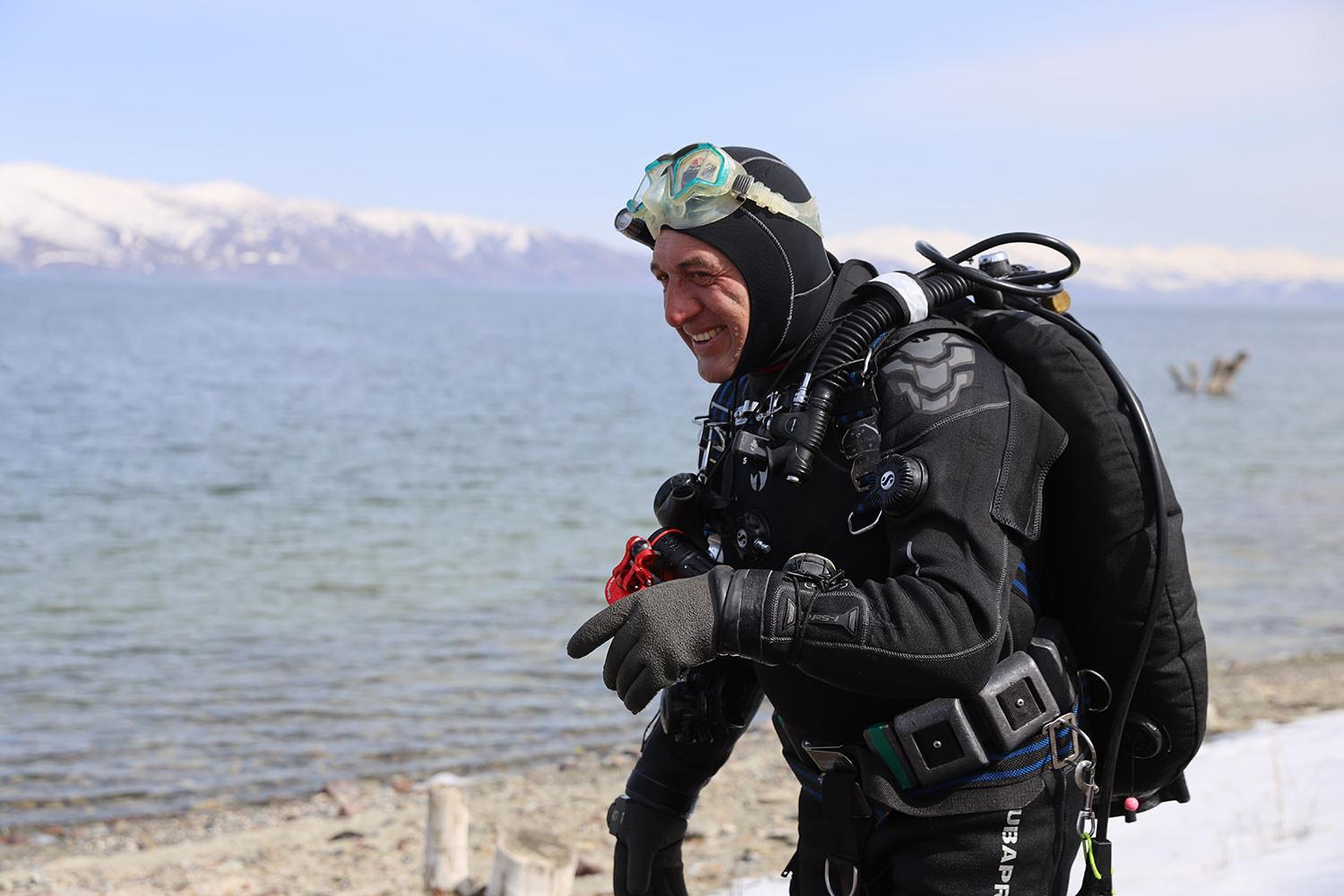
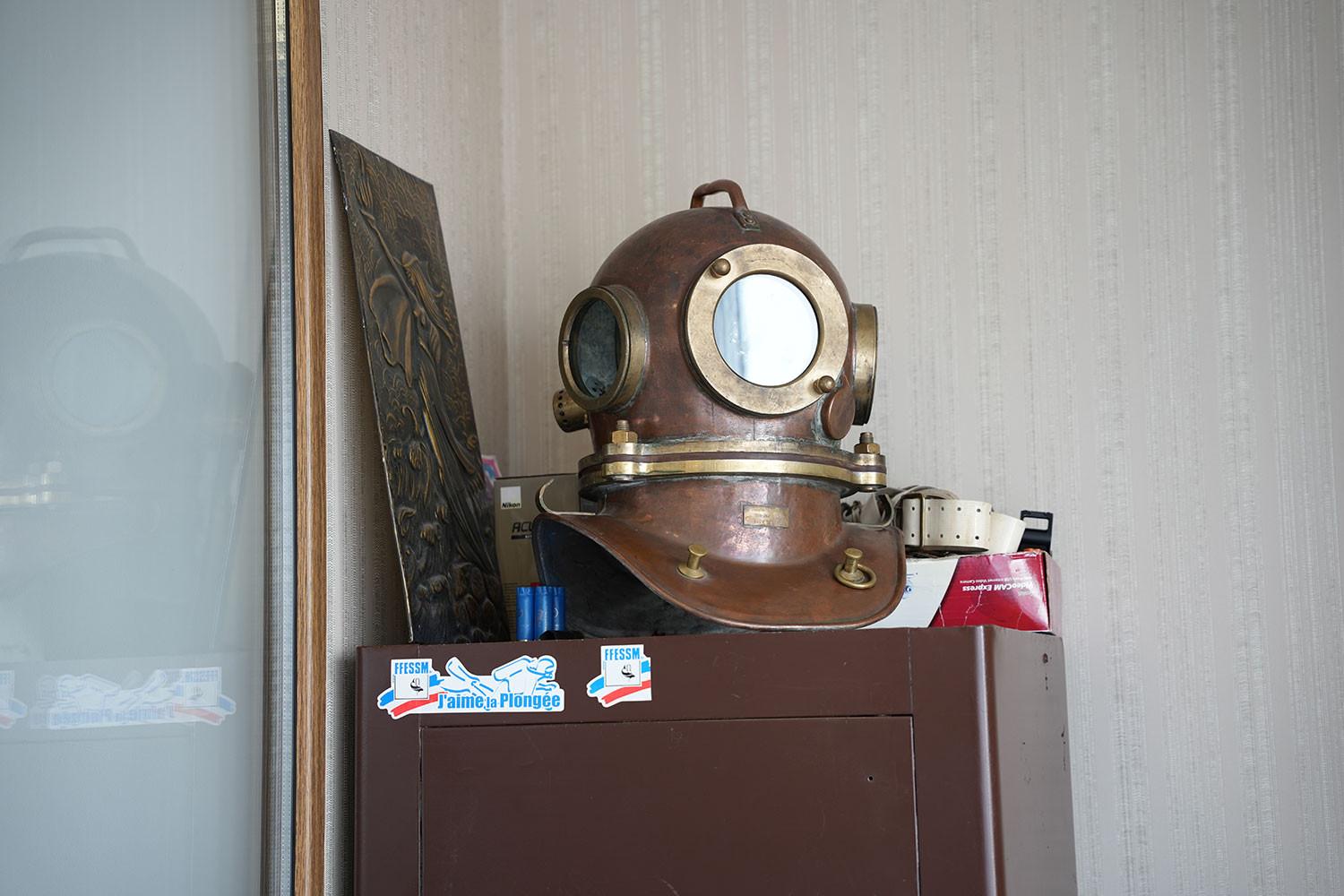
He’s been diving professionally for twenty-two years and jokes that his first dive was in the bathtub at the age of eight, fashioning a diving mask from a used gas mask.
At the age of twelve, Melkonyan made diving equipment using a car tire pump. He dived to a depth of two meters, studying small fish and crustaceans. Five years later, he purchased Soviet-made diving equipment.
“The work of a diver is considered one of the most dangerous and difficult jobs in the world. I will not let my children become divers,” he tells Hetq, adding that they will definitely engage in amateur diving, but not the commercial kind.
Over the years, he’s pulled out a wide variety of items from Sevan, ranging from ordinary clay pots to animal bones.
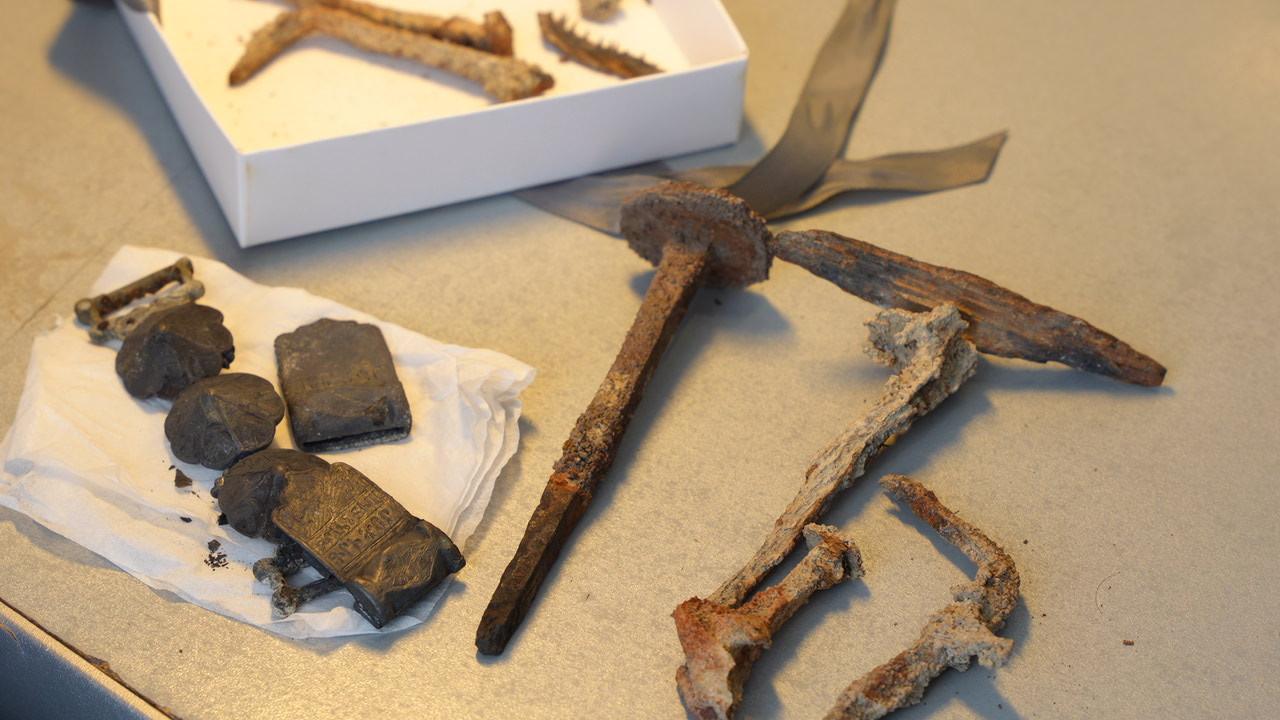
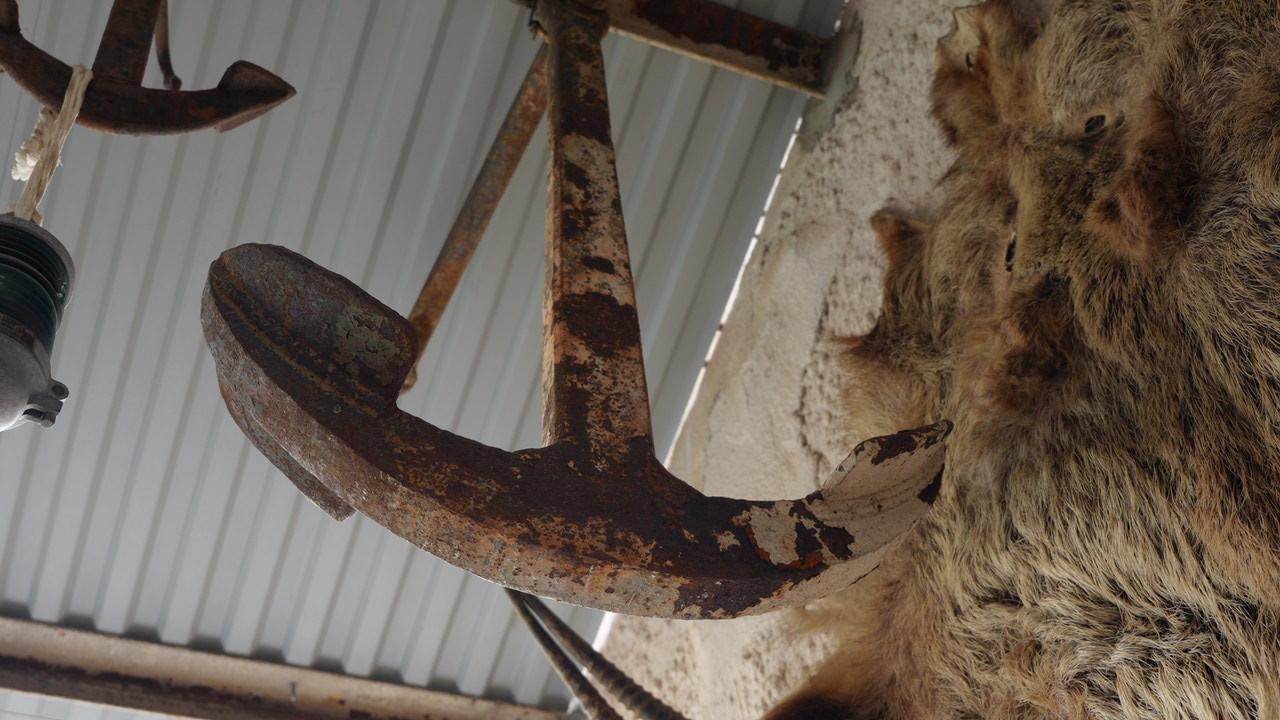
“I’ve come across many surprises. I found a boat near here. Whatever has remained under the lake, may have remained for centuries or millennia. I’ve reached places never touched by human hands before me. When I go down more than forty meters, it's like landing on the moon. I have the footage to show people,” Melkonyan says.
He runs a diving school on the lake, a special area where anyone over fourteen can dive.
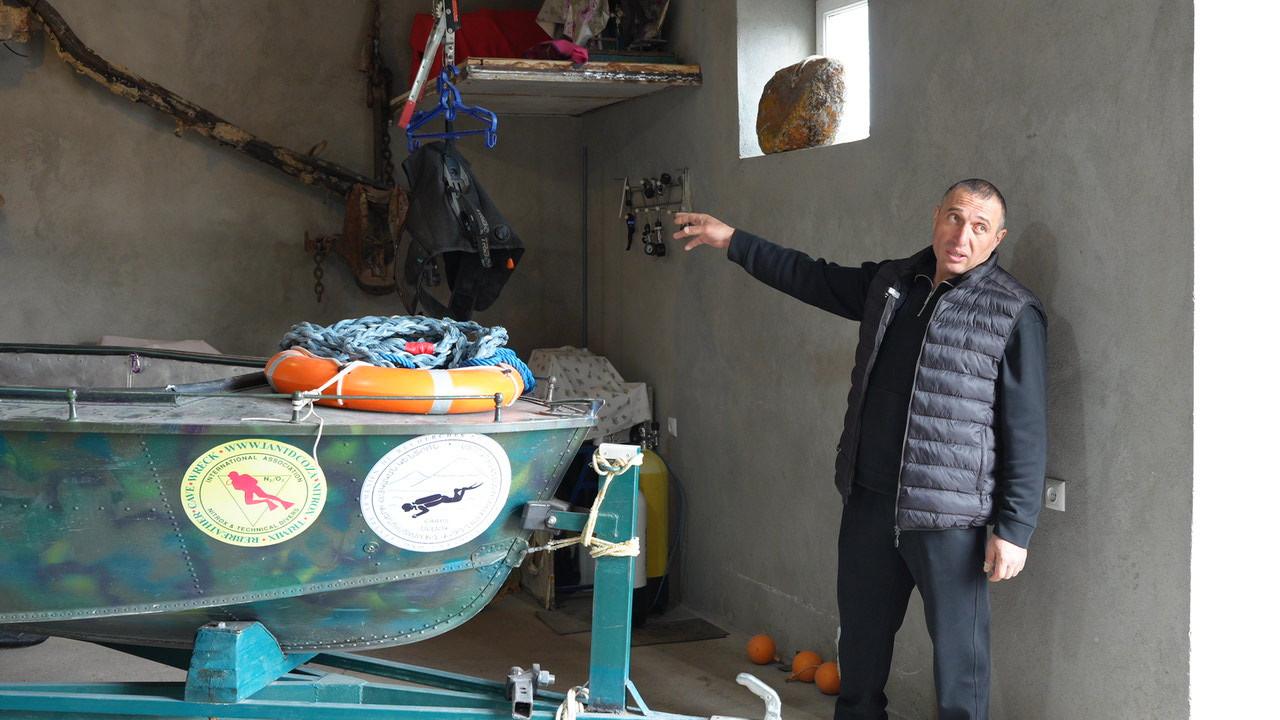
Melkonyan confesses that he talks to God while diving.
“I ask God why he made me a scoundrel rather than a parliament member,” he says, revealing the man’s jovial nature.
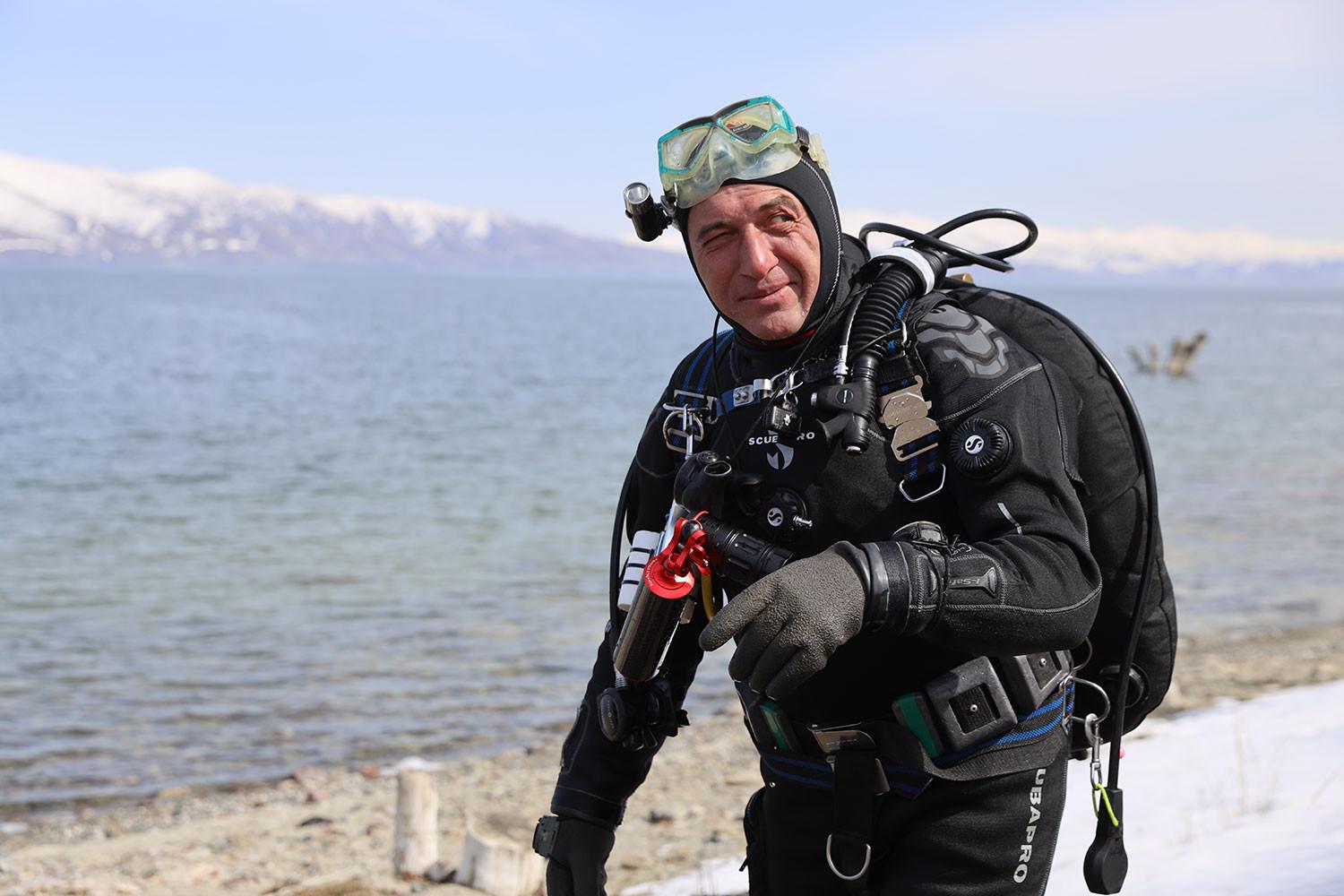
Melkonyan and his fellow divers are often called on to retrieve the bodies of those drowned people from various reservoirs, lakes, and rivers in the country.
He recalls recovering the body of someone who drowned in Gyumri. “It was on my birthday. I had to skip the celebration and do the job.”
One June 1, which marks Children’s Protection Day, he recovered the bodies of two children who had drowned. One died in the Aparan Reservoir, the other in the Sevjur River.
Some of the items Melkonyan collects from his Sevan dives are taken to various scientific institutions in Armenia for study.
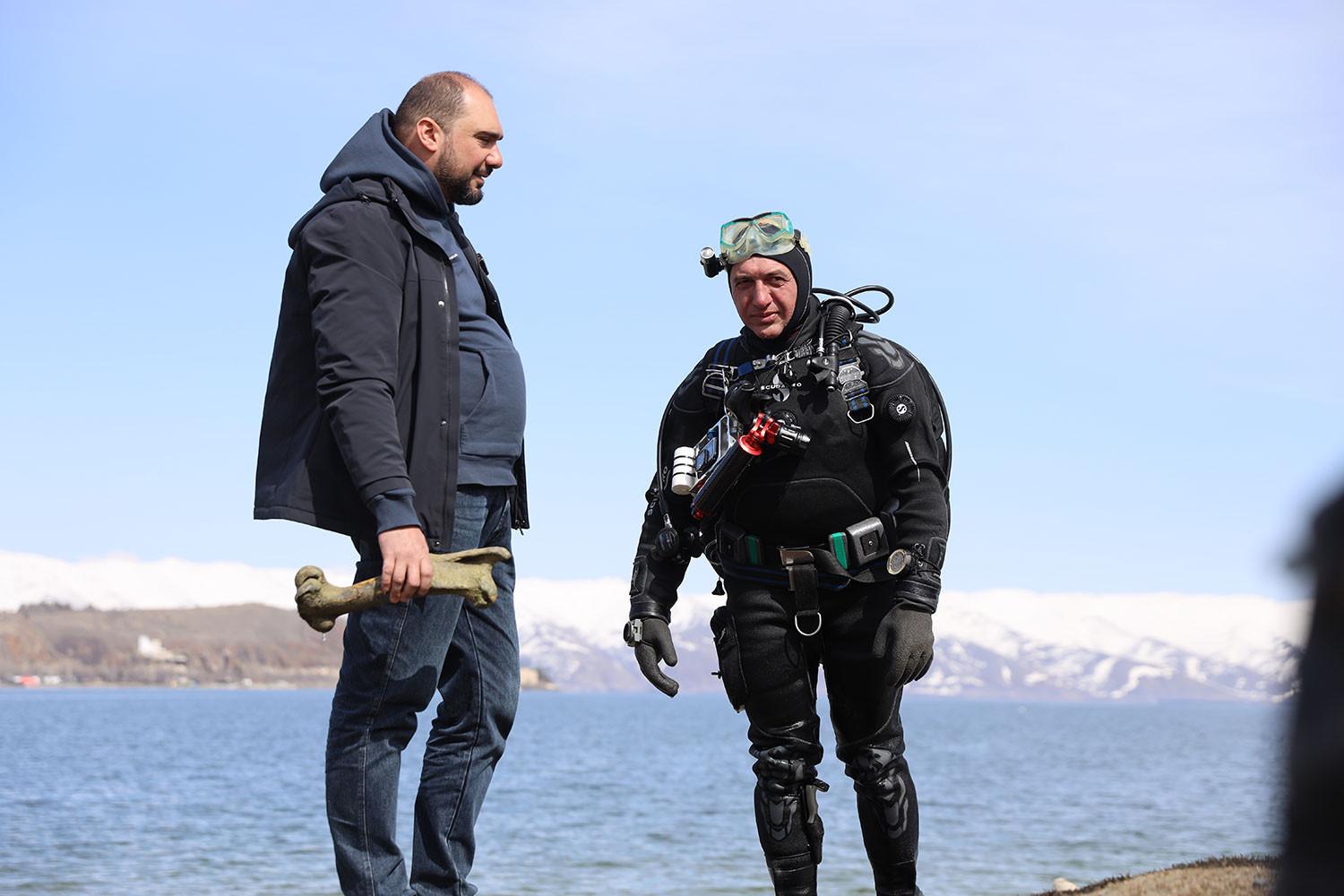
On the day of our meeting, Melkonyan retrieves a large bone from the water. Waiting for him on the shore is Andranik Gyonjyan, a researcher at the Scientific Center for Zoology and Hydroecology.
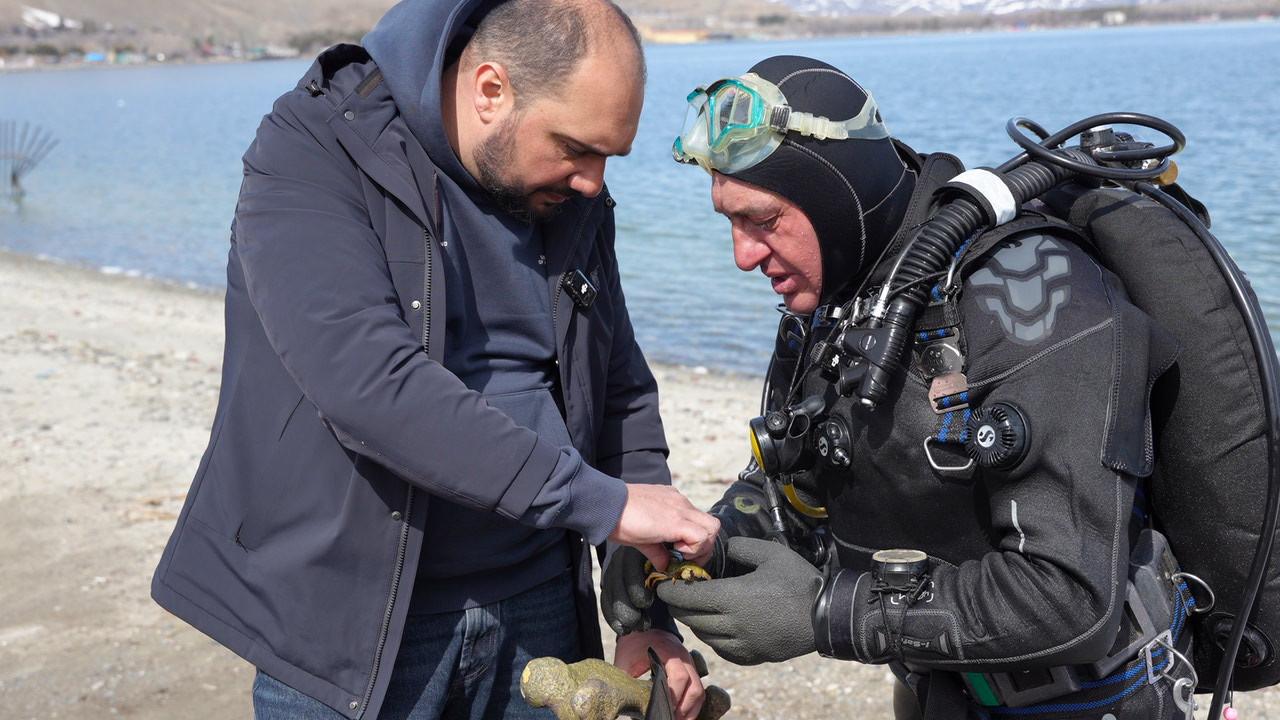
Gyonjyan looks at the bone, says it resembles a horse femur, and then takes it to Yerevan for morphometric analysis. (This is the quantitative measurement and statistical analysis of form—size and shape—applied to organisms, fossils, or geological landforms. It is used to identify variations in shape due to growth, evolution, or environment, and to analyze drainage basins for hydrological studies.)
Gyonjyan, a paleontologist, says the Center is conducting a study of Lake Sevan’s fauna, mostly based on Melkonyan’s finds.
“They are exceptional specimens for science, especially the complete European bison skulls discovered in the past two years. We don’t have such well-preserved specimens,” Gyonjyan says, adding that bones convey information not only about the animal species of the Sevan basin, but also about climate changes.
He says the Lake Sevan basin was studied by Soviet paleontologists and there is quite a wealth of information from that era.
Melkonyan says collaborating with scientists is exciting and that, in addition to sharing his finds with them, he’s amassed a collection of his own at home.
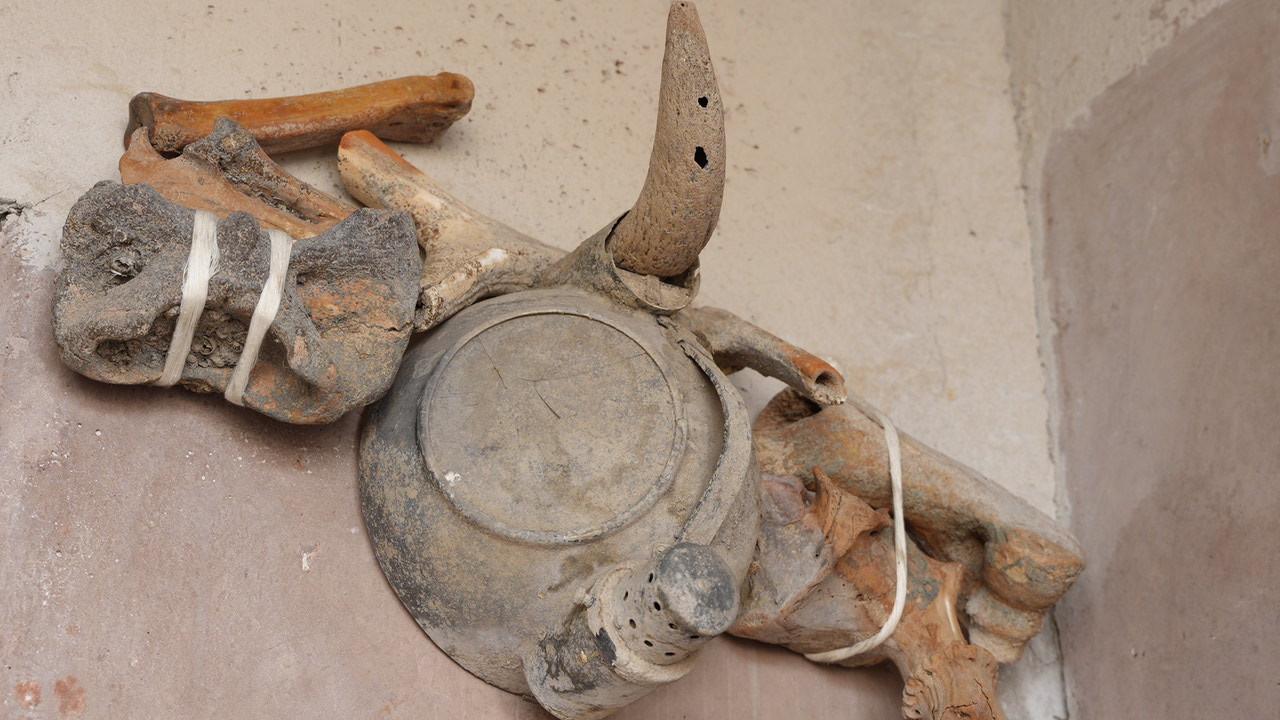
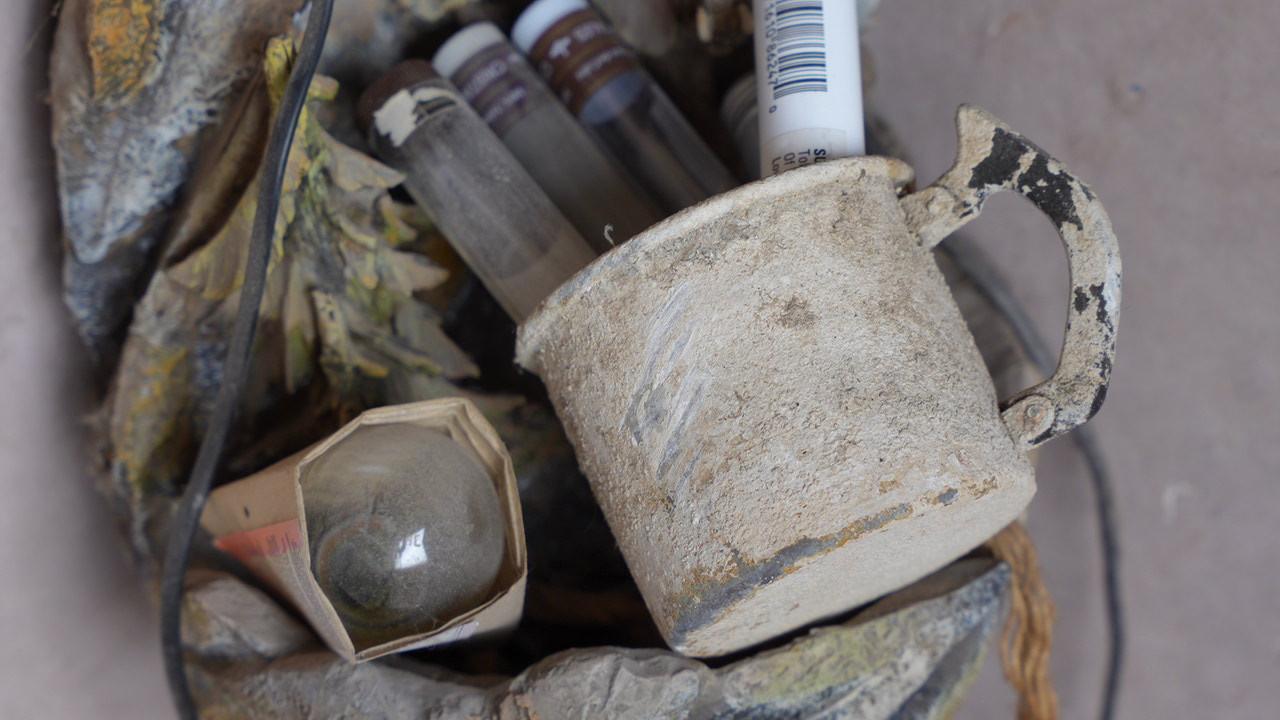
The diver says he’s drawn to the lake and the secrets it holds.
“The lake always reveals its secrets to me. I love nature. And nature loves me. I can’t miss a day of diving. My friends in the U.S. and France have been inviting me to travel there for ten years but I haven’t. When I see how people pollute the lake, I take it personally, like it’s my home. The shores are still all right, but not the lakebed.”
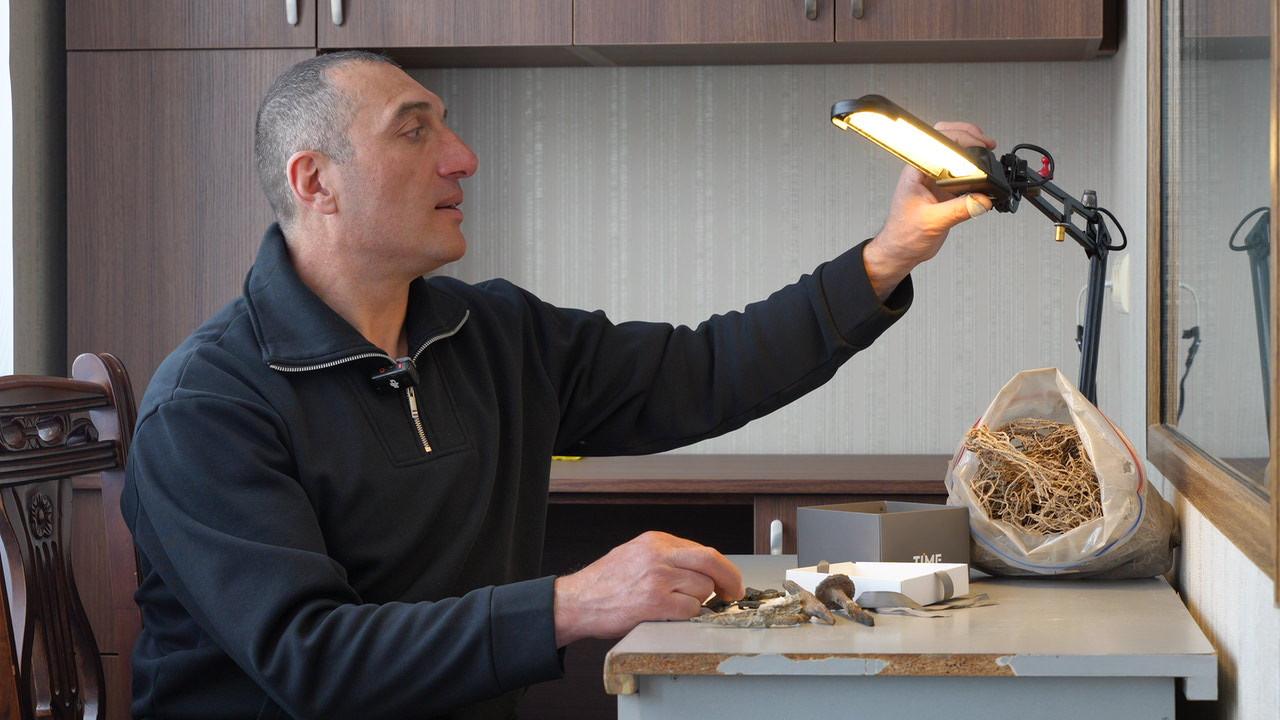
Melkonyan says he and his diving friends often clean the bottom of the lake, but that more must be done.
After a hard day's work, the diver from Sevan sips coffee on the balcony of his house, smokes a cigar, and ruminates about the day that passed.
Comments (1)
Write a comment