 Videos
 Photos


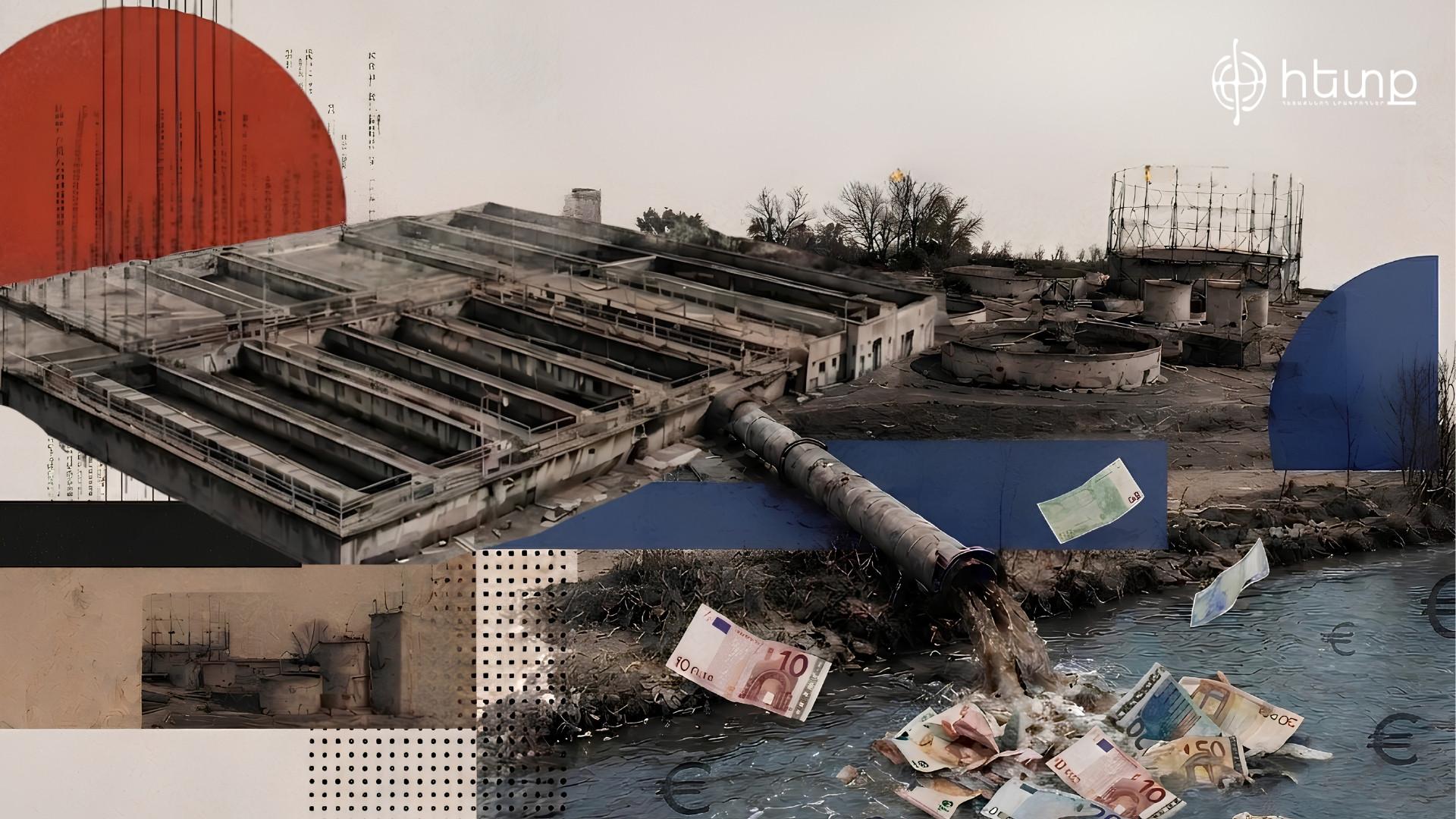
10.4 Million Euros Down the Drain: Yerevan’s New Wastewater Treatment Plant Still Not Working
Ten years ago, the French government lent Armenia 10.4 million euros to build a new wastewater treatment plant in Yerevan
The plant, Aeratsia (or Aeration) Wastewater Treatment Plant, was built but has yet to operate.
It was designed to mechanically treat 400,000 cubic meters of wastewater per day, which is enough to meet the daily volume of wastewater discharged from the Armenian capital. Hetq tried to find out why the new plant isn’t working.
When and how was the new wastewater treatment plant built?
Hetq began studying the history of the new Aeratsia WWTP in 2022 and found that although construction work was completed in December 2016, it was not put into operation because it did not have a completion certificate.
Construction of the new plant began in 2015, with a loan provided by the French government. The 10.4-million-euro construction contract was signed with the French company SADE. The new plant was built on the site of the old Yerevan Aeration wastewater treatment plant.
The new plant was completed in December 2016, but was never put into operation. Minor defects discovered during the last stage of construction, which were not corrected, halted its operation. Also, the plant did not have a completion certificate and state registration.
Who built the station, to whom was it transferred, and what do we have today
Armenia’s Community Development Programs Implementation Office was the original state agency to order the plant’s construction. The agency was liquidated in late 2017 and was succeeded by the Water Economy Programs Implementation Office. This agency was dissolved in late 2019 and the contracts were transferred to the Territorial Development Fund of Armenia. In response to Hetq's inquiry, the Fund stated that there were no contracts related to the Aeration WWTP among the transferred contracts.
In 2017, a lease agreement was signed with Veolia Water Armenia (VWA), the subsidiary of the French transnational company Veolia that operates under a long-term lease contract to manage drinking water production, distribution, and wastewater systems across a substantial portion of Armenia.
As a result, the 64-hectare area, where both the old and new non-operational plants are located, was leased to VWA, but the new plant was not on the list of properties to be leased.
Jinj company founding director Eduard Mesropyan says the construction of the new station was conducted with excellent quality, but the contract signed with the new operator did not include the maintenance of the station.
Jinj, based in Yerevan, is an engineering & consulting company specializing in water supply, industrial and domestic wastewater removal, treatment and water resources management.
“The new operator was supposed to work as of January 1, 2017. There was no mandatory condition for the new operator in the contract regarding the plant. Veolia Water Armenia started working under new conditions, a new contract, and there was no such obligation to do so. If the government had said on January 1, 2017 that we were reviewing the contract and adding that condition as mandatory, it would have been responsible.”
Hetq has sent inquiries to the Armenia’s Ministry of Territorial Administration and Infrastructure, the Water Committee, and VWA to find out whether any measures have been taken to put the plant built ten years ago into operation.
VWA stated that the plant was not leased to them and told us to direct our questions to the Water Committee. The Water Committee stated that it is not a party to the contract. The committee has developed a draft government decision to finalize the contract for the Aeration plant, which has not been adopted.
The Territorial Development Programs Fund also noted that there was nothing about the plant in the contracts. The Ministry of Territorial Administration and Infrastructure reported that it is conducting negotiations.
It was also stated that the plant can operate only after reviewing the contract. Until then, Armenia’s taxpayers are repaying the 10.4-million-euro loan taken for the plant's construction.
In May 2020, a criminal case was initiated on the grounds of the misuse of funds spent and the severe consequences caused by it—specifically, the pollution of the Hrazdan River. In response to our inquiry, Armenia's Prosecutor's Office noted that Hetq’s 2022 article has led to an investigation of the matter. The preliminary investigation is ongoing. However, there is currently no one named as a defendant in the criminal proceedings.
Now, only a portion of Yerevan's wastewater is treated through the old station's catch grates. It is the only working part left of the old Aeration plant. The grates only catch large debris, allowing smaller, dissolved particles to flow into the Hrazdan.
Mesropyan says the failure of the new plant has turned-off international donors and has led to a suspension of the construction of the Sevan and Armavir treatment plants.
“This is an unbelievably bad, negative lesson for us. We were humiliated on the world stage. Based on this, international donors and banks are now wary of financing new plants. Their logic is simple. If you cannot operate one already built plant, what is the guarantee that you will be able to operate the next one? This also became a precedent for the suspension of other programs.”
Armenia and Environmental Protection
Today, the Soviet-era slogan “May the Water of Hrazdan be Clean” can still be seen at the entrance of the new Aeration wastewater treatment plant.
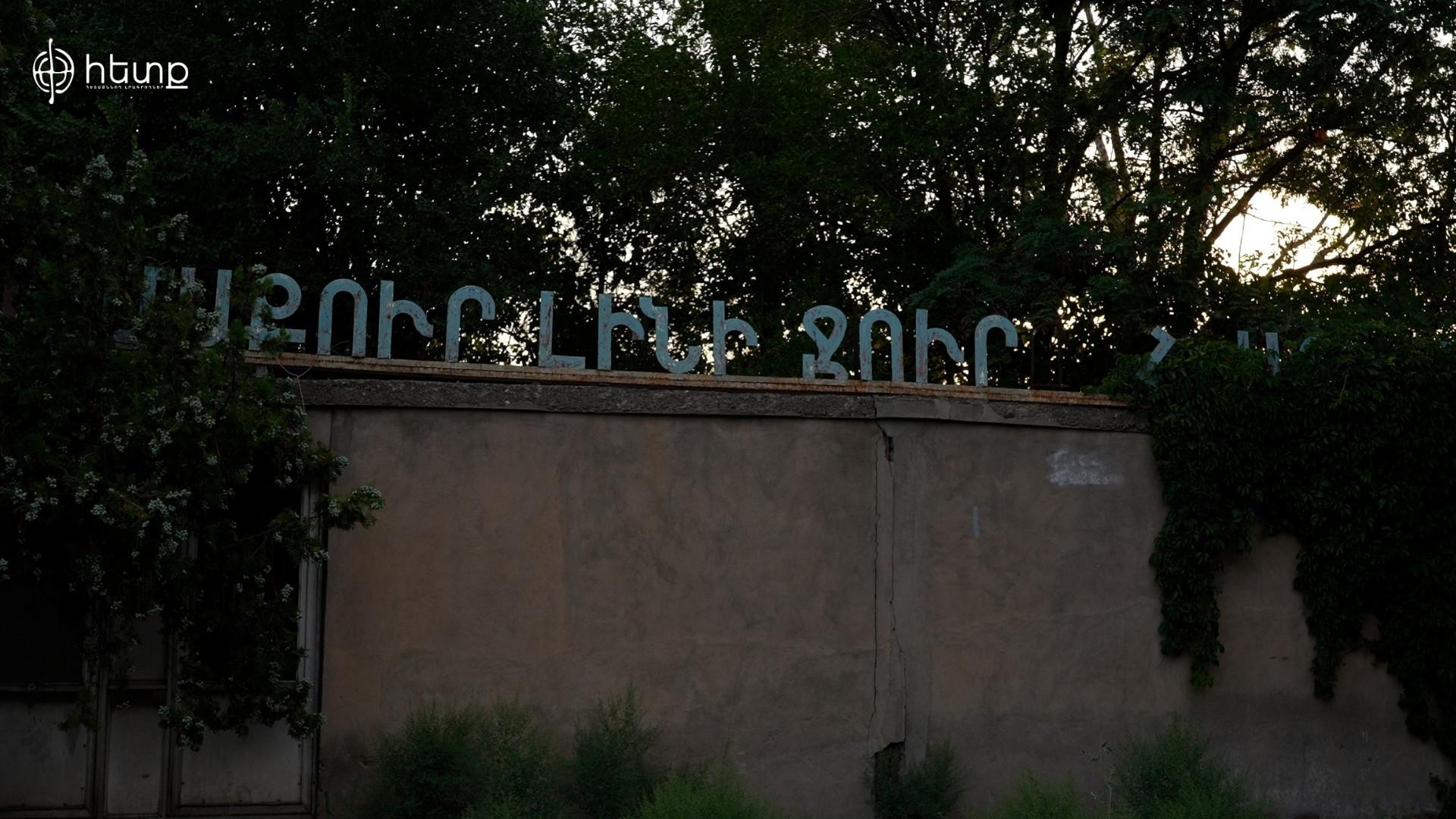
According to recent monitoring data, Hrazdan's water quality has been classified as the worst ever; 5th class (poor/bad).
In October 2026, Armenia is preparing to host one of the largest environmental international events, the UN Conference on Biological Diversity (COP-17). Thousands of delegates, environmentalists, and heads of state from more than 190 countries will arrive in the country.
The main part of the event will be held at the Yerevan Meridian Expo Center, located just fifty meters from the Hrazdan River, the same waterway into which the capital's wastewater is discharged every day.
The conference offers Armenia a fantastic opportunity to attract environmental investments and grants. If state and public organizations fail to utilize this opportunity for real changes, the only thing that will increase is the scale of wastewater discharged into the Hrazdan.
Comments (2)
Write a comment