 Videos
 Photos


From Classmate to ‘Headache’: How Yerevan’s School System Failed a Ten-Year-Old
An ordinary dispute between two ten-year-old boys—Armen and Gevorg—at a Yerevan school eventually brought the educational process to a standstill.
To resolve the conflict between Armen, who is hyperactive, and Gevorg, who has special educational needs, the school invited their parents to the classroom, a move that only exacerbated the situation. (The boys' names have been changed).
What began as a typical classroom altercation escalated over the months into hostility between the parents. Ultimately, the school was unable to resolve the issue on its own.
Reintegration hurdles block child’s return to school from day one
Armen attended first grade at a private school. Dissatisfied with the school's "non-standard" teaching methods, his parents transferred him to a public school in Yerevan. While studying there, Armen got into a conflict with a classmate who has autism. According to his parents, during one of the altercations, a classmate bit Armen on the back of the neck.
His parents say that Armen has been hyperactive since birth, so they considered changing schools the best way to avoid further clashes. In the second grade, they transferred him to a ballet school, but he failed to integrate there as well.
Eventually, the parents decided to return Armen to his previous general education school. However, they report that the principal refused to admit the child, citing a lack of vacancies and promising to notify them once a spot opened.
Armen's mother states that the school principal opened a new class and enrolled students without notifying the family. The principal only reached out to schedule a meeting after the family contacted the Ministry of Education, subsequently condemning that action as unethical. The principal's statements are corroborated by a recording of a meeting held with parents at the school.
After lengthy discussions and disputes, Armen was admitted to a newly formed class. Another child with special educational needs—Gevorg—was also studying in this class.
Tension between the children soon spilled over to the parents
According to the parents, frequent altercations occurred between the children due to Armen’s hyperactivity and Gevorg’s behavioral issues. They recount that Gevorg would often swear at and taunt the other children, provoking a reaction from Armen.
Armen’s parents asked the school principal and the class teacher to assign a psychologist to work with Gevorg. However, the school informed them that Gevorg had refused individual sessions with a psychologist at the beginning of that academic year, and his parents had also declined the service. The school suggested that Armen’s mother attend classes and sit next to the child until the tension subsided. When Gevorg’s mother learned of this, she also expressed a desire to attend the classes.
Armen’s mother says that during one of the lessons, Gevorg spat on Armen; Armen did not tolerate this and got into a fight with him. Subsequently, the children's parents also became involved in the conflict.
Armen's mother states that the parents of both children were summoned to the principal's office, where the principal and the homeroom teacher told her they had known from the start that conflicts would arise at the school after Armen's enrollment.
The homeroom teacher announced that she was resigning given the situation. Armen's mother says the teacher cited an inability to manage the class due to Armen's behavior as the reason.
The parents formed the impression that the homeroom teacher was presenting the school with a dilemma: either she would continue as homeroom teacher while Armen was transferred to another class, or she would step down from the role. The principal refused to accept the resignation or sign the application, citing the lack of a replacement.
Armen’s parents believe that the homeroom teacher’s unprofessional approach exacerbated the conflict among the children. They also consider the principal’s justification—that the teacher could not be relieved of these duties due to the lack of a replacement—to be groundless.
Following the incident, most of the students in the class, acting on their parents' instructions, did not attend school for about a week; Armen’s parents are convinced this was a deliberate attempt to pressure them into transferring their child to another class.
The issue eventually reached the district administration, where a meeting involving the deputy district head, police officers, the school principal, and educators was held to discuss Armen’s behavior and the situation it produced.
Armen’s parents do not deny that their son is hyperactive; he talks frequently during lessons and is unable to sit still for forty-five minutes. However, they are concerned that the school views their mischievous and energetic child as a "burden" and the primary culprit behind every conflict. The parents are convinced that Armen is being targeted because of this labeling.
Hetq also contacted Gevorg’s mother, but she declined to comment on the incident.
"I have submitted my resignation as homeroom teacher"
The class teacher maintains that Armen was welcomed into the class warmly and in a friendly manner and he is surprised that Armen’s parents believe the child has been targeted. She believes the first semester went smoothly; there were disputes, but they were quickly resolved. However, from the start of the second semester, the disputes became frequent. "The situation reached a point where the children started hitting and shoving each other," she says.
When asked whether the presence of two parents in the classroom constituted discriminatory treatment toward the other children, or might further aggravate the situation, she replied that the school had previous experience with this arrangement and there had been no issues.
"When I wrote my resignation letter, I realized that at that stage, at that moment, I was powerless. I saw that as the solution to the problem, and I told the principal that I couldn't manage it anymore and couldn't cope with the constant disputes between the children and parents," she tells Hetq.
The homeroom teacher says she thought that perhaps someone else—someone more competent—might come along who could bring order to the class. Despite this, the homeroom teacher maintains that there were no oversights on their part.
When asked whether the school might need more psychologists and support teachers, the homeroom teacher replies that their numbers are sufficient. They also note that psychologists have been present at every lesson since the conflict between the two children escalated.
Regarding the fact that Gevorg and his mother declined individual work with the psychologist, the homeroom teacher clarifies that this refusal applied only to the psychologist sitting directly next to Gevorg during class. The psychologist still attends the lessons.
As to whether Armen understands the implications of Gevorg having special educational needs, the homeroom teacher states, "We have spoken with Armen separately."
The homeroom teacher is unaware of whether the psychologist has conducted group sessions with the children. From conversations with Armen and his parents, Hetq learned that the psychologist organized individual meetings with the children, but there were no group psychological exercises or sessions.
Although the homeroom teacher believes the issue has been resolved, her resignation letter is currently with the principal. "I have written my resignation letter as homeroom teacher; it hasn't been signed yet, and the principal will decide whether or not to sign it," she says.
"It doesn't matter who is harming whom; both parties are facing certain difficulties"
Psychologist Marine Gabrielyan believes if a conflict arises between two children, one cannot focus on just one child while ignoring the other.
In her view, the conflict reflects a need to understand the inner anxieties and difficulties both children are experiencing. She notes that a psychologist's role in the classroom goes beyond simply sitting next to a child.
The psychologist suggests utilizing small group work, after-school sessions, and emotional exercises to gradually foster empathy and friendship between the children.
Is the hyperactive child to blame for everything?
On May 11, 2026, a specialist from the Republican Pedagogical-Psychological Center observed a class at the school to assess Armen’s situation. As noted in the report, Gevorg was absent from school that day due to health issues. The Center observed that Armen was inattentive and lagging behind his classmates, and that a teacher’s assistant constantly accompanied him.
Given his inattentiveness and hyperactivity, Armen had been referred for an assessment regarding special educational needs. An assessment conducted on April 21, 2026, determined that he does not require special educational conditions, despite the presence of certain behavioral issues.
The mathematics teacher confirmed that Armen is absent-minded but noted that conflicts rarely arise during his lessons, as he employs an individualized approach with the student.
The Center assessed the socio-psychological atmosphere in the classroom as generally satisfactory; no instances of bullying directed at students by the class teacher were recorded. However, the Center's report does not specify what served as the basis for this conclusion.
According to the Center's findings, Armen is the primary source of conflict in the classroom. He is described as a child who is hyperactive, oppositional, disobedient, and impulsive, and who experiences difficulties regarding both behavior and academic progress. In contrast to this conclusion, the homeroom teacher, responding to Hetq’s question about the individual approach taken toward Armen during lesson, noted that the child has no difficulties with learning or processing information. She even described him as a well-rounded child.
At the same time, the Center recommended that the school psychologist work with Armen individually and instructed the principal to "improve the moral-psychological atmosphere in the classroom and ensure a safe environment."
The directive issued to the principal must be conducted by October 30, 2026.
The Territorial Pedagogical-Psychological Support Center's (TPPSC) assessment is under scrutiny for its contradictory findings.
While the report claims no bullying occurred, it simultaneously blames Armen's behavior for the classroom conflicts while ordering the school to improve its safety and climate.
This raises critical questions about why the evaluation focused on only one child during a two-way conflict, what preventative measures the school failed to take beforehand, and why the responsibilities of school staff were entirely overlooked. Inclusion is not merely about admitting a child to school; it is about creating a safe environment for all children and, in the event of a conflict, examining equally the needs and responsibilities of every party involved.
(P.S. Before this article was published, we learned that Armen’s parents had withdrawn him from the school.)
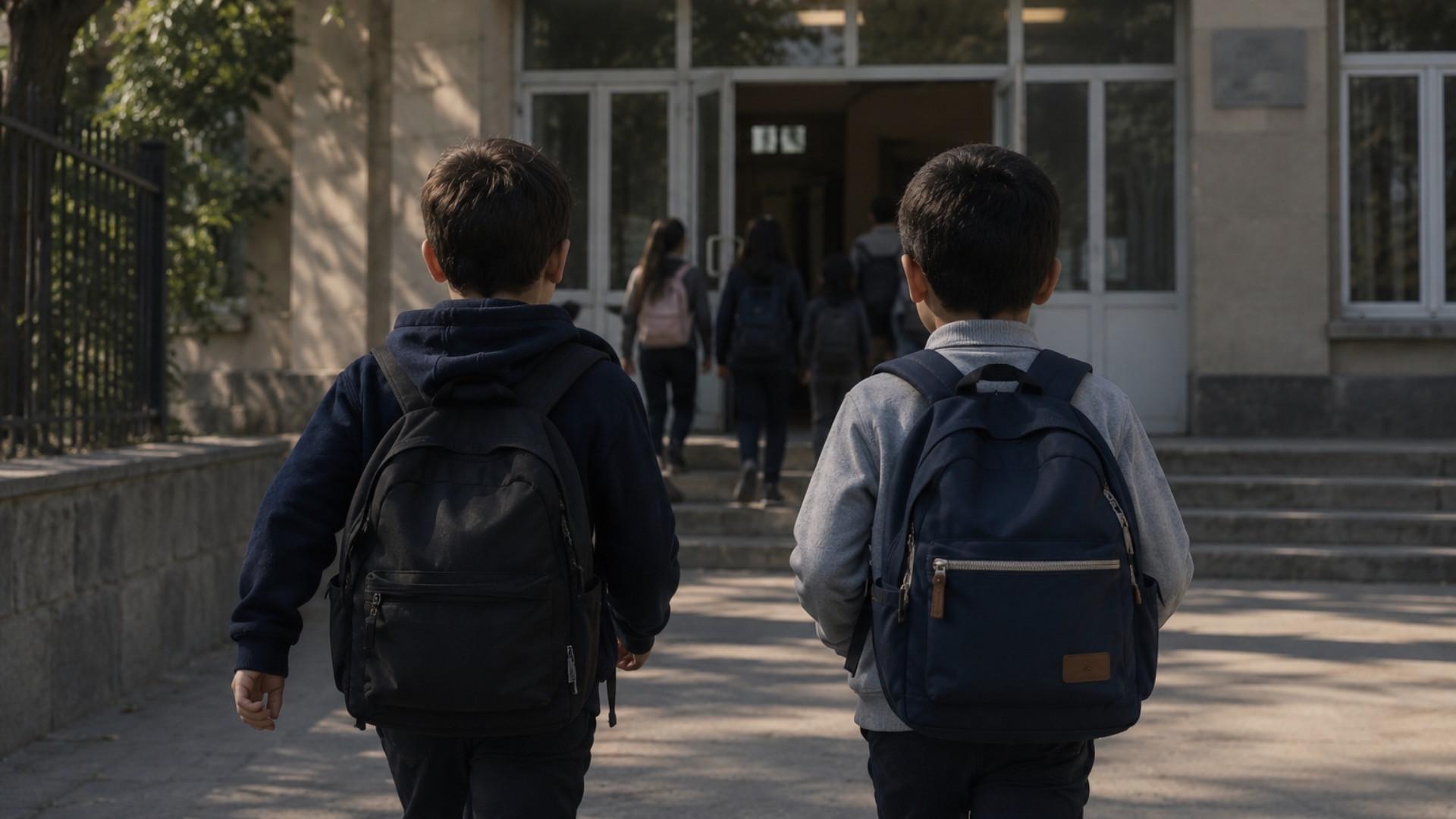
Top photo: AI generated
Comments (1)
Write a comment