 Videos
 Photos


Armenian Peach Growers Eye European Markets After Sudden Russian Import Ban
By Mattis Choquart (Hetq intern)
What the closure of the Russian market reveals about an industry and its allies
Russia slammed its border shut to Armenian stone fruit on June 2, 2026, weaponizing trade right before the harvest and five days ahead of Armenia's parliamentary election.
The European Union (EU) stepped in by erasing import duties, but a policy shift cannot instantly reroute a supply chain. Between the orchards of Armenia’s Ararat Valley and European grocers lies a complex gauntlet of retail standards and cold logistics that no tariff waiver can fix overnight.
The Season That Never Happened
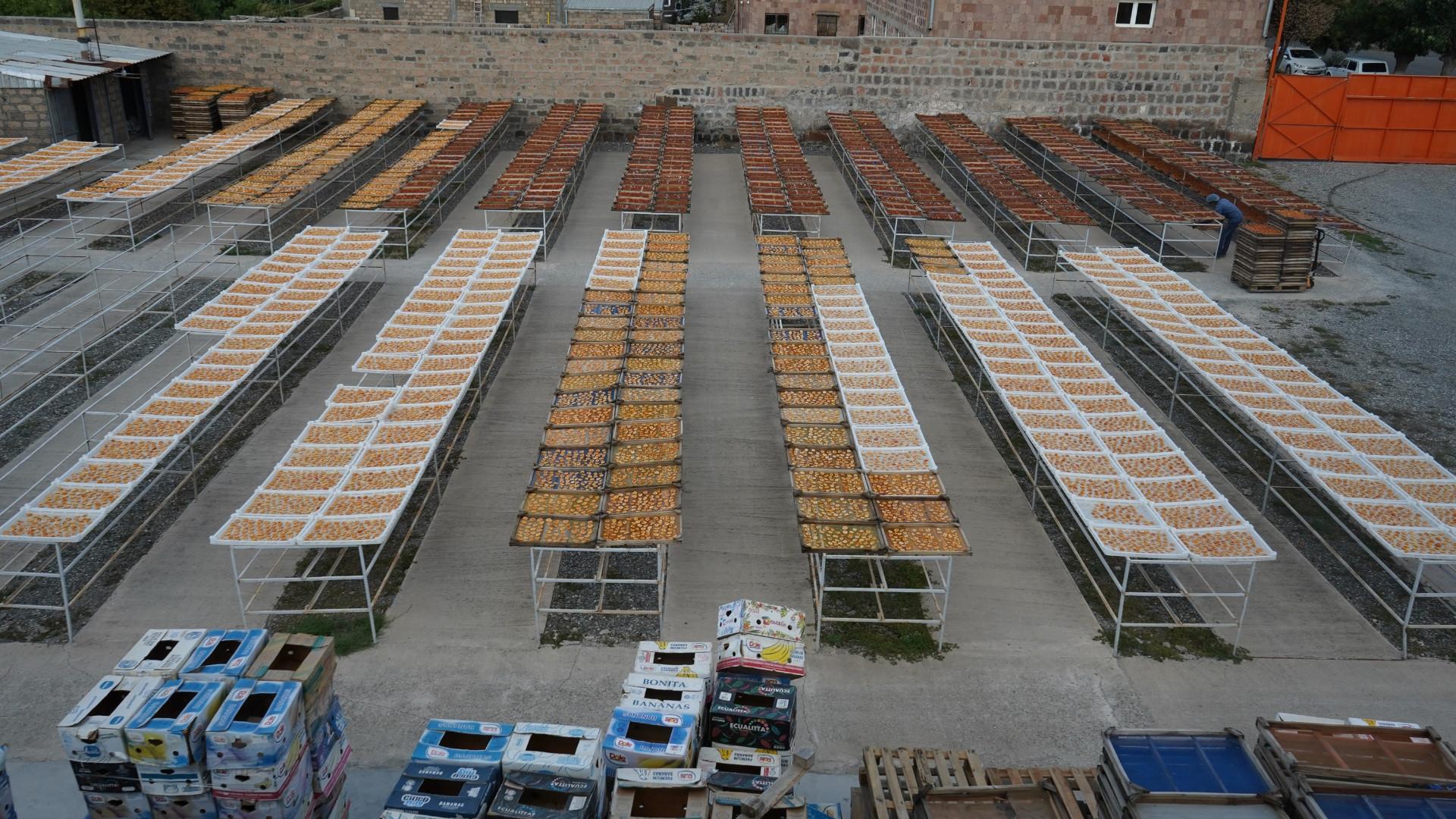
The Gourmet Lab plant in Armenia runs around the clock. People work hard, talk loudly, laugh; it feels like one large family. Artyom Tadevosyan shows us around, then settles on a wooden terrace looking out over the Ararat Valley. Below, in the late afternoon, peaches are drying in the sun.
He founded the company in 2015. He started with dried fruit before extending the range to frozen vegetables and premium preserves at a plant in the Armavir village of Bambakashat. The products are local. "This is not a commodity sold at a fixed price," he says. "It is a craft."
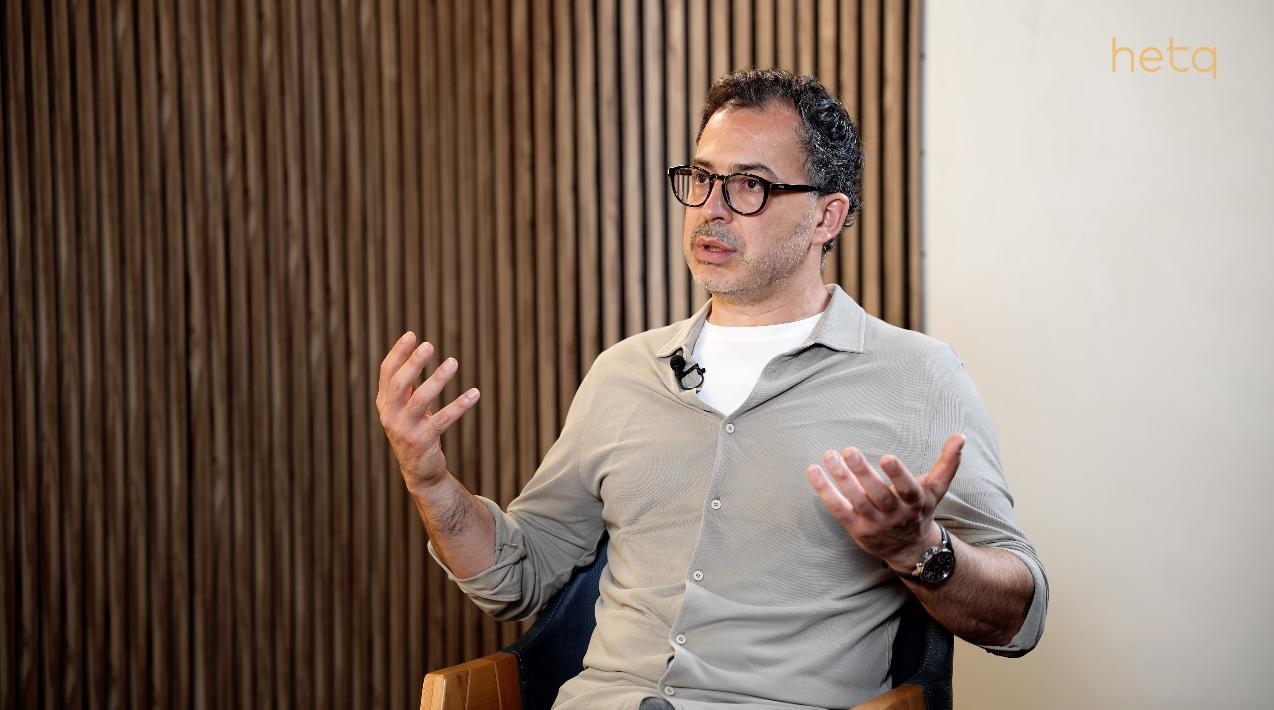
Founded in 2015, the company evolved from dried fruit into premium preserves and frozen vegetables. Every product is sourced locally and made with intent. As the founder puts it: "This is not a commodity sold at a fixed price. It is a craft."
Ninety percent of his company's output used to go to Russia. On June 2, a sudden embargo shattered Armenia's agricultural sector. Russia’s phytosanitary watchdog, Rosselkhoznadzor, banned all Armenian grapes and stone fruits including peaches, cherries, and apricots just days before the harvest. The blockade cut off tens of thousands of local farmers from what was their only export market.
It was a record crop. The peaches were ripe on the trees, the packaging was on order, and ties with Russian buyers went back ten years. Then, in an instant, the market vanished.
Unlike his peers, Tadevosyan has a temporary reprieve: dried fruit keeps, allowing him to wait out the storm. Yet, the stakes remain absolute. He could still lose everything, and around him, neighbouring companies are already shutting down.
Anatomy of a Squeeze
June 2 was not an isolated incident. It was the fifth of a series of measures taken by Russia targeting Armenia sourced products.
The first began on May 22, targeting cut flowers. On May 23, Jermuk mineral water, two wines and a brandy were banned. What began as a targeted restriction rapidly escalated into a total trade blockade. On May 30, Moscow banned Armenian tomatoes, cucumbers, peppers, herbs, and strawberries, alleging 181 cases of contamination since the start of the year. Within days, the embargo swelled: grapes and stone fruits were blocked on June 2, followed by potatoes, eggplants, pome fruits, and dried fruits on June 3 over alleged pest detections. By June 12, Russia placed every single Armenian agricultural product under strict quarantine, declaring Armenia’s plant protection service entirely incompetent.
This rolling embargo relies on three precise mechanisms. First, it targets what perishes; because a peach cannot wait out a bureaucratic dispute in storage, the financial ruin for the exporter is instant and irreversible.
Second, it systematically seals every exit; the June 12 escalation cut off not just bilateral trade with Russia, but critical overland transit to fallback markets in Belarus and Kazakhstan.
Finally, the timing. Grapes and stone fruit were banned on June 2. Armenians went to the polls on June 7. Taken together, these measures are designed to destroy the Armenian economy, a punishment imposed by Moscow in response to the growing closeness between Europe and Pashinyan's government.
Two European Lifelines
With the Russian market slammed shut, the European Union stepped in with a two-pronged response: direct financial aid and immediate tariff cuts.
The first was €52 million euros, announced in early June by Ursula von der Leyen. Brussels swiftly deployed €52 million in budget support, disbursing €34 million within two weeks and announcing the final €18 million in Yerevan on July 2. Rather than directly compensating individual farmers, this state funding is strictly earmarked to upgrade Armenia's export infrastructure. The capital targets the structural tools required to pivot toward Western markets: purchasing refrigerated logistics trucks, funding expensive European safety certifications, and sponsoring pavilions at international trade fairs where new contracts are secured.
The second concerns tariffs. Today, an Armenian exporter selling peaches in the European Union pays a duty at the border. A Spanish grower pays nothing: inside the EU, goods move without customs duties. Consequently, Armenian fruit hits European shelves with a double disadvantage: higher prices and longer transit distances.
This is what the EU Commission proposes to correct with what it calls autonomous trade measures: scrapping duties on close to eighty percent of Armenian products, including most of the fresh fruit, vegetables and plants that used to go to Russia. Because these trade benefits are autonomous, the EU granted them unilaterally, demanding nothing in return. It is an extraordinary diplomatic gesture rather than a negotiated treaty, running for two years and costing the EU under €3 million annually in lost customs duties. Strikingly, Armenia is the first non-candidate nation without a free trade agreement to receive such a privilege.
An arrangement meant to last two years is of little use here. Tadevosyan says that building relationships, a sales structure and a contact book can take many long years. It is precisely this mismatch that worries Armenian exporters.
"It Is Not Money We Need"
Tadevosyan produces dried peaches. Even before the crisis hit, his products already utilized the maximum market access Brussels could offer, with established export lines running into France, Germany, and Romania.
The tariff waivers have failed to move the needle on his daily sales. He says that the average French shopper will not reach for an Armenian brand they have never heard of.
“Europeans have no familiarity with Armenian products the way people in Russia do. With no demand, the supermarket will not take the risk of listing the product. For now, European retailers have no reason at all to collaborate with Armenian producers."
The fundamental issue is not the cost of market entry; it is the total lack of an established sales channel. Building a retail route into Europe takes a decade or more of meticulous relationship-building. Furthermore, Western retail demands an unparalleled level of logistical precision sending a freight truck to Europe is an entirely different universe than sending one to Russia.
What Tadevosyan wants from Brussels is neither a cheque nor an exemption, but business contacts: B2B meetings between European buyers and Armenian producers, cooperation along the whole chain rather than at its customs end alone. The money being paid out now, he says, only targets the short term.
"What we need are European buyers and distributors." He is looking, and he wants this in print, for people willing to become his distributors in Europe.
The groundwork has already been laid at the ministerial level. In late June, Armenia’s Economy Minister Gevorg Papoyan and the French ambassador to Armenia discussed a framework to bridge the gap: B2B networking events, stronger corporate ties, and marketing campaigns to build French consumer awareness. Two months later, the immediate demands of Ararat Valley producers mirror that exact agenda, underscoring the urgent need to turn diplomatic talk into practical retail channels.
France cannot open its market on its own: trade policy is the exclusive purview of the European Union. On paper, Paris cannot grant any tariff preference on its own accord. What remains are public financing, trade missions and access to retail buying groups, which is precisely what Tadevosyan is asking for.
Tadevosyan believes European governments will not be the ones to save Armenian agriculture. It falls to the Armenian diaspora in Europe to find the partners and the distributors. If they want to help, he says, the moment is now.
His company will attend the SIAL international food fair next month in Paris. Tadevosyan hopes to find buyers for his products there.
Write a comment