 Videos
 Photos


Pashinyan Champions 'TRIPP' Railway and Demands EAEU Market Reforms at Summit
YEREVAN - Armenian PM Nikol Pashinyan today called for a turning point in regional connectivity while simultaneously demanding the removal of stubborn trade barriers during his address to the Eurasian Intergovernmental Council.
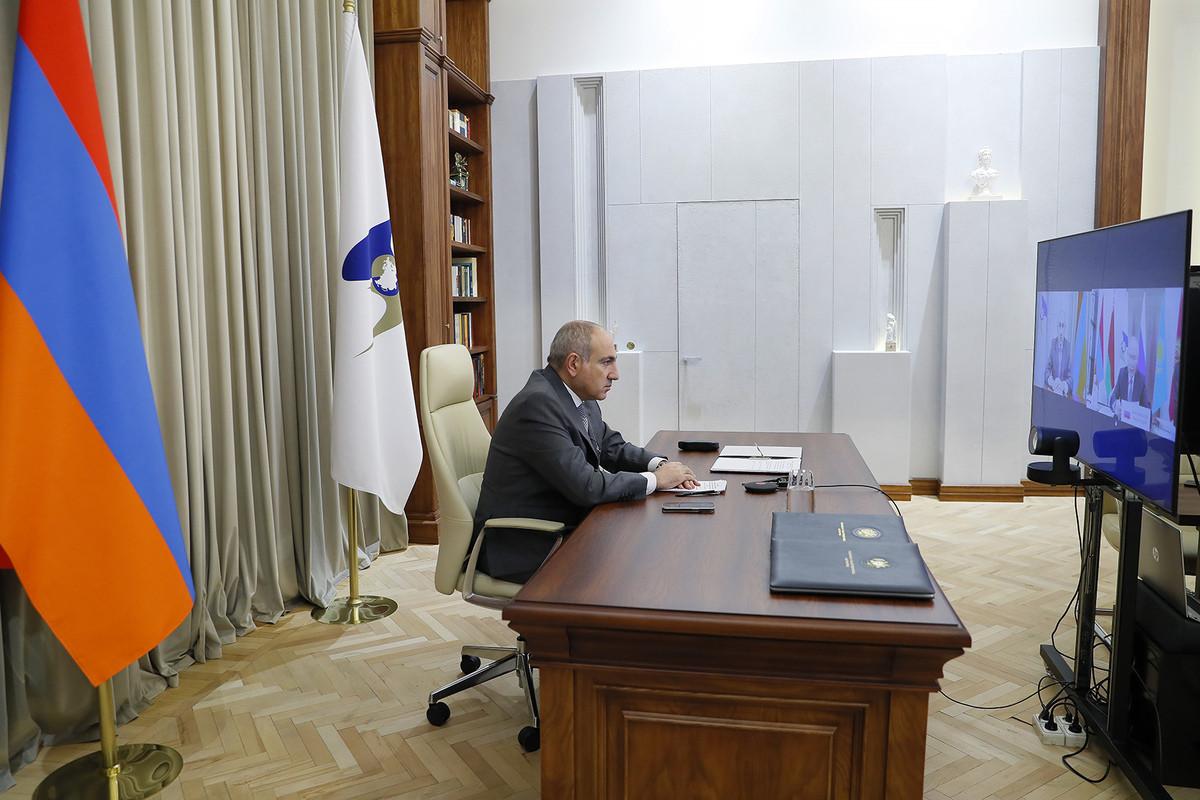
Speaking via videoconference, Pashinyan balanced a forward-looking vision for South Caucasus transit with sharp critiques regarding the slow pace of economic integration within the Eurasian Economic Union (EAEU).
A central focus of the prime minister's address was the Trump Route for International Peace and Prosperity (TRIPP), a core component of the Armenian government’s broader "Crossroads of Peace" initiative. Pashinyan stated that the TRIPP project holds the key to restoring direct railway communication between Armenia and Azerbaijan, a milestone made possible by ongoing peace negotiations.
Beyond bilateral ties, Pashinyan framed TRIPP as a transformative geopolitical asset that will integrate Armenia into the wider international rail network. The project is designed to establish a vital transit corridor linking the Persian Gulf to the Black Sea.
“This will become a landmark event in the field of transport links, a turning point for Armenia, Azerbaijan, Georgia, and Iran,” Pashinyan stated. He later shared with council members that specific "nuances" regarding the unblocking of regional transit networks were discussed in a closed session, expressing optimism for upcoming decisions aimed at maximizing the efficiency of Armenia's domestic rail system.
However, the tone shifted as Pashinyan addressed the domestic realities of the EAEU common market. While reaffirming Armenia's commitment to the core tenets of the union—specifically the free movement of goods, services, capital, and labor—Pashinyan expressed blunt dissatisfaction with the current state of implementation.
Reflecting on the time passed since the council's previous session in Cholpon-Ata, Kyrgyzstan, Pashinyan noted that "unfortunately, no significant progress has been achieved on a number of existing issues." He pointed directly to lingering administrative obstacles and restrictions that continue to complicate and restrict the export and transit of Armenian products.
Pashinyan concluded with a call to action, urging member states to engage in a more constructive dialogue to align market practices with EAEU law. Resolving these regulatory bottlenecks, he argued, is vital to securing predictable trade flows and ensuring economic stability for all participants in the bloc.
Write a comment