 Videos
 Photos


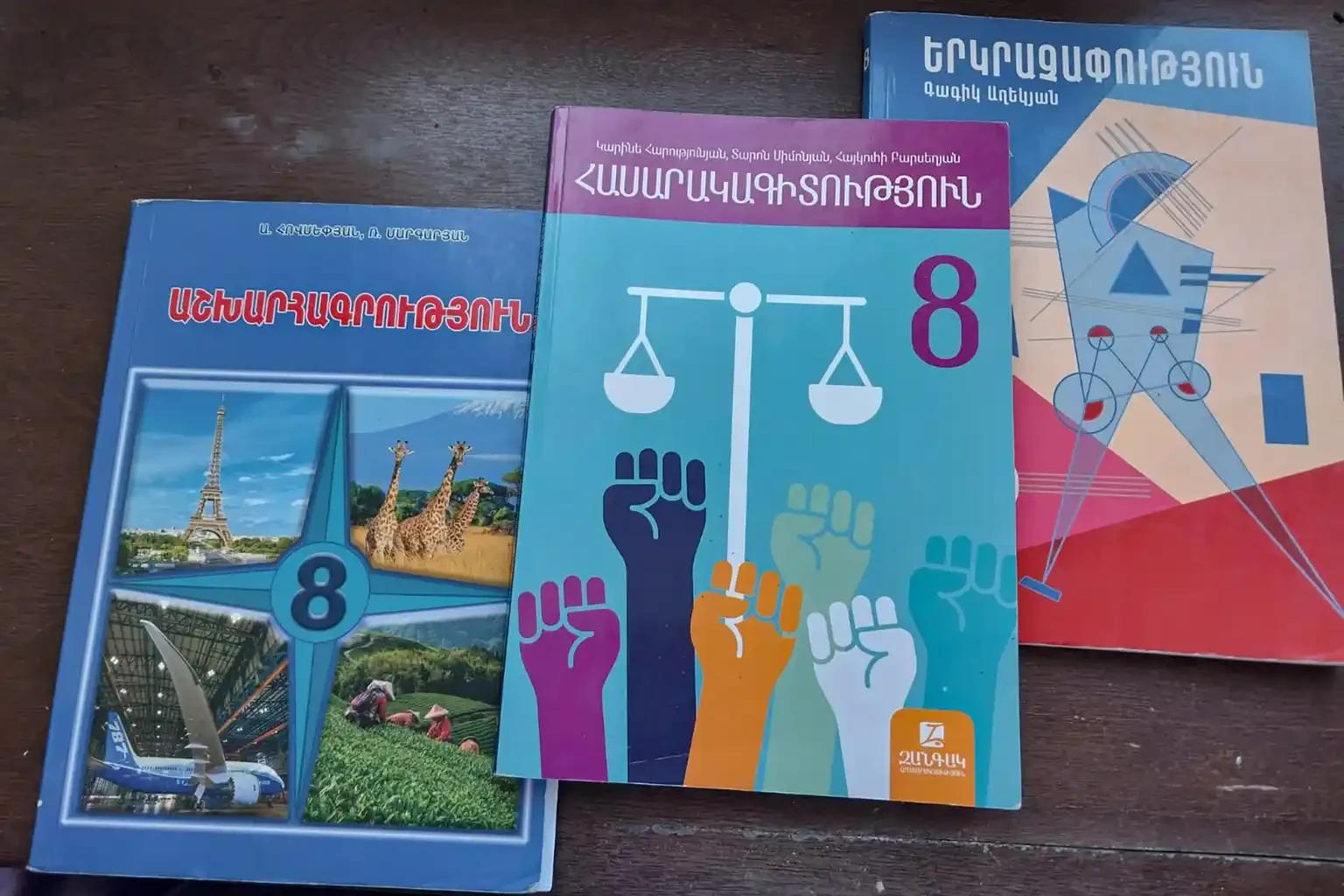
Mapping the Words: Armenia Introduces Digital Tool to Solve Textbook Readability Crisis
In response to a stark national crisis in functional literacy, Armenia’s Ministry of Education, Science, Culture and Sport (MoESCS) has proposed a new quality-control mechanism to audit the linguistic accessibility of school textbooks.
The draft policy, currently hosted on the government's unified website for draft legal acts for public consultation, aims to establish a systematic approach to textbook evaluation, ensuring that educational content is structurally understandable for students.
The Proposed "Mechanism" Explained
The core of the proposed framework is an automated text-readability scale and digital testing tool developed by Armenia’s Language Committee. Moving away from subjective textbook reviews, the mechanism relies on algorithmically driven linguistic diagnostics to optimize text structures:
- The Diagnostic Tool: The software natively processes Armenian script to calculate a localized readability index. It parses text files based on hard mathematical parameters: sentence complexity, average word length, and vocabulary clarity.
- The Evaluation Protocol: The numeric score generated by the tool serves a supportive, non-punitive role. A poor readability score cannot be used as an outright justification to reject an author's or publisher's educational material.
- The Revision Window: If a text falls outside acceptable readability parameters, the designated subject-specific commission flags the dense sections. Authors are granted a strict timeline of up to ten working days to simplify the syntax and vocabulary. These edits must be executed while strictly maintaining scientific accuracy, content integrity, and compliance with the State Standard for General Education.
Driving Force: The Stark Reality of PISA Findings
The policy push follows deep structural anxieties fueled by the newly released findings from the Organisation for Economic Co-operation and Development's (OECD) Programme for International Student Assessment (PISA). Under the global PISA standard, reading is tracked not as simple phonetic decoding, but as a student’s cognitive capacity to understand, evaluate, utilize, and reflect on written information.
Armenia's baseline results paint a sobering picture of the public education landscape:
Massive Reading Deficit: A staggering 81 percent of Armenian 15-year-olds fell below baseline proficiency (Level 2) in reading. Effectively, four out of five students cannot read functionally, failing to identify the main idea in a moderate-length text.
Low National Averages: Armenia's students achieved a reading score of just 348 points, trailing far behind the OECD international average of 461 points.
Regional Underperformance: The results placed Armenian students last in the South Caucasus region, scoring behind neighboring Georgia, Azerbaijan, and Turkey across all assessed subjects.
Absence of Advanced Learners: Virtually zero percent of students reached advanced reading proficiency (Level 5 or 6), meaning youth struggle heavily with abstract or counterintuitive concepts.
By standardizing the textual density of classroom materials before they go to print, the MoESCS aims to create more favorable conditions for information processing, transforming textbooks from a barrier into a gateway for foundational literacy.
Write a comment