 Videos
 Photos


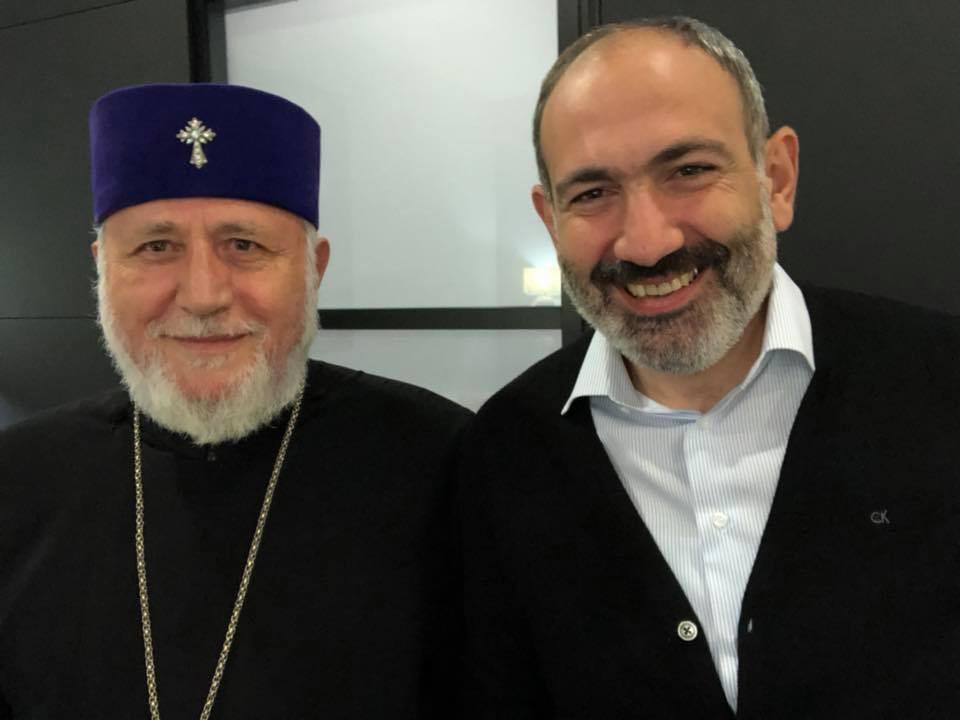
Pashinyan’s Civil Contract Party Monopolizes Parliamentary Probe into Armenian Apostolic Church "Crisis"
YEREVAN — The Armenian National Assembly has approved the composition of a controversial new parliamentary inquiry commission tasked with examining what the government labels a "deep, systemic crisis" within the Armenian Apostolic Holy Church.
According to the official mandate, the commission is tasked with investigating a structural crisis "resulting from the activities of certain clergy members" and an alleged "failure of the Armenian Apostolic Holy Church to fulfill its exceptional mission regarding the spiritual life of the Armenian people, the development of national culture, and the preservation of national identity."
In a move that has drawn immediate condemnation from legal experts and opposition lawmakers, all six seats on the commission have been filled exclusively by MPs from Prime Minister Nikol Pashinyan’s ruling Civil Contract faction. The total exclusion of outside voices or independent theological experts has fueled accusations that the commission is a political tool rather than an objective investigative body.
The Context: Pashinyan’s Quest to "Reform" the Church
The establishment of this ruling-party commission is the latest step in a multi-stage campaign by the Pashinyan administration to forcibly overhaul the centuries-old church institution:
- The 2026–2031 Government Program Mandate: The push to restructure the church is explicitly written into the Pashinyan administration's official 2026–2031 state program, which labels church reform a "vital necessity". The official state agenda openly seeks the forced removal or retirement of Catholicos Karekin II (the supreme head of the church), the appointment of a state-backed interim authority, and the rewriting of the church’s historical statutes.
- The "Seized Church" Report: The commission’s investigation relies heavily on a September 24, 2026, government report published by the Prime Minister’s Office outlining sixteen alleged institutional failures. These range from financial opacity and arbitrary defrocking to accusations that the church is acting as a "state within a state" and spreading war propaganda by praying from the altars for the preservation of Artsakh. Pashinyan has publicly alleged that the church has been "seized" by an illegitimate clerical elite.
- Deepening Feud and Criminal Trials: The parliamentary probe follows a sharp escalation in tensions. In August 2026, Catholicos Karekin II and six senior bishops were put on criminal trial for abuse of power after refusing a civil court order to reinstate a pro-government defrocked bishop. The church has consistently denounced these prosecutions as an illegal state-sponsored anti-church campaign.
The Constitutional Paradox
The government’s ongoing legislative push to regulate inner-church affairs has sparked intense domestic backlash and created a stark governance paradox:
- Violation of Secularism: Critics argue that having Civil Contract MPs actively dictate church charters and demand leadership changes directly violates Article 17 of the Constitution of Armenia, which guarantees that the republic is a secular state where religious organizations must remain strictly separate from state governance.
- Political Weaponization of Faith: Legal experts note a growing contradiction in Pashinyan’s rhetoric. While his administration enforces policies that erode the traditional autonomy of the Mother See of Holy Etchmiadzin, Pashinyan frequently invokes deep religious imagery to appeal to traditional voters. Just days before the commission's launch, Pashinyan delivered a heavily theological address at Armenia's Second Prayer Breakfast, declaring the nation to be a "promised land granted by God" to legitimize his highly contested border-delimitation frameworks.
By leveraging an all-ruling-party commission to force legislative changes on an independent religious institution, critics argue the administration is overriding the constitutional separation of church and state to bring Armenia's most influential spiritual body under direct executive oversight.
Write a comment