 Videos
 Photos


Controversial Amulsar Gold Mine Reopens in Armenia After Decade of Environmental Delays
YEREVAN — Armenia officially launched open-pit mining operations and smelted the first gold at the Amulsar gold mine on Saturday, October 10, 2026, marking the end of a highly controversial, decade-long saga of environmental blockades, political shifts, and financial setbacks.
Prime Minister Nikol Pashinyan attended the ceremonial inauguration in Armenia’s southeastern Vayots Dzor province, touring the site and witnessing the first gold pour. Pashinyan, who originally helped disrupt the multimillion-dollar project following Armenia's 2018 political transition, reversed his stance to praise the launch as a major "success story" that highlights the country's strengthening investment climate and economic potential.
"The mineral resources that turned into gold before our eyes today belong to the people of the Republic of Armenia," Pashinyan stated during his address, emphasizing that the project will generate critical funds for roads, schools, and local infrastructure.
The mine is operated by Lydian Armenia, a subsidiary of Lydian Canada Ventures. Under a negotiated agreement, the Armenian government holds a 12.5% equity stake in the project. According to Economy Minister Gevorg Papoyan, total investments in the asset have topped $750 million. A previous funding framework involving the Eurasian Development Bank fell through, prompting the government to approve a $150 million state guarantee for commercial bank borrowing to finalize construction.
The economic projections for the Amulsar deposit—Armenia's second-largest gold mine by volume—are substantial:
- Annual Output: The mine is projected to produce roughly 210,000 ounces (about 6.5 tons) of gold annually.
- State Revenue: Operations are expected to inject approximately $130 million each year into the state budget through taxes, duties, and royalties.
- Economic Growth: The Ministry of Economy estimates the project will expand Armenia's gross domestic product (GDP) by 1.5% to 2% annually.
- Employment: The project expects to generate up to 4,000 direct and indirect jobs while providing $7 million to $9 million annually to support local communities like Jermuk, Vayk, and Sisian.
The site is anticipated to reach full production capacity by the second quarter of 2027.
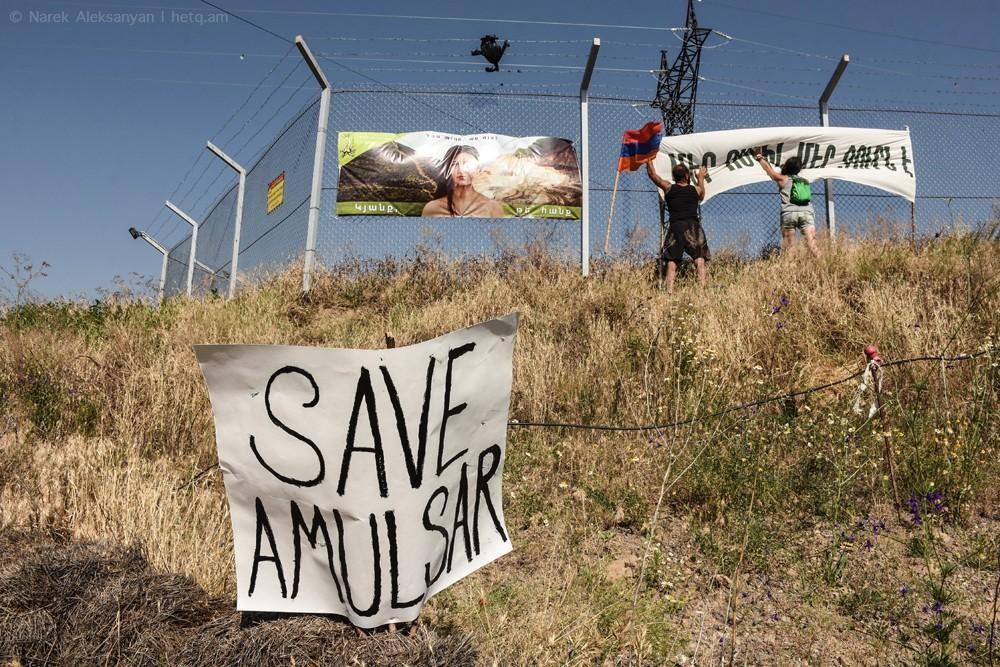
Despite the economic enthusiasm expressed by officials at the launch, the project continues to face sharp pushback from civil society. For years, local residents and environmentalists have warned that open-pit mining and cyanide heap leaching at Amulsar pose catastrophic risks to nearby water systems—including the mineral springs of the spa town Jermuk and Lake Sevan, Armenia’s largest freshwater reserve.
While Pashinyan pointed to the absolute absence of protests during the ribbon-cutting ceremony as evidence that ecological concerns had been resolved, local activist groups told reporters a different story. Members of the "Amulsar Without a Mine" initiative claimed that the government purposely withheld a public announcement about the ceremony, stating they only learned of the official launch by chance after the fact.
Lydian Armenia maintains that its operations utilize strict, state-of-the-art international environmental safeguards designed to prevent any cross-contamination of the local water tables. Moving forward, the project's long-term viability will depend on balancing its high-stakes economic promises against rigorous environmental compliance and persistent community scrutiny.
Write a comment