 Videos
 Photos


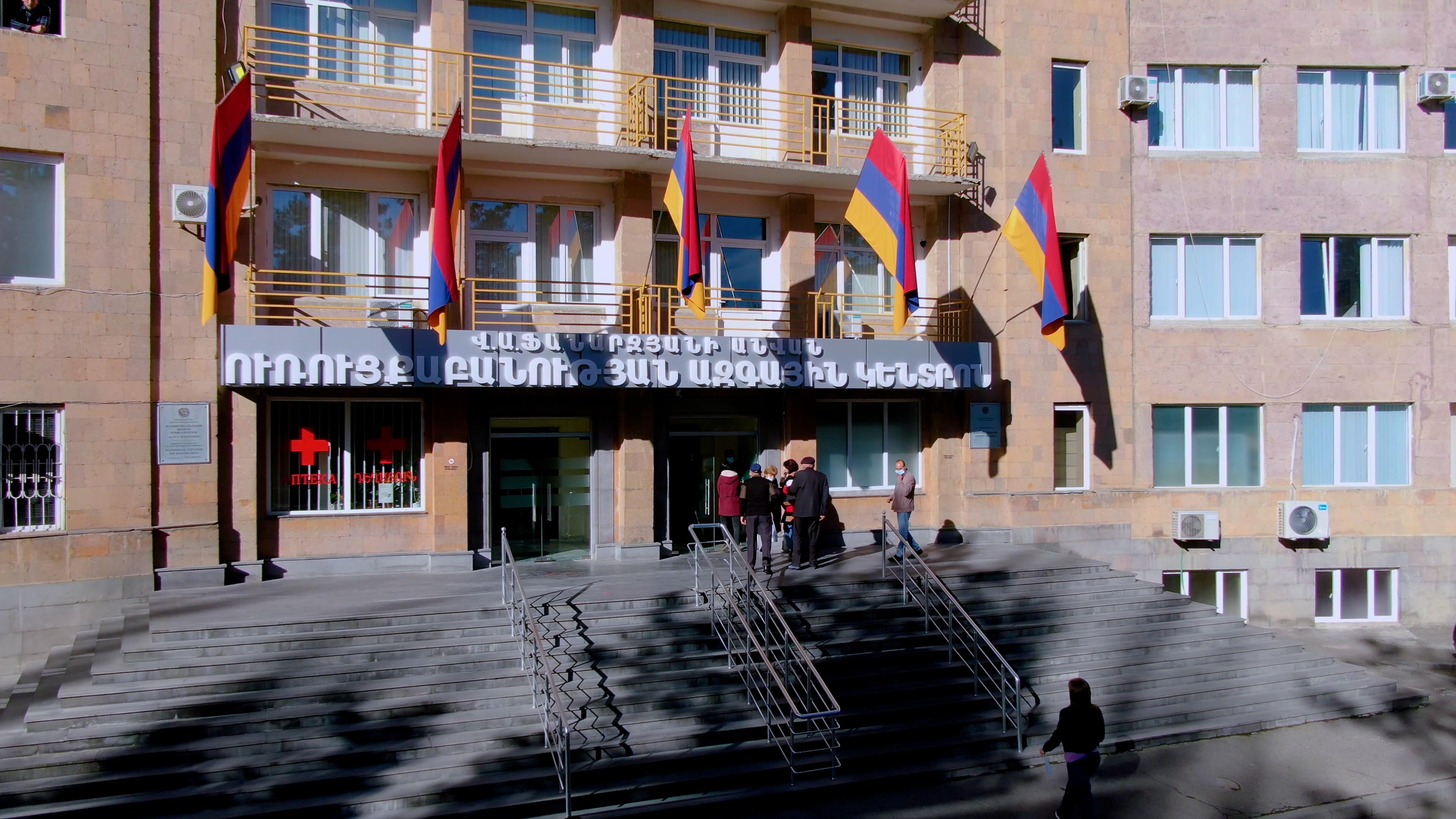
Inside Armenia's Universal Health Care Rollout: Some Left Behind by the Safety Net
By Anton Geissler (Hetq intern)
A patient from Armenia’s Armavir Province, called Ani Petrossian in this article to protect her identity, was diagnosed with cancer in 2024. She was referred to a hospital in Yerevan. After radiation therapy and surgery, she began her first session of chemotherapy at Yerevan’s V. A. Fanarjyan National Centre of Oncology in 2026.
The cost of the treatment ranges between AMD 260,000 (US$ 720) and 275,000 (US$ 762). Blood complications add an additional AMD 200,000 (US$ 554). One course consists of five-six sessions, and every twenty-one days, Petrossian must pay an additional AMD 15-25,000 (US$ 42-59) for a hospital bed. The total cost for one round of chemotherapy treatment amounts to around AMD 2 million (US$ 5539), including consultation fees.
Petrossian is insured under Universal Health Insurance, a new mandatory government insurance, launched on January 1, 2026. The related fund is supposed to cover chemotherapy treatment up to AMD 1.2 million (US$ 3323). However, Hetq’s interview with the patient reveals that no money is ever reimbursed, and all costs are paid out of pocket.
The Universal Health Insurance Fund states that the insurance is aimed at reducing the financial burden on vulnerable families who risk being pushed into poverty due to high out of pocket health costs, but for Petrossian, little has changed for the better.
“We have all asked the same question about why the insurance doesn't work,” Petrossian says. “When you ask why you are paying for the consultation, they answer that it is the normal procedure.” She has friends who have been through similar treatments and considers herself lucky, as the cost of chemotherapy drugs can be up to three times more expensive.
“Nobody uses the insurance. If anybody had used it, we would have known about it,” Petrossian tells Hetq.
One change she does note is related to the hospital's receipt system. Before 2026, she was issued with a check that stated the specific service or medicine paid for. Now, the receipt issued is not an official VAT invoice. Instead, there is nothing on the receipt stating what the payment was for. “‘It just says “Fanarjyan M/c’,” the name of the oncology clinic where the treatment was received.
Petrossian also tells Hetq about the procedure for buying medicines. “They send you to the second floor. To their own pharmacy. And you don’t even get a proper receipt.”
Other smaller issues also persist as patients, due to overcrowding, often don’t get their own room and must take medication in the hallway. Petrossian tells Hetq that the queues can take hours. “Once we had to wait until seven in the morning to get the treatment.”
Yerevan's Yeolyan Medical Centre
Some two kilometres away, in the Yeolyan Hematology and Oncology Centre, cancer specialist Samvel Bardakhchyan presents a different picture. Especially for cancer patients, because of the cost of the treatment, he estimated that “around 90% of patients would not receive treatment without the government.”
The doctor tells Hetq that the number of patients has increased by about 10%, compared to 2025. In his hospital, Hetq can confirm that the problem of overcrowding seems to persist, as patients are also taking chemotherapy drugs in the hallways.
However, Bardakhchyan believes that the system is working for his hospital. “More drugs are available for the patients and the treatment at the hospital is free.”
He admits that there have been times where drugs have run out, as the government has not had enough time to provide the required number of medicines. “In these periods, we ask the patient to buy their own drugs.”
Despite Universal Health Insurance, some patients are paying for treatment that should be included under the system, but the prevalence of this problem may be specific to each hospital.
As the insurance expands to include all Armenian citizens, Bardakhchyan believes that hospitals will come under increasing pressure. “We must be prepared for an increase in workload”, he tells Hetq, although the government’s plan to ensure this remains unclear.
The Fund’s Report
A report from the Universal Health Insurance Fund for the first half of 2026 states that the insurance now covers 1.8 million people, with around 762,000 receiving covered services. It claims that AMD 102.4 billion (US$ 284 million) has been reimbursed to local hospitals, clinics, and patients, around half of the fund’s total 2026 budget of 211 billion (US$ 584 million).
None of this money is used to pay for Petrossian’s treatment, even though she is included in the groups with mandatory insurance under stage 1 of the initiative.
As of January 2026, the state pays insurance premiums for those under 18, over 65, patients with disabilities, and other groups, while employees earning over AMD 200,001 (US$ 554) per month are insured through a mandatory fee of AMD 129,600 per year (US$ 359), paid for in parts by the beneficiaries themselves and their employers. Later stages aim to extend coverage to the entire population by January 2029, but with problems emerging at this early stage, the success of the program is open to questioning.
The report included other lapses as well. The reimbursements from all regions only amount to AMD 90.26 billion (US$ 250 million), AMD 12 billion (US$ 33 million) less than the fund’s stated total of AMD 102.4 billion (US$ 284 million). The Ministry of Health tells Hetq that the sum of total reimbursements from different regions does not include the cost of primary healthcare services, explaining the difference. However, according to the fund’s report, the reimbursements for primary healthcare are only AMD 8.6 billion (US$ 23.7 million) which does not account for the total difference.
Regional Disparities
In addition, the report reveals large geographic disparities in the number of reimbursements from the Universal Health Insurance Fund between Yerevan and other provinces.
While AMD 78.43 billion (US$ 217 million) was reimbursed in Yerevan, other provinces trail far behind, with reimbursements ranging between 0.36 billion (US$ 1.0 million) and 2.40 billion (US$ 6.6 million).
The Ministry of Health cites the population density of Yerevan and concentration of medical service providers in the capital as an explanation for the regional differences.
Yerevan does have the highest number of beneficiaries. 688,000 have received treatment here, compared to 69,000 in Shirak, the second largest number. However, the population density of the capital cannot alone explain the difference in total reimbursements.
Patients receiving treatment in Yerevan receive five times the number of reimbursements per person, compared to other provinces such as Ararat and Kotayk, and three times the more than Armavir, which has the second largest reimbursements per recipient.
Image of reimbursements per recipient:
Both the cost and number of services begin to explain this difference. Yerevan, again has the highest amount of reimbursements per service, translating to the highest cost of treatment.
Image of reimbursements per service:
In addition, recipients here have had the most services per person, amounting to around ten, compared to 3.4 in Shirak and 3.5 in Aragatsotn.
Image of number of services per beneficiary:
Age contributes to this disparity, as Yerevan has a higher number of people aged 65+, who received AMD 57 billion (US$ 158 million) from the Universal Health Insurance Fund, more than half the reimbursements. However, according to ARMSTAT, just 5% more elderly live in the capital compared to Ararat, the province with the youngest population. Age cannot alone explain the difference in reimbursements.
Instead, the data indicates that most patients covered under Universal Health Insurance are choosing to receive treatment in Yerevan.
Population statistics support this conclusion. Yerevan is the only region where the number of recipients is higher than the age groups insured by the state. According to ARMSTAT around 479,000 are under the age of eighteen or over the age of sixty-five in the capital, while the region reimbursed 688,000 patients. For comparison, in all other regions only a fraction of the population that should be insured by the state ever received reimbursements in their home regions, indicating that they are either not receiving reimbursements or traveling to Yerevan for treatment.
Bardakhchyan has patients from all over Armenia, further confirming this movement of patients. However, he rejects the notion that some patients are being prioritized. “For every patient, regardless of their place of residency, we prescribe the same treatment, and patients are getting the same reimbursements from the government.”
Still, while patients are treated equally, the concentration of healthcare services in Yerevan forms a geographic hindrance to equal access for provincial patients. Bardakhchyan estimated that “up to 90% are receiving their cancer treatment in Yerevan as the majority of doctors, equipment, MRI and PET-CT machines are concentrated here.” For chemotherapy, patients may have to travel up to 300 km every two to three weeks, adding transport and accommodation as a preventative out of pocket cost for patients outside Yerevan.
A Patient's Experience
Lillit Sargsyan, a resident of Yeghegnavan in Ararat Province, whose name has been changed to protect her privacy, confirmed the geographic boundaries to access healthcare. She tells Hetq that patients from her village must travel to Yerevan for most treatments due to the poor state of healthcare services in her home province. As Ararat and Artashat provincial hospitals lack equipment, patients often must take a taxi to Yerevan. “The trip only takes 40 minutes, but can cost up to AMD 8,000, which for many people, especially pensioners cannot afford.”
Ambulances are not an alternative. Sargsyan describes how they are not dependable and do not have any equipment. In addition, they can only take patients to provincial hospitals, while most patients want to go to Yerevan.
Yeghegnavan is close to central Yerevan, only fifty kilometres away. The regional barriers and price of transport that Sargsyan describes are multiplied by several factors for most other regional patients that live up to four hundred kilometres away.
Historical Development
The problem of healthcare concentration in Yerevan has been ongoing for several decades. Reports from the World Bank and WHO from 2013, 2019, and 2022 warn that much of the population outside the capital are excluded from quality healthcare, as a result of the post-Soviet closure of rural hospitals. In 2022, the WHO reported a higher concentration of healthcare workers in the capital, which had two times the number of nurses and five times the number of doctors per patient compared to other regions.
Another 2025 report by the Children of Armenia Fund and Yerevan State Medical University mentions distrust in rural healthcare workers as a reason for patients seeking medical care in the capital.
The Ministry of Health tells Hetq that proportionate regional development is one of their priorities. Initiatives, such as targeted clinical residencies and reimbursements for the tuition fees of regional health workers are intended to improve healthcare outside of Yerevan.
In addition, the Ministry states that fourteen medical institutions were constructed or improved in 2025, with work continuing in 2026.
Still, reimbursements in these areas trail the capital, although the Universal Health Insurance Foundation’s pilot program for preventative health examinations in Syunik province may be a step in the right direction.
Bardakhchyan describes progress in his twelve years as a cancer specialist. When he started working no chemotherapy medications were paid for by the government.
Still, Universal Health Insurance, designed to protect the most vulnerable of the population, does little to address regional disparities in the quality of healthcare. While the fund hails its success in extending coverage to half of Armenia’s population, patients such as Petrossian have received no benefits. The concentration of healthcare in Yerevan must be addressed to reach all patients equally in practice, while the success of the program relies on individual hospitals adhering to the Universal Health Insurance Fund’s guidelines.
Top photo: Wikipedia Commons, 2021
Write a comment