 Videos
 Photos


Rooted in Armenia’s Survival: How a Wartime Ecological Crisis Sparked a 10-Million-Tree Legacy
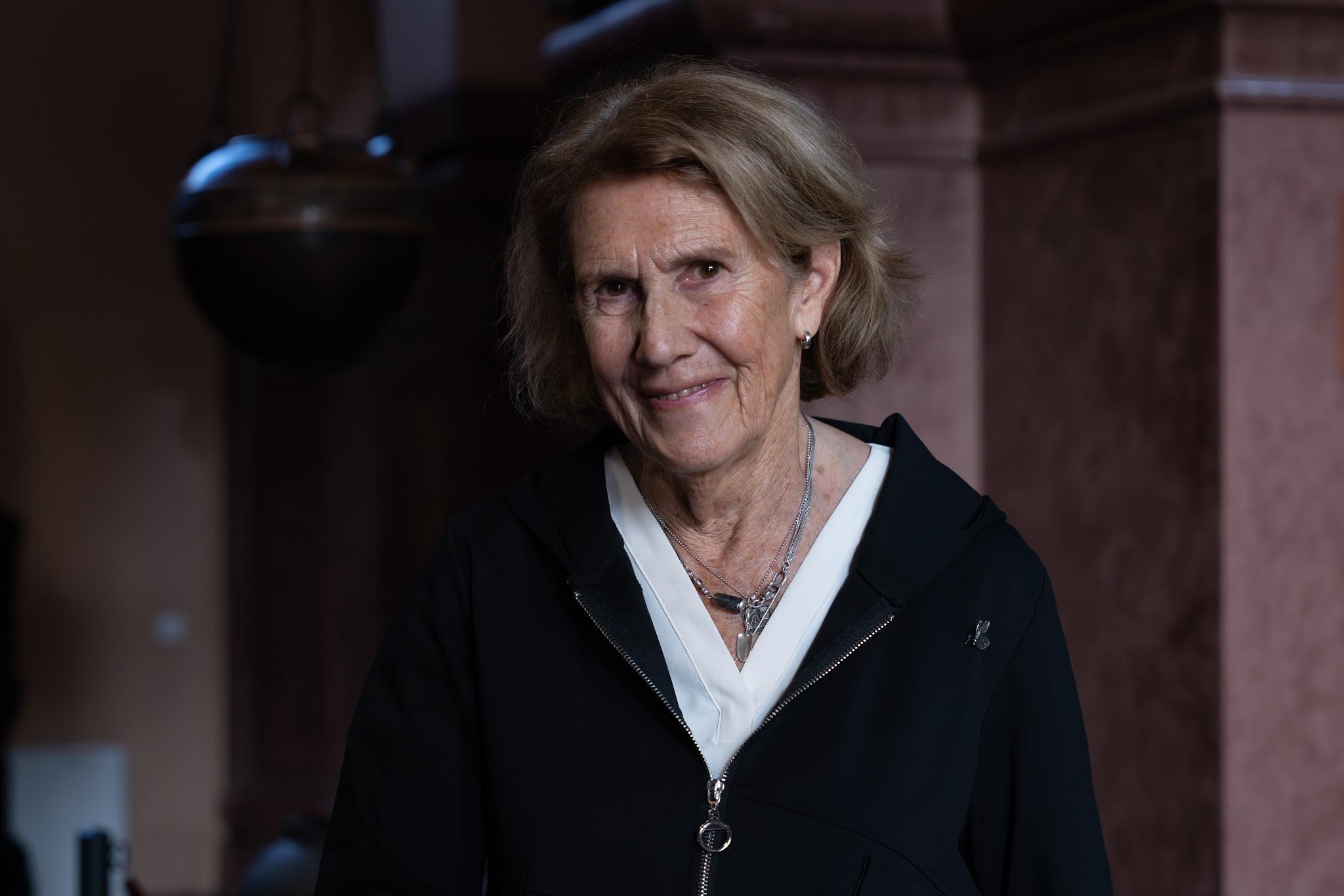
Carolyn Mugar looks out across the grounds of the Matenadaran, Armenia’s majestic repository of ancient manuscripts in Yerevan, a profound quiet settling over her. Just yesterday, she stood here to announce a fresh environmental chapter for a nation she has spent more than three decades reshaping. Today, the longtime President Emerita of the Armenian Assembly of America reflects on an environmental odyssey that began not with a pristine vision of nature, but with the raw, desperate struggle for human survival.
A Tragedy of Survival
More than thirty years ago, the South Caucasus was gripped by the devastating realities of the first Artsakh War (1991–1994). Trapped in a brutal blockade and facing a catastrophic energy vacuum following the 1989 Gyumri earthquake, the people of Armenia looked to their forests. Left with no other way to heat their homes or cook their food, families made a tragic but necessary choice. They picked up axes.
"It was a truly dramatic situation," Mugar recalls, looking back on the genesis of what would become the Armenia Tree Project (ATP). "Imagine a moment where people did not want to harm nature, but they were compelled to do so. It was a matter of survival."
The resulting denudation of the landscape sparked immense societal grief and friction. For Mugar and her late husband, John O’Connor, the sight of a nation consuming its own future to survive the winter was a call to action. While visiting dignitaries and diaspora members reacted with anger and indignation at the falling trees, Mugar saw a deeper psychological and ecological wound that needed healing.
She decided the best remedy was to plant.
Cultivating Behavioral Change
What began as a localized response to wartime devastation has blossomed into one of the most impactful environmental endeavors in Armenia’s modern history. Over the past thirty years, ATP has rooted more than ten million trees into Armenian soil, systematically restoring natural landscapes, stabilizing fragile ecosystems, and strengthening local communities.
For Mugar, the mission has never been purely aesthetic. In her view, environmental conservation is inextricably bound to a nation's core existence. "Environmental conservation cannot be separated from security or sovereignty," she asserts firmly.
Achieving this required shifting public consciousness. Over three decades of visiting Armenia, Mugar has witnessed a profound transformation in how people view green spaces, driven by ATP’s structured knowledge, media coverage, and specialized awareness campaigns targeting soil, water, and forests. Through everything from documentaries and children’s animations to in-person courses and summer schools, public awareness has skyrocketed.
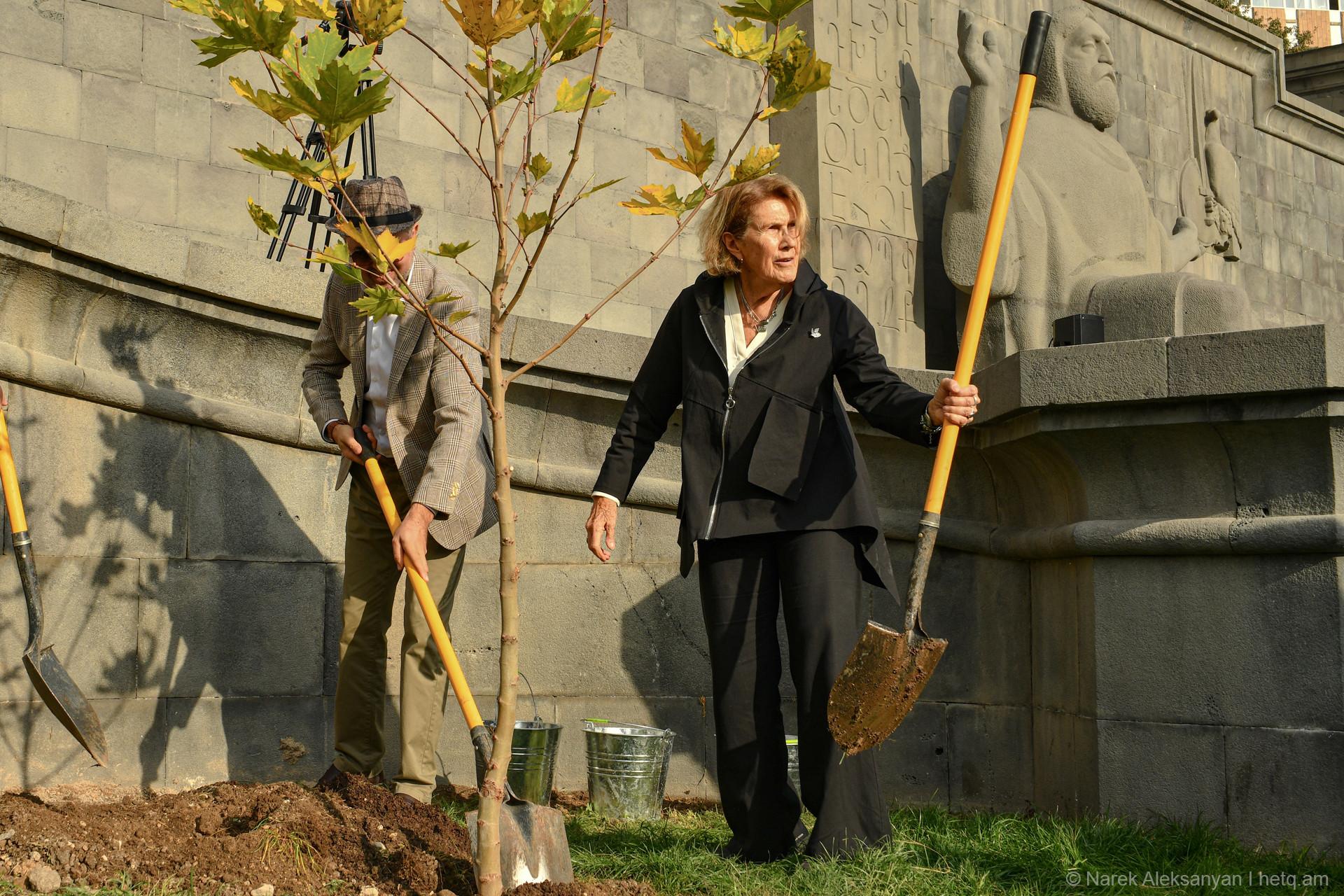
This rising consciousness is translating into a growing movement of hands-on participation. ATP's ranks are expanding to include an increasing number of corporate volunteers and dedicated individuals. "That said, this has not yet fully evolved into a culture," Mugar notes candidly.
Crucially, local residents are central to this evolution. Whenever ATP organizes a community planting event, the neighborhood invariably rolls up its sleeves. Before a single shovel hits the dirt, residents receive targeted education, so they fully understand the purpose behind the tree and how to care for it.
Deep Roots and Future Shards
The structural backbone of the project has also evolved dramatically. In the cash-strapped 1990s, the initiative relied almost entirely on the passion and pockets of the Armenian Diaspora. Today, the project boasts deep, institutional roots within the republic itself. Local financial backing has scaled up significantly, matching the dedication of international partners.
Yet, despite their massive success, Mugar remains grounded. ATP’s telling motto is “We don’t just plant trees; we restore nature, strengthen communities, and shape Armenia’s future,” but Mugar believes they are just getting started.
"I don’t want to make grand, lofty claims, but I would say that we have laid a very solid foundation and are still at the beginning of this journey," she says. "It is a long path, and I must once again highlight our environmental education programs and our work with youth and adolescents—because that is the very base that will enable us to traverse this path." She actively invites journalists and locals to speak with the children and the residents of communities where ATP is restoring pastures and planting forests, eager to hear their perspectives.
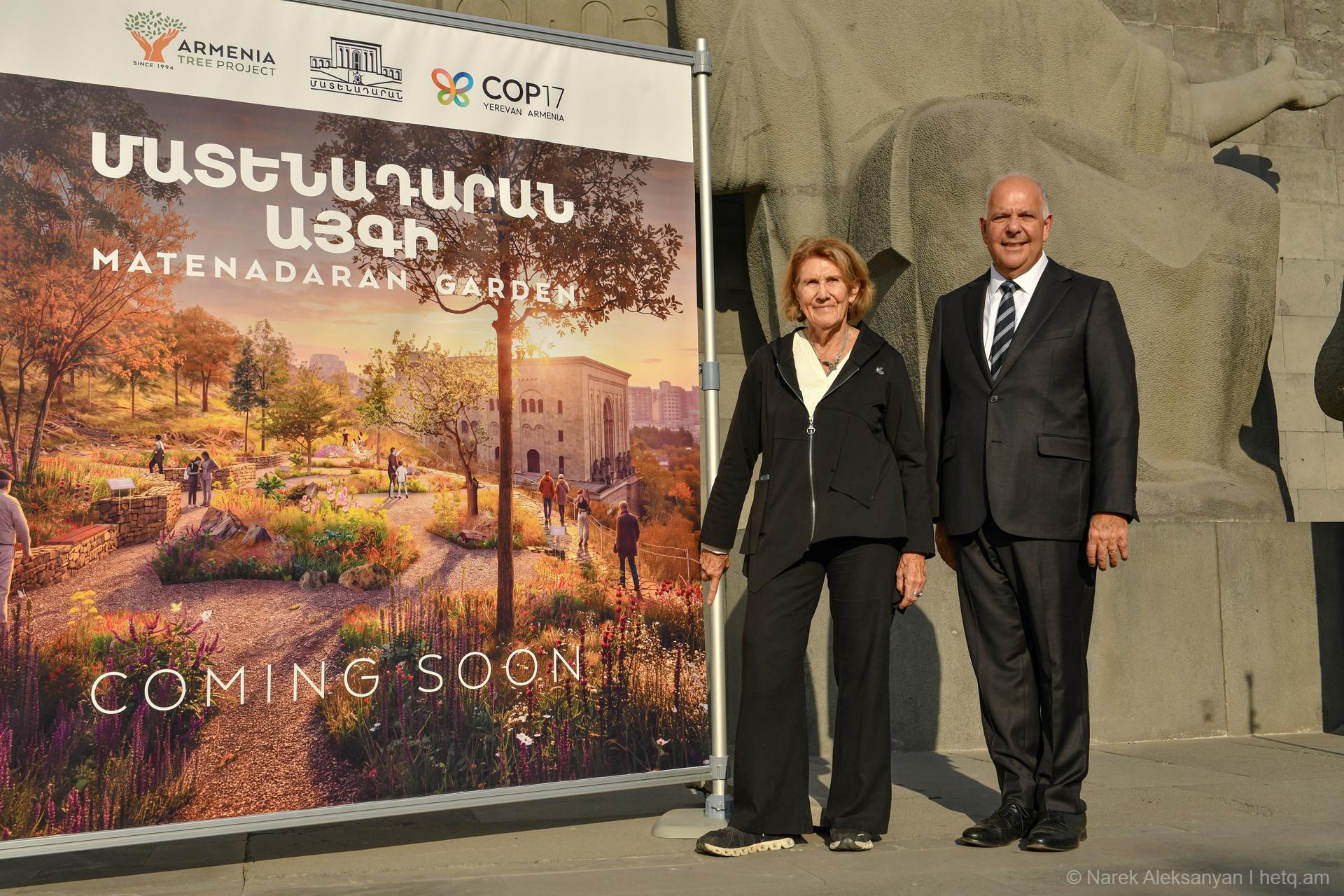
This journey has brought ATP full circle, back to the steps of the Matenadaran. The organization already runs a specialized workshop that produces restoration paper used by the institute to preserve Armenia's written heritage. Yesterday, they announced their latest landmark initiative: the creation of a multifunctional garden on the institution's grounds.
The project finally realizes a vision held as far back as the 1970s by Levon Khachikyan, the founding director of the Institute of Armenian Manuscripts. For Mugar, the symbolism of building a garden here is profound.
"If there is one thing we wish to pass on to future generations, it is, perhaps, the root," Mugar says thoughtfully. "At the very core of our identity, the Matenadaran holds roots of knowledge and culture. We considered how to extend these roots—so that they might reach beyond the Matenadaran, while remaining firmly in the soil. It would be wonderful if those roots were also tangible—in the form of trees. Let these roots be planted to unite nature with the vast cultural and scientific wealth housed within."
A Convergence of Heritages
When asked about her own roots and what connects her so deeply to this soil, Mugar smiles, revealing a rich, dual heritage.
"My father was born in Kharpert in 1901," she shares. "He was still a child when he moved to the United States. My mother is American; she was born in the small town of Salem, near Boston—a place often called the 'City of Witches.'"
She laughs warmly, acknowledging the famous literary legends of her mother's hometown. "There is a popular legend that my mother’s family is connected to the Salem witches. So, I carry both within me—my Armenian roots from Kharpert and the witches from Salem!"
As Armenia continues to navigate complex geopolitical and environmental frontiers, the millions of trees stretching across its valleys stand as a living testament to Mugar's blended spirit of tenacity and magic. They serve as an enduring proof of a simple truth: even in the darkest winters of human conflict, the act of planting a seed is the ultimate declaration of sovereignty.
Top photo courtesy of Armenian Assembly of America
Other photos by Narek Aleksanyan
Comments (1)
Write a comment