 Videos
 Photos


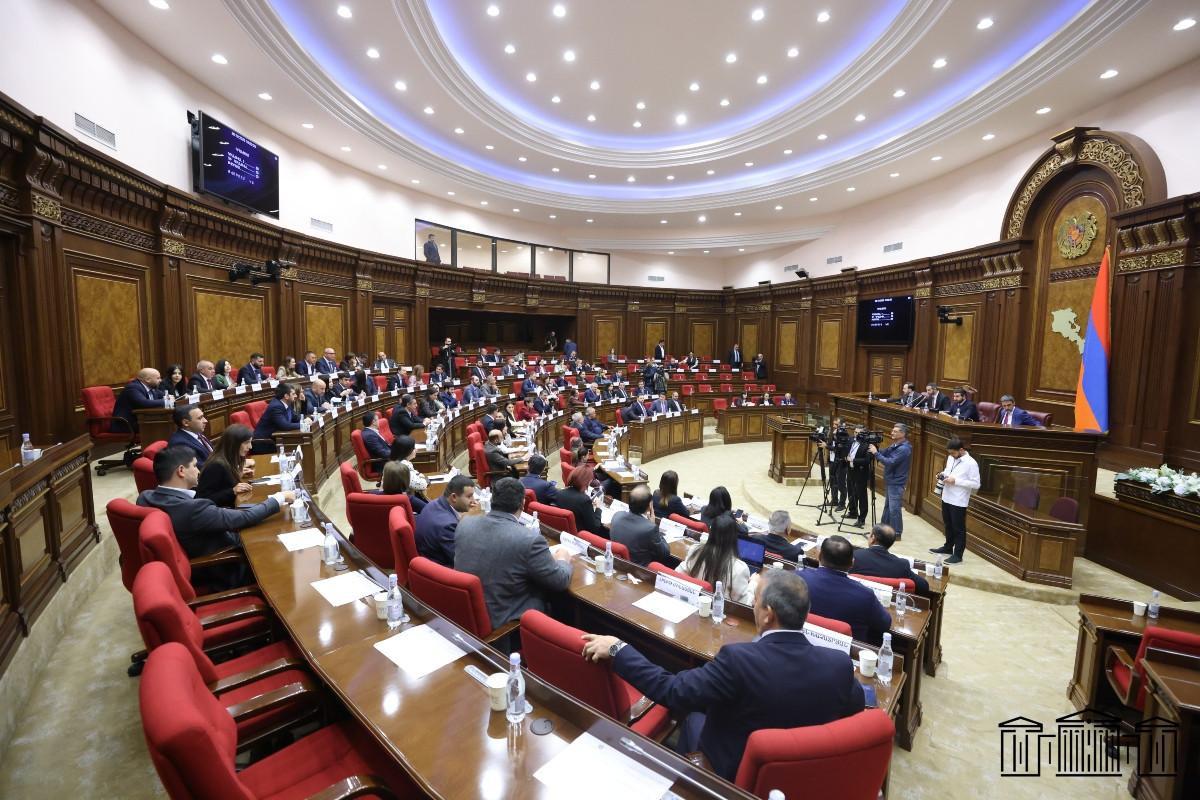
Armenian Parliament Ratifies "Board of Peace" Charter to Bolster Regional Diplomacy
YEREVAN — During its regular session on October 28, 2026, Armenia’s National Assembly voted to approve the draft law "On Ratifying the Charter of the Board of Peace," formally integrating the nation into a newly formed global stability initiative.
The bill passed with 92 votes in favor, 0 against, and 8 abstentions. The ruling Civil Contract faction alongside the opposition Strong Armenia faction voted in favor of the ratification, while the opposition Armenia (Hayastan) faction chose to abstain.
Lawmakers engaged in extensive debate over the document, with various parliamentary factions presenting their positions on the nation's accession to the international body. Speaking on behalf of the ruling "Civil Contract" faction, Nazeli Baghdasaryan emphasized that joining the organization is a core pillar of the country's proactive diplomacy.
"Armenia’s accession to the Peace Council is not merely a process of ratifying the charter of an international organization," Baghdasaryan stated, "but rather an important component of the country’s foreign policy and regional peace efforts."
Baghdasaryan underscored the broader strategic importance of the ratification, aligning it with Armenia's long-term security goals. Broad political alignment was evident as opposition factions also supported the measure. Tigran Abrahamyan, Secretary of the Strong Armenia faction, announced during the prior day's session that his faction intended to vote in favor of the draft law.
A New Framework for Regional Stability
The Peace Council (officially known as the Board of Peace) is a new international organization established in January 2026. Initiated and chaired by U.S. President Donald Trump, the framework for the organization was first conceptualized during the Middle East Summit in Sharm El-Sheikh, Egypt, in October 2025. It was officially launched on January 22, 2026, during the World Economic Forum in Davos, Switzerland, where Armenian Prime Minister Nikol Pashinyan signed its founding charter.
Originally designed as part of a post-war stabilization plan for the Gaza Strip, the council's broader global mandate is to promote international stability, develop peace-building best practices, and oversee the restoration of governance and economic connectivity in conflict-affected regions.
The body currently consists of twenty-eight-member states serving renewable three-year terms. Its executive committee features prominent figures, including U.S. Secretary of State Marco Rubio, advisor Jared Kushner, and former UK Prime Minister Tony Blair.
Write a comment