 Videos
 Photos


The Micro-Battlefields of COP17: Inside Armenia’s Fight for Tradition and Environmental Survival
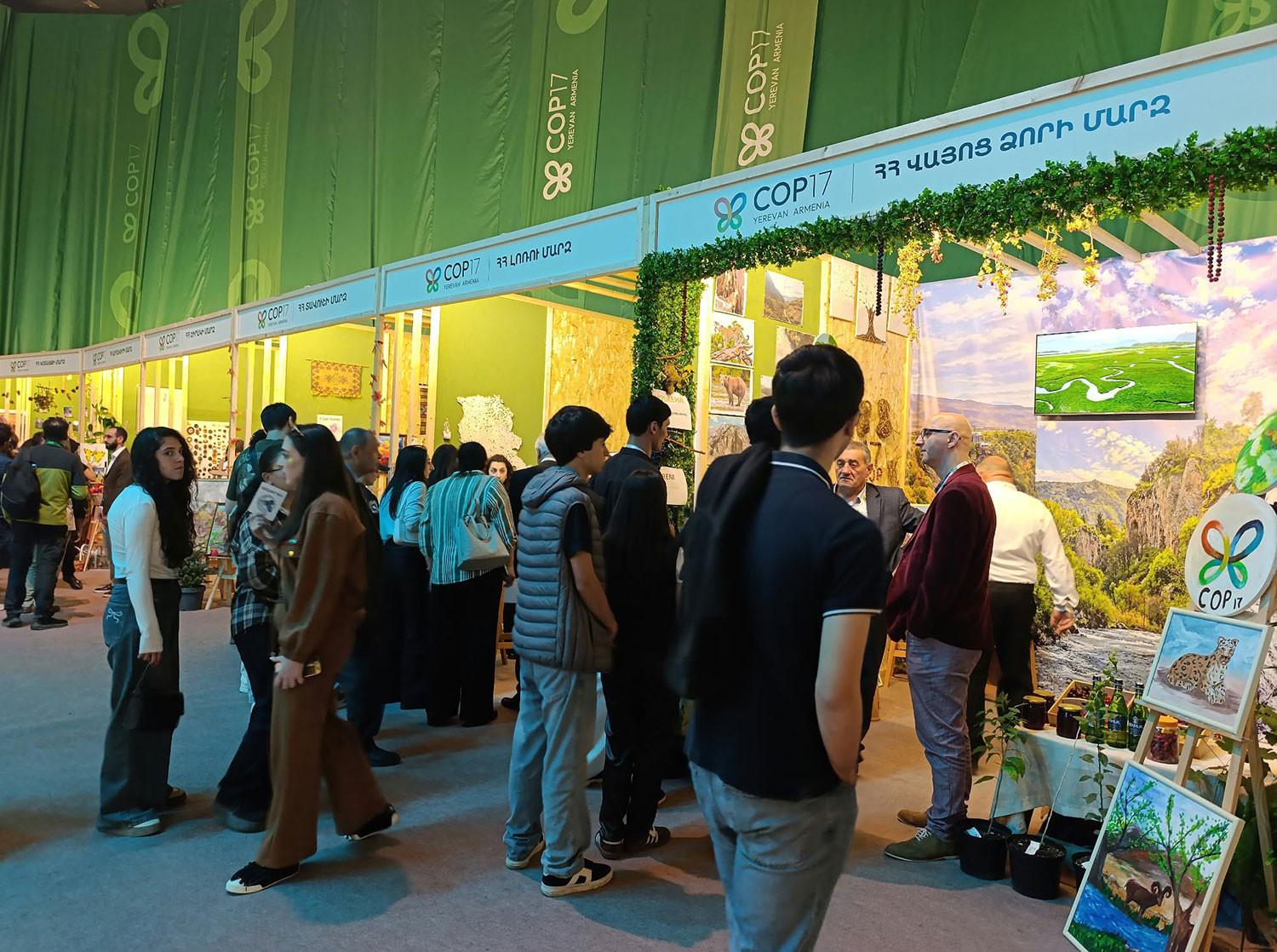
Stepping into the bustling Green Zone of the COP17 summit underway in Yerevan you are immediately met with a vivid tapestry of sights and scents. Here, the provincial pavilions serve as an urgent cultural and environmental crossroads, designed to elevate regional voices, exchange critical insights, and place local biodiversity onto the global stage.
Beyond the rows of amber honey, rich preserves, and indigenous crafts, however, lies a deeper story. These exhibitions are not just marketplaces; they are micro-battlefields where local communities are fighting to preserve their natural heritage. To understand the stakes, Hetq caught up with representatives from Armenia's provinces to explore the delicate balance between tradition and survival.
The Buzz of Danger in Syunik
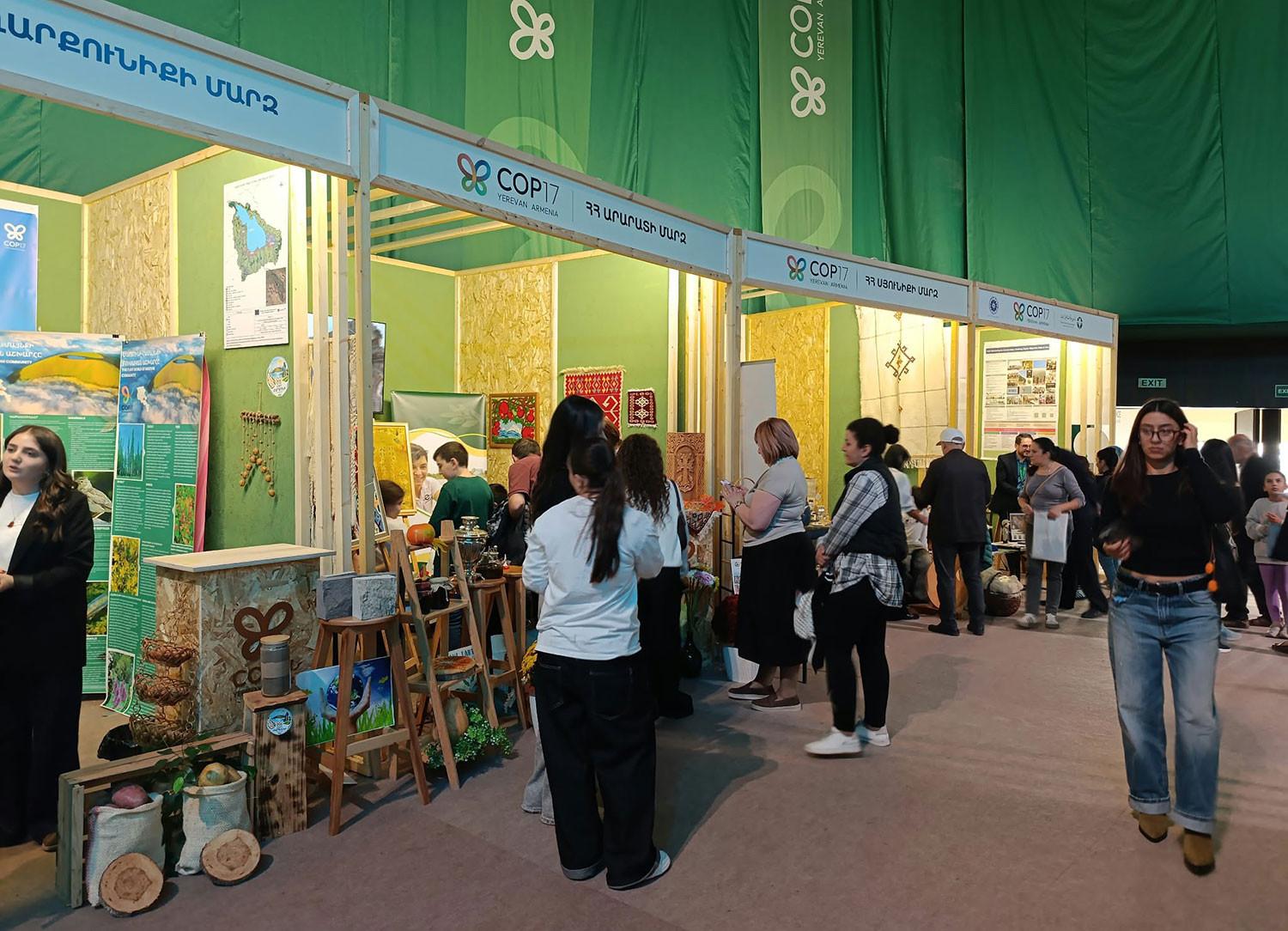
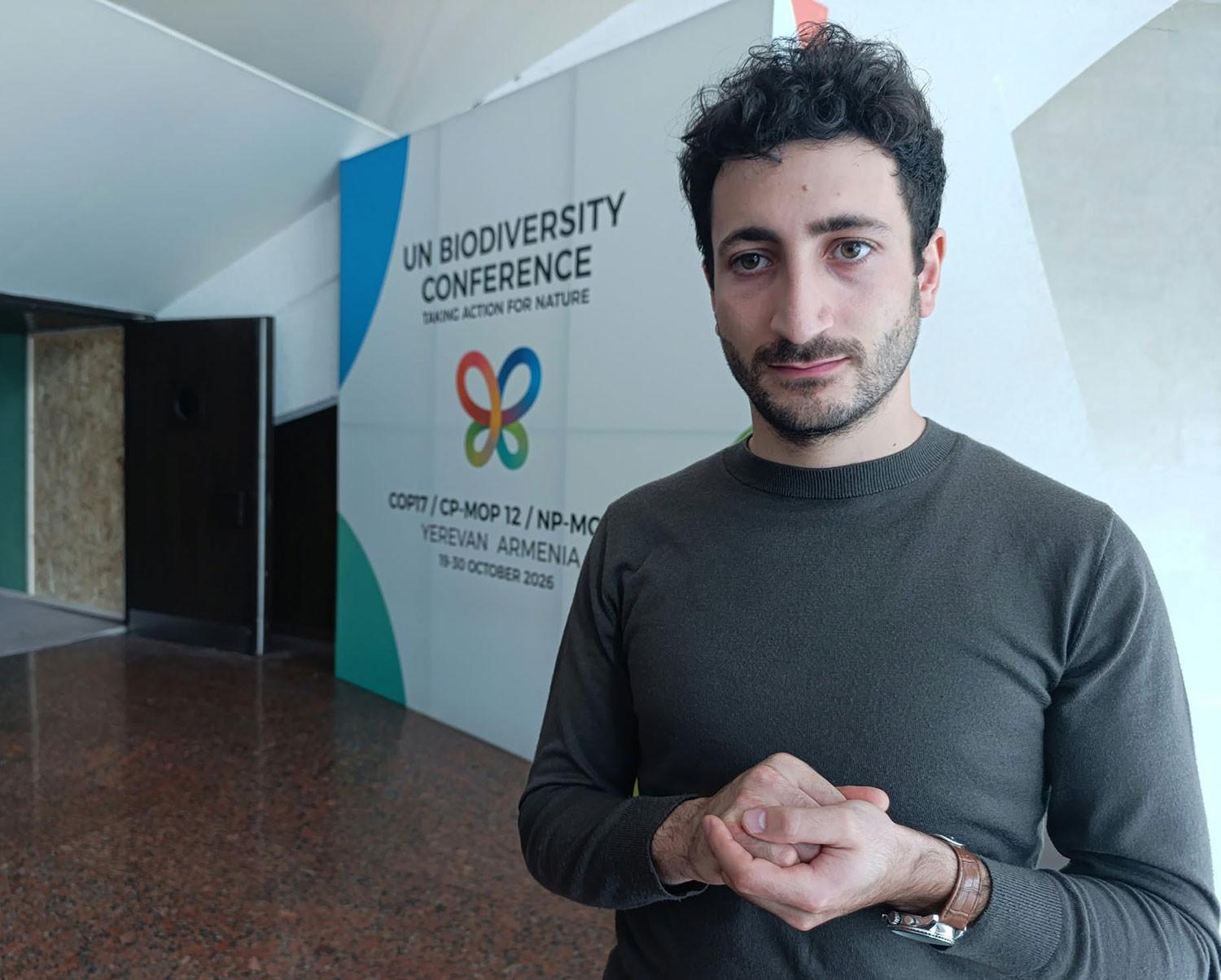
At the Syunik Province pavilion, the display is a celebration of the earth: jars of mountain honey, volcanic basalt, red clay, and clear mineral waters. But for Artur Grigoryan, a specialist in Arabic studies and IT professional who spends half his week tending beehives in Sisian, these products represent a vulnerable legacy. Beekeeping has defined his family for a century, passed down through generations. Now, he warns that legacy is under siege.
"COP17 is the right arena to finally address the crises threatening our ecology," Grigoryan says, noting that the challenges facing apiculture run deep.
The first threat is global: a relentless rise in bee diseases that is decimating colonies worldwide. The second is a systemic wound closer to home, driven by a lack of coordination. Grigoryan points out that Armenia desperately lacks a unified, managing body to protect and advocate for the sector—a stark contrast to the robust beekeeping unions that safeguard the trade across Europe. Without structured support, local honey producers are left to weather environmental changes and market pressures entirely on their own.
A third, more pervasive issue is an internal knowledge gap. Grigoryan notes that many contemporary beekeepers continue to rely strictly on traditional, ancestral methods—approaches that simply cannot withstand modern ecological pressures. Chief among those pressures is the unprofessional application of agricultural chemicals.
Pesticides used on nearby plants are devastating honey quality and driving up bee mortality rates. Grigoryan explains that gardeners and orchard owners often take an amateurish approach in the spring—a critical window for colony development—by spraying chemicals during the day when bees are at their most active.
The root of the problem is a complete lack of regulatory oversight. "There are no restrictions on the use of pesticides in Armenia," Grigoryan laments. "A person can walk into a shop without ever consulting an agronomist, and a non-specialist employee might simply recommend which pesticide to buy. It could be a highly toxic substance that lingers in fruits, plants, and the soil, causing harm to both bees and other animals."
A Call for "Greener" Governance
The solution, Grigoryan argues, is not an outright ban, but smart regulation. He urges the Armenian government to introduce strict frameworks and champion "greener" approaches that protect both the environment and local economic operators.
Simple, common-sense practices could yield immediate results. For instance, orchard owners planning a chemical treatment should be required to notify local beekeepers in advance, allowing them time to safely relocate their hives. "Relevant authorities should exercise oversight," he asserts. "We shouldn't reach a point where a kiosk vendor gets to decide which pesticides can be sold."
Grigoryan didn't let the opportunity at COP17 go to waste. When representatives from the Ministry of Economy visited the Green Zone, he brought these issues directly to them.
"I personally suggested that they implement a pilot project—perhaps subsidized by the state—focused on pollination-related practices," Grigoryan says. It is a collaborative vision that he believes would ultimately serve as a win-win, boosting yields for orchard owners while safeguarding the historic lifelines of Armenia's beekeepers.
Shadows Over Vayots Dzor: The Looming Mining Crisis
Just three pavilions away from Syunik sits the exhibition of its only neighbor: Vayots Dzor Province. Here, the display boasts the region's immense ecological wealth. Wild-harvested berries, forest timbers, and rich wines made from the endemic Areni grape line the shelves, reflecting a pristine wilderness.
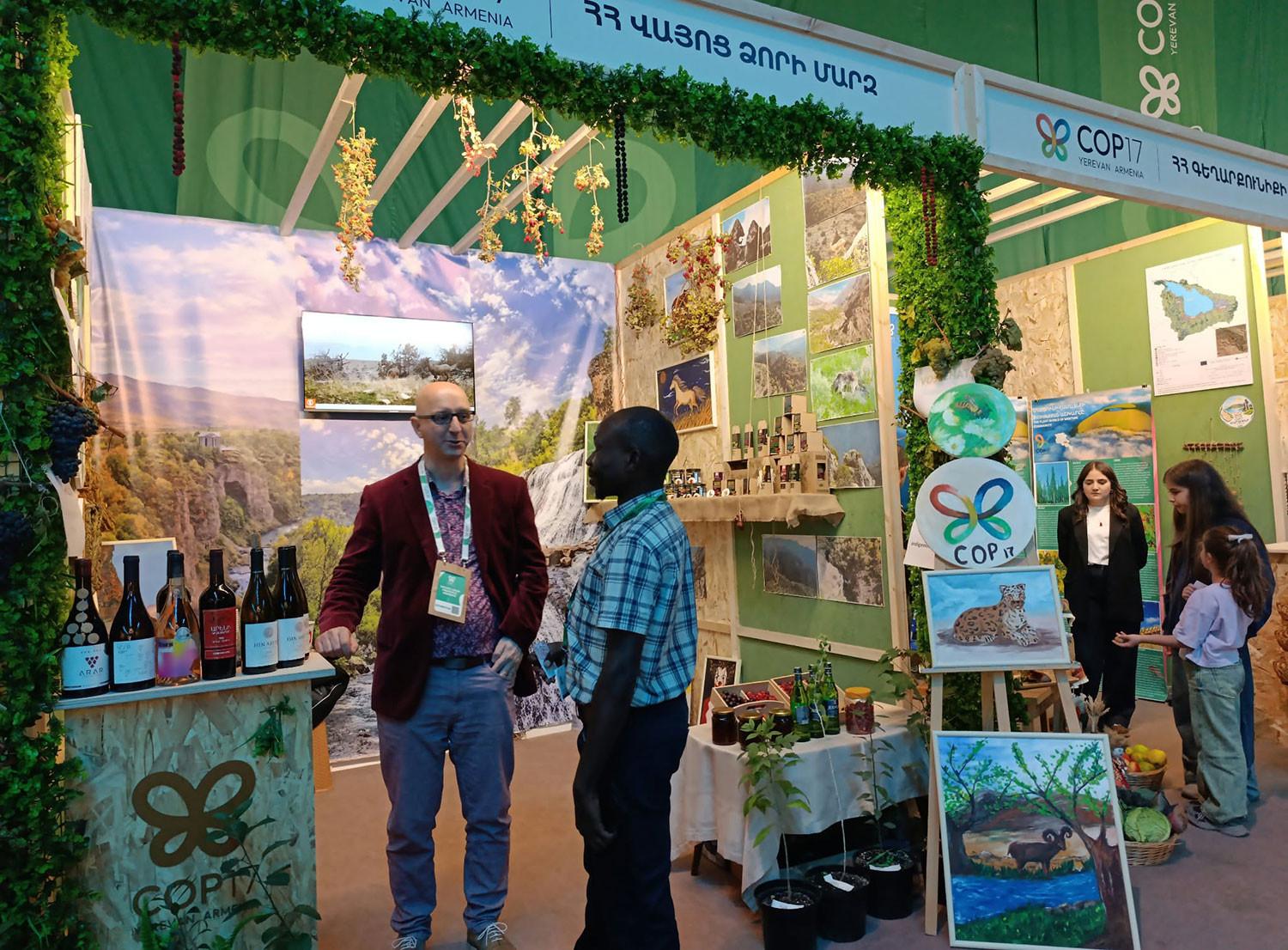
Gegham Margaryan, the Head of the Department of Agriculture and Environmental Protection within the Provincial Governor’s Office, speaks proudly of the region’s dense biodiversity. The province serves as a critical refuge for rare fauna listed in Armenia's Red Book, including the elusive Persian leopard, the brown bear, the bezoar goat, and the Armenian mouflon. Furthermore, the terrain blooms with roughly 1,500 species of flowering plants, a staggering 500 of which possess potent medicinal qualities.
Yet behind this proud display of natural treasures, local officials are harbored by profound anxiety regarding the expansion of heavy industry.
When asked about the prospective ecological hazards that the heavily debated Amulsar gold mine might bring to the biodiversity of Vayots Dzor and the renowned Jermuk health resort area, Margaryan admits that he lacks definitive research papers on the matter. However, a more immediate, localized threat is already stoking fears within the governor's office.
An exploratory geological push by Mendia Resources LLC in the village of Vardahovit has raised urgent alarm bells regarding the province's vital watersheds.
"They want to conduct an assessment in the village of Vardahovit—a site where mining operations might eventually take place—but this assessment itself poses a risk to us, as our water resources are located there," Margaryan reveals.
The stakes could not be higher for the region’s agricultural identity. Margaryan explains that any potential heavy metal pollution originating in Vardahovit would not remain localized. It threatens to travel directly through the Yeghegis Gorge toward Lake Sevan, while simultaneously contaminating the downstream water networks relied upon to irrigate the historic vineyards of the Areni community.
For Vayots Dzor, the fear is that a single industrial misstep could permanently alter their cultural heritage. "If a heavy metal ends up in that wine, what are we supposed to do?" Margaryan asks bluntly, capturing the profound vulnerability felt by the communities operating on the front lines of Armenia's environmental shifts. "Who should we turn to? How will you manage this?"
Martuni: Engineering Solutions for Lake Sevan
Moving along the exhibition floor reveals the rotating nature of the summit, where different communities take turns representing their homeland. At the Gegharkunik Province pavilion, the spotlight on this day belongs to the Martuni community. Regional representatives Inga Shahumyan and Hovsep Mirzajanyan have a clear mission: put Martuni on the global map as a beacon of climate action.
"We have sought to present Martuni not merely as a community facing challenges, but as one that provides solutions to them," Inga Shahumyan states firmly. "Martuni is not waiting for the climate challenges of tomorrow; rather, it is striving to create a greener future."
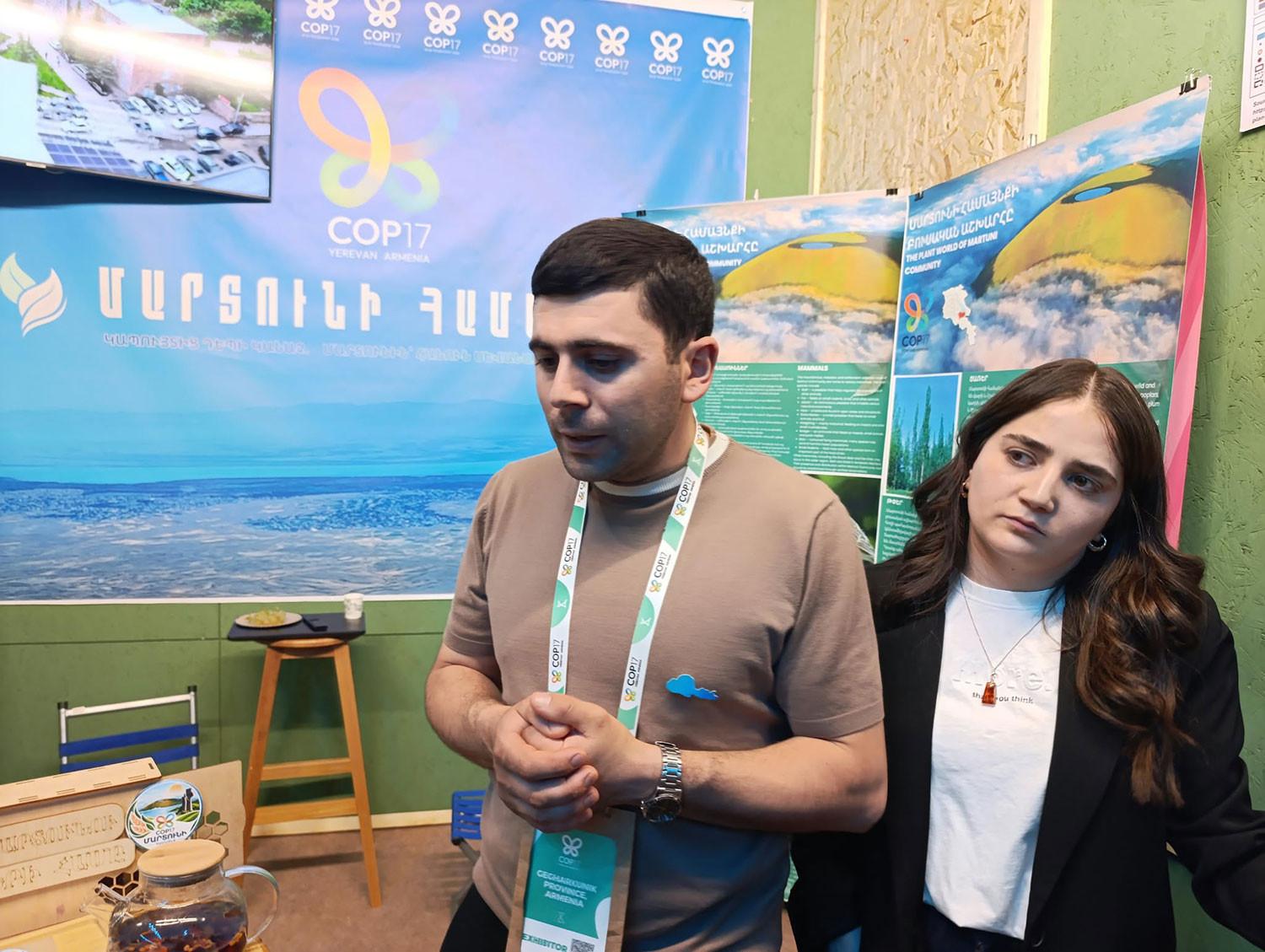
The community is actively backing up that rhetoric with localized infrastructure. Martuni has already successfully implemented aggressive energy-saving and efficiency programs, alongside a pioneering agroforestry site in the settlement of Tsovinar.
Yet the ultimate test for Gegharkunik lies in protecting Armenia's ecological crown jewel: Lake Sevan. The pavilion representatives are completely focused on a vital infrastructure overhaul to tackle wastewater pollution.
"Currently, a key priority for the community is the establishment of wastewater treatment plants," explains Hovsep Mirzajanyan. The community's roadmap includes building comprehensive sewage networks across local settlements to establish a centralized, modern system. The goal is absolute purification: treating every drop of wastewater so that the water finally discharged back into Lake Sevan is completely clean.
The Raw Earth of Talin
Further down the line, the Talin community represents the Aragatsotn Province, where the approach to drawing in crowds takes a beautifully tactile turn. Razmik Ghazaryan, representing the Aragatsotn Governor’s Office, smiles as he picks up an intricate butterfly—the official symbol of COP17—delicately crafted from thread and local apricot pits. The creative handicraft is doing its job, successfully anchoring the curiosity of international visitors.
Once pulled into the pavilion, guests are introduced to the literal foundation of the region: an exhibition of the diverse soils and unique rock formations that define Talin.
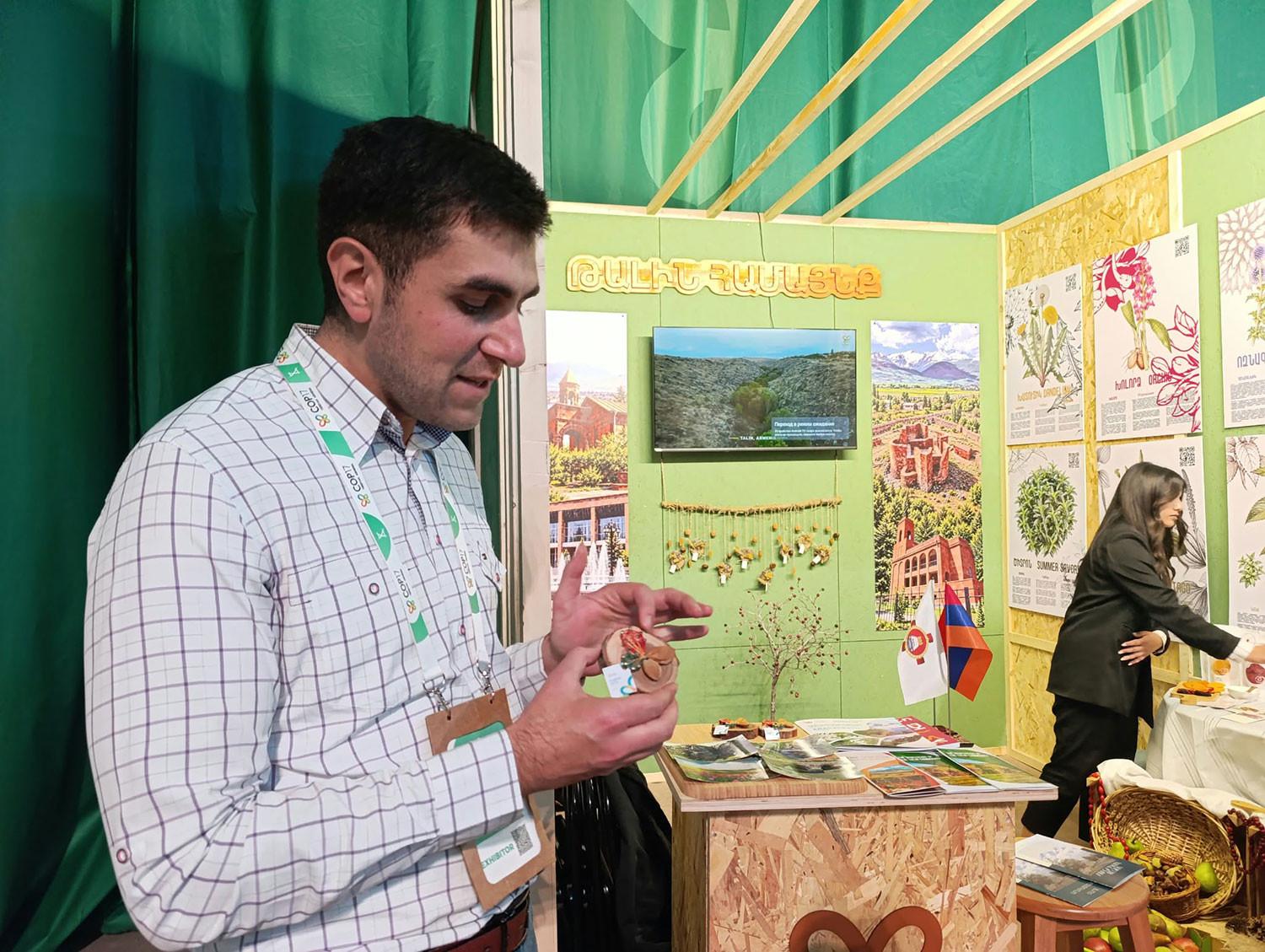
Ghazaryan breaks down the complex topography of a community that radically transitions from 1,100 meters to a striking 3,000 meters above sea level. "We can identify three types of soil," Ghazaryan explains, tracing the geography. At the highest alpine peaks, rich black soils mirror those of neighboring Shirak Province to the north, yielding thriving vegetable cultivations in the settlements that claim them.
However, farming here is a game of geographical roulette. Lower down, the terrain gives way to thirsty, sandy soils that struggle to retain moisture—a hardship compounded by Talin's severe scarcity of irrigation water. Elsewhere, dense clay soils create a stubborn, compact barrier where cultivating plants or fruit trees becomes nearly impossible.
Yet, what the land denies in easy agriculture, it makes up for in geological wonder. Shifting from soil to stone, Ghazaryan displays the striking rock formations born from ancient volcanic activity. He points out a glistening, dark specimen, noting that few visitors realize the Talin community is immensely rich in volcanic glass—obsidian—known colorfully in local folklore as "the devil's fingernail."
Lori Province: Awakening Ecological Consciousness
The final stop in this regional journey brings visitors to the Lori Province pavilion, represented on this day by the Alaverdi community. Here, the focus shifts from the ground beneath our feet to a profound philosophical realization.
“To conserve biodiversity, one must first recognize it—and realize that it is not just the elements surrounding us, but that we, too, are part of it,” observes Karine Simonyan, a dedicated employee of the municipal administration.
The Alaverdi display aims to pierce public unawareness by highlighting species listed in Armenia’s Red Book that share their immediate geographic footprint. Visitors pause before portraits of the northern banded newt and three distinct, majestic raptors: the Eurasian griffon vulture, the cinereous (black) vulture, and the rare, bearded vulture (lammergeier).
To illustrate the highly migratory and fragile nature of these creatures, municipal officials share a remarkable story from 2022. A bearded vulture in neighboring Georgia accidentally swallowed a knife, requiring emergency surgery by specialists who fitted the bird with a GPS tracker upon its release. Zoologists watched its data trail cross the border into Armenia, where the bird was eventually located near Alaverdi in the settlement of Kachachkut—having successfully found a mate and settled down.
Beyond rare fauna, Simonyan underscores the vulnerability of Lori's flora, particularly its unique edible herbs. "They are found in only a few regions," she notes. "It is crucial to consider how they are harvested, so that future generations may also have the opportunity to benefit from them."
Lori's environmental canvas is complex, balancing citizen observations with industrial history. In nearby Marts village, residents have voiced alarms over a sudden decline in the giant peacock moth population, a localized crisis that still awaits formal scientific study. As one of Armenia's most heavily forested regions, public participation is vital to combat issues like illegal logging—but Alaverdi is fighting back with proactive greening.
Faced with the historical ecological scars left by the Teghut mine within its borders, the community has pivoted toward reclamation. At the explicit request of residents, the municipal administration has distributed young, fruit-bearing trees to citizens. Already, 134 hectares of orchards have been planted, complete with newly installed water pipelines to ensure their survival. Private investors are mirroring this public effort, funding a sprawling 110-hectare orchard in Aygehat.
"Although this does not constitute traditional forest planting," Simonyan reflects, looking around the bustling Green Zone, "it is another vital method of expanding our green space that drives our agricultural development while expanding the green lungs of our province."
As the sun sets over Yerevan, COP17's provincial pavilions reveal a nation at a crossroads. From Syunik's vulnerable bee colonies and Vayots Dzor's threatened aquifers to Martuni's wastewater solutions, Talin's complex soils, and Lori's newly green fields, Armenia's communities bring a shared message to the world: global biodiversity depends on local survival.
Write a comment