 Videos
 Photos


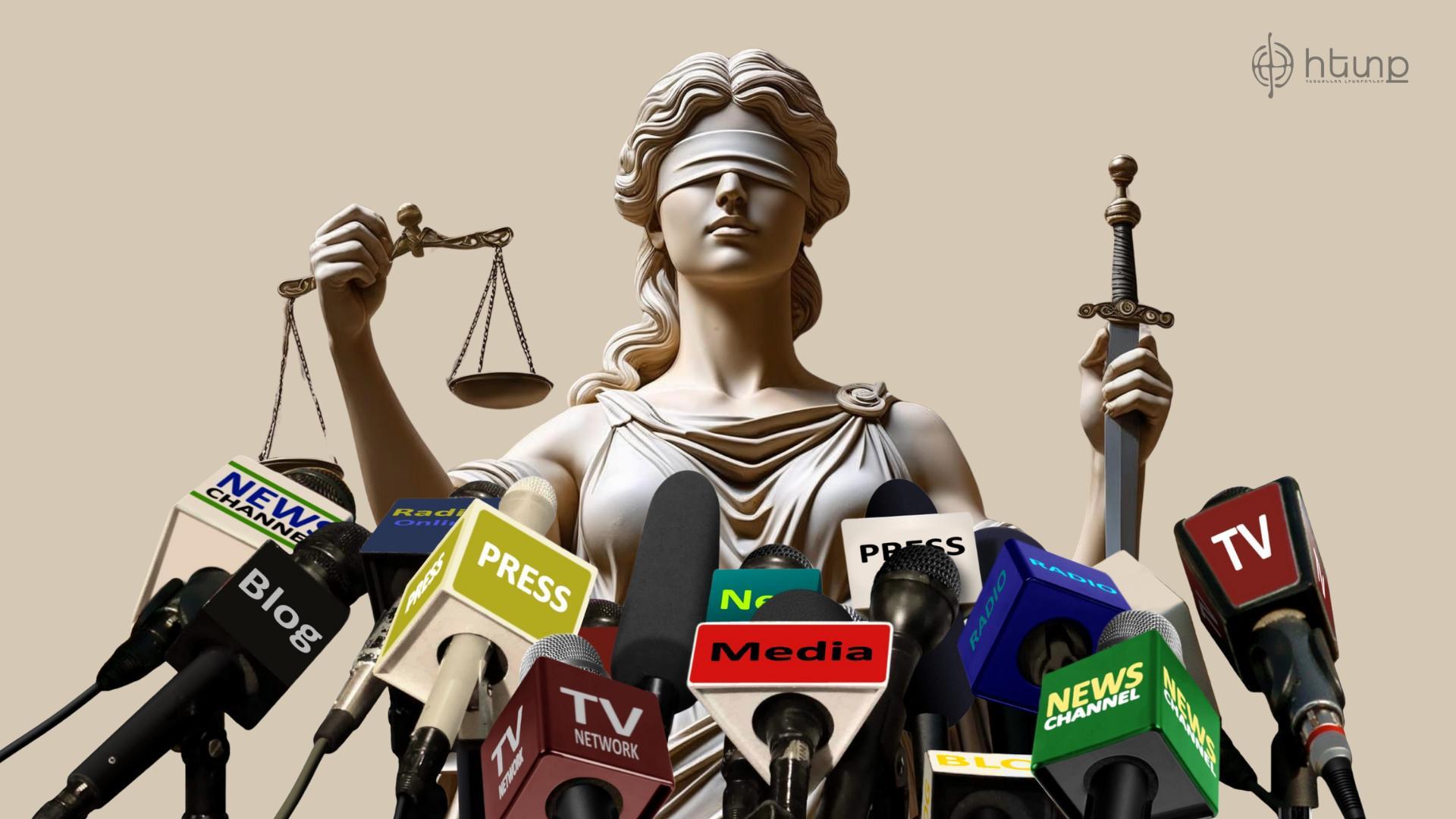
Armenia’s Independent Press Isn’t Dying From Censorship—It Is Being Starved and Sued Into Silence
By John Takoushian
In early 2025, Armenia’s independent journalism sector suffered a sudden financial shock when the U.S. government froze foreign aid and dismantled USAID operations. Overnight, Washington terminated its flagship five-year, $15 million Media Program in Armenia—implemented through Internews—two years ahead of schedule, cutting off roughly $7.5 million in planned funding.
Until March 2025, that program had sustained fifty-nine Armenian media outlets and trained more than 330 journalists. Its abrupt end exposed a painful structural truth: Armenia’s independent newsrooms were never financially self-sustaining, and today they are caught in a vise between a broken advertising market and mounting legal pressure.
Unlike traditional authoritarian environments, Armenia’s press crisis is not driven by overt state censorship or shuttered printing presses. Journalists still investigate corruption, scrutinize defense contracts, and challenge officials. Instead, independent outlets are being weakened by financial attrition and punitive legal mechanisms that threaten to bankrupt them from within.
As reporting by Media.am and a recent Hetq opinion piece have highlighted, Armenia’s commercial advertising market is far too small to keep independent digital newsrooms afloat. According to editors at outlets like Infocom, replacing lost international grants with local ad revenue would take at least four years under ideal conditions. Meanwhile, Armenia has yet to develop a widespread reader-subscription culture. In my piece, I observed that leaves unaligned digital outlets deriving only a small fraction of their budgets from local revenue—forcing them to compete against major television broadcasters and online portals heavily subsidized by political parties or oligarchic factions that treat newsrooms as public relations wings.
Without donor lifelines, several newsrooms have already entered crisis mode, freezing hiring, shelving investigative projects, and laying off staff.
Just as newsrooms are struggling to survive financially, the legal environment has grown markedly more hostile. Earlier this week, Armenia’s Ministry of Justice published draft Civil Code amendments that would introduce mandatory minimum financial compensation for insult (1 million drams, or roughly $2,800) and defamation (2 million drams, or roughly $5,600). By stripping judges of the discretion to scale damages according to a defendant’s actual financial capacity, the bill turns civil litigation into an existential threat—compounding an already litigious climate in which Armenian media outlets were sued for $174,000 in libel and slander claims in the first half of 2025 alone.
Nine leading Armenian media watchdogs—including the Committee to Protect Freedom of Expression, the Yerevan Press Club, and the Media Initiatives Center—rightly warned that the proposal violates European Court of Human Rights standards. When a small investigative outlet is already operating on a shoestring budget, a single mandatory $5,600 judgment—or a coordinated wave of strategic lawsuits from wealthy officials and business figures—is enough to force its closure.
These twin pressures are already eroding Armenia’s democratic standing. As Hetq reported on the 2026 Reporters Without Borders (RSF) World Press Freedom Index, Armenia dropped 16 places—from 34th to 50th out of 180 countries—moving into the "problematic" classification tier after registering regressions across all five evaluated political, economic, legislative, social, and security indicators. Both RSF and Freedom House point out that while direct censorship remains absent, deep political polarization, smear campaigns, and verbal hostility from both ruling and opposition figures have fostered a climate of self-censorship.
If Armenia’s government is serious about its declared European integration agenda and building a resilient "Real Armenia," it cannot treat independent journalism as an expendable nuisance. Protecting media pluralism requires urgent action on three fronts:
First, Yerevan must withdraw the mandatory defamation minimums and establish arm’s-length public support. Rather than weaponizing civil damages, the Ministry of Justice should align defamation laws with European proportionality standards. At the same time, the government—working alongside European partners—should explore an independent, transparent public media endowment modeled on successful European press-support funds, governed by civil society and international experts so state money never translates into editorial control.
Second, the Armenian diaspora must shift from crisis charity to institutional journalism funding. Diaspora organizations and philanthropists routinely pour millions into infrastructure, education, and cultural initiatives, yet largely overlook the Fourth Estate. Investing in multi-year, unrestricted endowment grants for verified, non-partisan investigative newsrooms—and building English-language syndication partnerships—would insulate Armenian journalism from sudden shifts in Western foreign aid.
Third, newsrooms and readers must build a domestic civic-membership model. Independent outlets cannot rely indefinitely on institutional grants, whether from Washington, Brussels, or the diaspora. Outlets must collaborate on shared back-office infrastructure, joint investigative desks, and unified micro-subscription platforms that make it easy for ordinary citizens in Armenia and abroad to contribute small monthly sums. Readers, in turn, must recognize that accountability journalism is not free: if citizens do not pay for independent reporting, oligarchs and political operatives will gladly pay to shape the narrative instead.
Democracy in Armenia has survived turbulent elections, security shocks, and deep social polarization largely because investigative journalists have refused to look away from power. Allowing those newsrooms to wither through market failure and legal attrition would hollow out Armenia’s democracy without a single censor ever lifting a pen.
(John Takoushian is a writer and observer of Armenian affairs whose commentary focuses on media literacy, national resilience, and diaspora engagement. He explores the evolving relationship between the Republic of Armenia and Armenian communities across the globe.)
Write a comment