 Videos
 Photos


Silenced at COP31: Anatolia’s Indigenous Peoples Erased from Their Homeland
By Arshak Makichyan
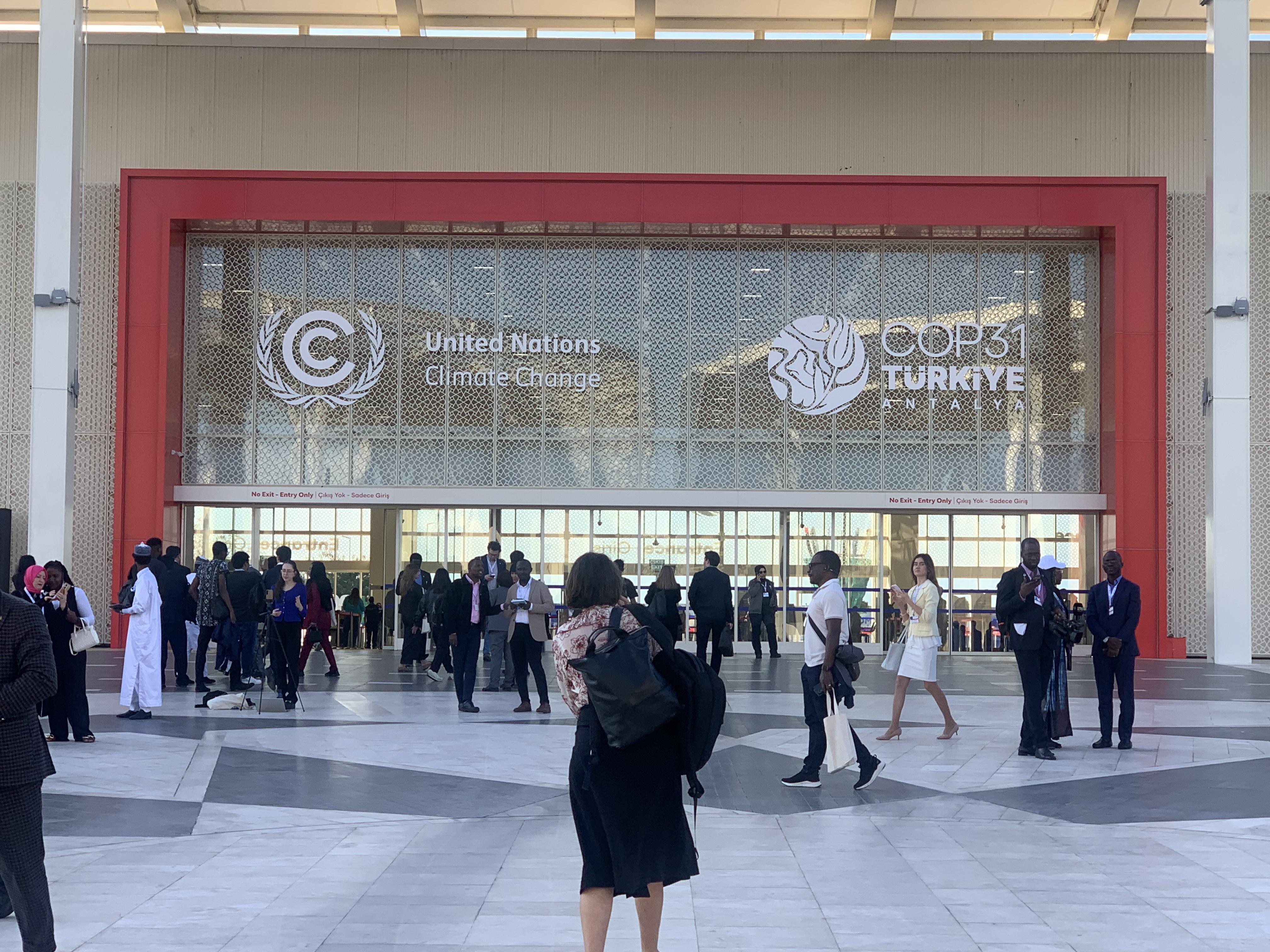
I am sitting in the rest area at the COP31 venue in Antalya, Turkey, where world leaders have gathered to debate the future of our climate and whether they are truly willing to curb the crisis.
As the annual UN climate conference, COP31 aims to reach an agreement on how to cut carbon emissions, limit global warming to 1.5°C, and fulfill the goals of the Paris Agreement.
Usually, when you participate in such a conference, you don't expect much. People here have different badges and statuses, and I was there as a member of civil society with observer status. To obtain accreditation, you need to apply through an accredited NGO. In my case, it was an Armenia-based environmental organisation.
A person sitting in front of me asked whether I was Armenian. Apparently, they were Armenian, someone with Armenian roots, as people say here.
It was the second week of the conference. Armenian Prime Minister Pashinyan had already returned to Armenia, taking a banana with him back to Armenia. He made a funny video about it, and later even ate the banana.
As many people are aware, the Armenian prime minister likes creating rather extravagant content. In this case, while participating in the conference in Turkey, he picked up a banana, travelled with it all around the world, and then made another video in which he finally ate it in Armenia.
But if you think about it, there is nothing funny about this conference. While his attempts at diplomacy and content creation are indeed going viral, the reality is much less amusing.
When the person with Armenian roots asked me how the conference had been so far, my answer was that it had been a total disaster. And I didn't mean that after three decades of negotiations, official delegates still fail to mention the necessity of phasing out fossil fuels, as scientists recommend.
I told him that I had come here to raise the issues of the rights of indigenous Armenians, Kurds, Assyrians and Greeks of the region. I had expected this from civil society.
And the only person who actually did this was Greta Thunberg, when she called for justice for the Kurds. After that, she was threatened, and many Turkish media outlets and posts on Twitter called her a terrorist supporter for doing so.
The Armenian person didn't say much in response. It's Turkey. What should we expect?
And I understand him. What can one do when they live here?
Turkey has more political prisoners than Russia, and recently, more than 150 LGBTQ+ activists were detained.
But that's exactly why I came here. As someone living in the diaspora, outside our homeland, I have the privilege of not having to risk my life every time I speak out about these issues.
The third person at the table was someone from the administration of the host country, Turkey, involved in the organizational side of the conference. I wasn't sure whether it was safe to talk in front of them, but apparently, they were a friend of the person of Armenian descent.
When I asked whether they were Armenian, they answered that they didn't know. Then I asked whether they might be Kurdish.
They said they were.
I don't want to disclose more, considering safety concerns. But it was a strange feeling. People like me, who still live here, participate in all of this with a full understanding of what I am trying to do. But what can they do?
I grew up in Russia and never thought of myself as having any connection to Turkey. In my family, we never really talked about the genocide. But after the ethnic cleansing in Nagorno-Karabakh, I started thinking about it more. I remembered my grandfather talking about his mother, who had survived the Genocide and fled to Eastern Armenia, where our family has lived ever since. I began asking myself more and more: why have we been deported almost every generation?
A day earlier, there had been a plenary session in a big hall where civil society was given a platform to speak out. It was called the "People's Plenary". I had expected to hear something about these issues because they were talking about solidarity, indigenous rights and genocides. But their solidarity was directed only towards Palestinians.
All of them stood in front of the Turkish flag. A flag associated, for me, with the blood of our ancestors and our stolen homeland.
That day, I also had my first interview with a grassroots radio station. I was interviewed by an Indigenous person from Turtle Island, or what people call America.
That person easily understood me, seeing right through to the nuances, the hidden repression, and the tragedy.
There are specific mechanisms within the UN for indigenous peoples to be represented, but no one is given a seat at the actual negotiations. But all the protests at the venue feel symbolic.
Unfortunately, Armenian diaspora organisations don't participate in this effort.
That same morning, I also had a meeting with another Armenian from the diaspora.
My point was that diaspora organizations should focus less on influencing politics in the Republic of Armenia, and more on leveraging Indigenous rights frameworks to gain institutional recognition of our stolen homeland.
He asked, “ But how can we be indigenous if we are the most ancient civilisation in the world?”
And that's the problem. Many people don't understand what the word ‘indigenous’ means. It is fundamentally about power dynamics on the ground, when other people arrive, conquer your land and take away your rights. The same thing happened to ancient civilisations on Turtle Island.
Raising these issues at the UN and other institutions is difficult work. But if we continue to fight for power in the Republic of Armenia while forgetting our stolen homeland, we will also betray our brothers and sisters who stayed and were forced to assimilate.
We will lose our connection with the land where our ancestors lived for centuries. And the diaspora will always remain a diaspora: foreigners in the countries where we live and tourists who need a visa to visit their own homeland.
Another argument for why this matters is that the Republic of Armenia will never be safe without genuine reconciliation. Recognition of the genocides would also benefit Turkey. Wealthy Armenians from the US would no longer have to fear travelling to their ancestral homeland and might be more willing to invest. Instead of constantly arguing about historical injustices, we could focus on how to make life in the region safer and more prosperous for everyone.
I was struck by how poor Antalya, this tourist city, is. And I know that in eastern Turkey, things are much worse.
Echoing what I was taught at university in Germany, the renowned Turkish economist of Armenian descent Daron Acemoglu argues that economies only thrive when they build independent, inclusive institutions.
But Turkey doesn't want to listen to its own scientists. Everything keeps getting more expensive here, and everyone suffers, while Turkish flags are put up everywhere.
The conference is coming to an end. Most people are leaving disappointed.
I am sitting in a coffee shop now. For breakfast, I had menemen, or what Armenians call pomidorov dzvazeg. And I see so many people who look like me. Probably assimilated Armenians or Greeks. They don't speak English, so I cannot talk to them. But I wish them all the best.
I want this land to prosper again, but I don't know how I can explain all of this to them.
And I don't mean only eastern Turkey. Armenians and other Indigenous peoples of the region lived throughout the Armenian Highlands and the wider region. Why can't we build a future in which we can do so again, but this time with equal rights for everyone, where people don't have to hide their identities, as many people of Armenian and Greek descent still do today?
Today, I visited an old Armenian church. Or rather, what was left of it.
I hope the day comes when we can rebuild it—not for tourists, but for the people returning to their Indigenous lands to pray for a better future, one with genuine peace between our peoples.
(Arshak Makichyan is a climate activist and political scientist currently pursuing a PhD at Freie Universität Berlin.)
Write a comment