 Videos
 Photos


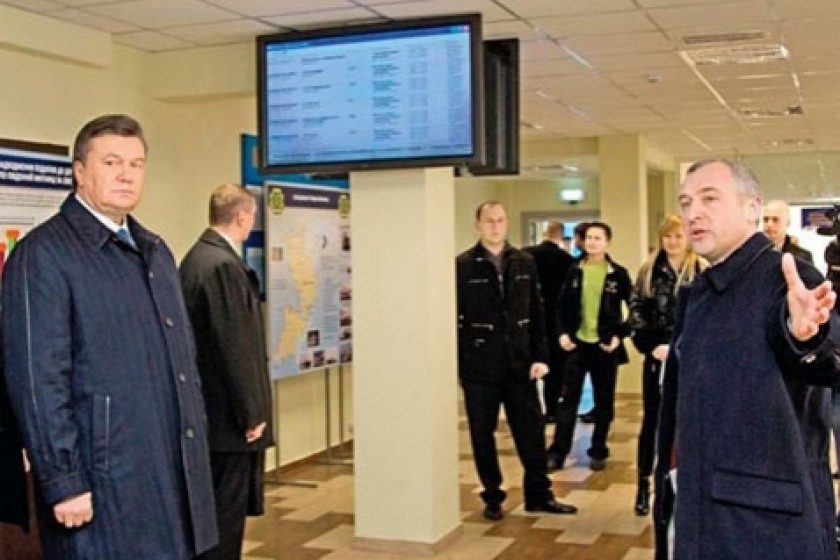
Odessa's Customs Cash Cow
Editor’s Note: The following is an investigation conducted by the Washington-based Organized Crime and Corruption Reporting Project, a Kyiv Post partner, coordinated by Kyiv Post staff writer Vlad Lavrov. The authors are Kyiv-based Ukrainian journalists working for the investigative bureau Slidstvo.info.
ODESSA – A stretch of dried-up swamp on the outskirts of Odessa is where probably more cash change hands daily than anywhere else in Ukraine. The 50-hectare site is known as Euroterminal, a cargo and customs clearinghouse with a murky ownership structure that has support from Ukraine’s President Viktor Yanukovych, who helped get it started.
Soon after the new private terminal was built in 2011, government officials created a new state Southern Customs branch at Euroterminal. A growing share of the country’s imports of food, consumer goods and other essentials, delivered through Ukraine’s largest sea terminal, now goes through this private business.
Ukraine’s state customs service, notoriously corrupt and cumbersome, has long been a sore point for businesses. According to the World Bank’s latest Doing Business ranking, the customs service is among the most difficult to deal with in the world, scoring a dismal 145th out of 185 economies surveyed for ease of trade across borders. Importers who tried to go through the state port could wait months for customs clearance, unless they paid expensive brokers connected to port management to expedite the delivery.
Valeriy Lokaychuk, the Odessa Oblast Council member and deputy head of its organized crime and corruption commission, said Euroterminal has effectively replaced the old system. However, at present, it is not clear if importers still can use the state-owned sea terminals for clearing their cargo. OCCRP reporters called the office at the sea port and were told all customs must now be cleared through Euroterminal. The website, however, still indicates customs can be done at the sea port.
Many importers, however, complain privately that they are pressured by customs officers into using Euroterminal.
The new terminal, while eliminating the need to hire well-connected brokers to expedite customs clearance, introduces new and higher fees. Under the old or new system, this is revenue that could have gone to the state. In the past, the money went to privileged brokers that Lokaychuk says were connected to high-ranking politicians. Now the money goes to Euroterminal.
Lokaychuk estimated that billions of dollars in revenues bypassed state coffers under the old system, in which each type of good had two corresponding entries: customs duties paid to the budget and the unofficial cash payments collected by chosen brokers.
How much revenue the state stands to lose because of Euroterminal remains to be seen, but it already appears to be substantial and growing.
According to Yuri Vaskov, the director of the state-owned Odessa Commercial Sea Port, Euroterminal has already received millions of dollars in fees. The seaport’s current annual turnover has reached 20 million tons of cargo, but now an estimated 15 to 30 percent of the containers daily go through the new private terminal. And this revenue is set to increase, according to state terminal director Vaskov, as Euroterminal is undergoing a major expansion to boost its capacity.
Euroterminal management wouldn’t provide any financial information, although customs brokers estimate that one container going through customs via Euroterminal brings around $100 to $500 in revenue to its owners in unloading, weighing, storage and other fees. Currently, Euroterminal processes around 300 containers daily, meaning that Euroterminal’s annual revenues could easily reach $20 million.
Dmytro Gambeev, head of an Odessa-based firm that trades ceramic tiles, chose the state-owned sea terminal to undergo customs clearance procedures because it was cheaper than the privately owned alternative. But it wasn’t easier or faster.
Write a comment