 Videos
 Photos


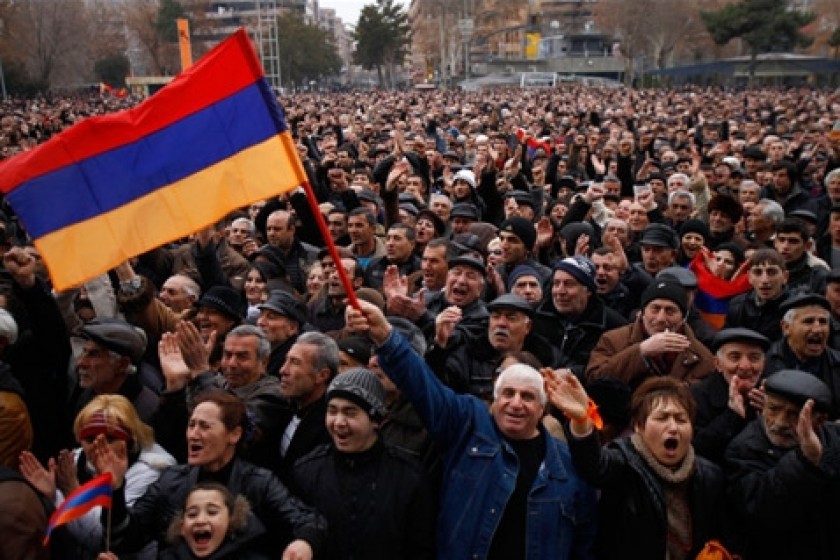
An Armenian Spring?
By Chris Stone
A landscape exuding hopelessness and catastrophe surrounds the city of Vanadzor in Armenia.
As we neared the end of the three-hour drive from Tbilisi last week, my companions and I passed orchards reduced to stubble, farms that could barely be called subsistence, inhabited homes whose roofs had long since caved in, and—bleakest of all—a sprawling wasteland of concrete rubble from the earthquake that devastated this region in 1988.
Vanadzor itself, Armenia’s third-largest city, reminded me of Russian provincial cities in the 1990s: depressing, impoverished, grey.
Yerevan, the capital and home to a third of the country’s three million people, shows a façade of modern prosperity. The buildings are grand, gaudy, and intact, though many of the high-end apartments stand empty. But I was told that until a few weeks ago, a common hopelessness seemed to hang over both Yerevan and Vanadzor.
The reasons for the hopelessness were clear. President Serzh Sargsyan presides over a corrupt and sometimes thuggish government. A small number of oligarchs rule the economy and control its markets.
Violent repression of protests following Sargsyan’s election in 2008, combined with the devastating impact of the global financial crisis on Armenia, the sporadic war with Azerbaijan, and the failed border talks with Turkey, have steadily deepened cynicism, poverty, and despair, while propelling emigration.
See more here.
Write a comment