 Videos
 Photos


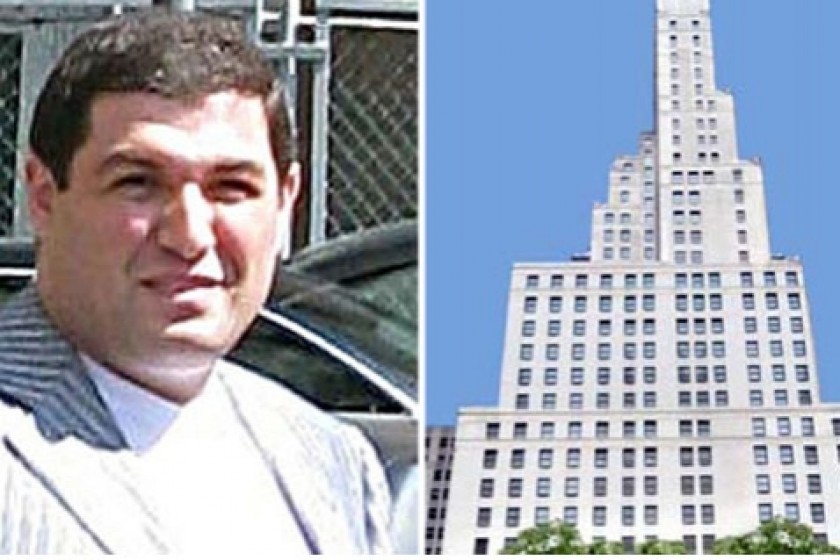
US Authorities Look To Seize Magnitsky Linked Assets
By Kevin Briskin
There may be some justice for Sergei Magnitsky yet.
Magnitsky is the Russian lawyer who died in Moscow's notorious Butyrka prison in 2009 after a year of beatings and neglect. He had exposed a $US230 million tax scam, the largest in Russian history, but instead of a reward he was accused of the crime himself and jailed. The money disappeared and Russian authorities have said it cannot be found.
But for the first time there may be retribution for those who benefited financially from Magnitsky’s death.
On Tuesday, the US attorney for the Southern District of New York filed a complaint aimed at recovering some of those stolen funds. Prosecutors are asking that a number of high end apartments in the Wall Street area of Manhattan worth about $10 million and a number of bank accounts owned by a series of related companies be seized as illegal gains from the Magnitsky fraud.
United States Attorney Preet Bharara said in a press release: "Today's forfeiture action is a significant step towards uncovering and unwinding a complex money laundering scheme arising from a notorious foreign fraud. As alleged, a Russian criminal enterprise sought to launder some of its billions in ill-gotten rubles through the purchase of pricey Manhattan real estate."
Prosecutors are asking the court to seize the assets of Prevezon Holdings Limited, owned by Denis Katsyv, the son of the wealthy Russian public official Pyotr Katsyv. It is also asking for the assets of nine subsidiaries, which own four luxury apartments and two high-end Manhattan commercial spaces as well as numerous bank accounts.
The companies also face civil money laundering penalties.
"Manhattan may have some of the most desirable real estate in the world, but it is not the place to purchase it if you are allegedly doing so with dirty money,” said District Attorney Cyrus R. Vance, Jr.
Following the Money
The Prevezon connection to the Magnitsky case was uncovered in an investigation by the Organized Crime and Corruption Reporting Project (OCCRP), Novaya Gazeta in Moscow and Barrons which revealed that the Magnitsky money was passed through a Moldovan ghost company to Prevezon. Prevezon used the illicit funds to purchase expensive New York real estate.
Katsyv denied involvement, saying he bought Prevezon after the transfer of the Magnitsky money. According to Wellington International, a British public relations company hired by Katsyv, Prevezon was purchased for $50,000 from Timofey Krit. Krit, who was 22 at the time of the transfers, refused to discuss the deal with OCCRP reporters. However, banking records show that a long-time Katsyv business partner, Aleksander Litvak, appeared on Prevezon’s Swiss bank accounts at the time of its formation.
Katsyv initially promised to send documentation to OCCRP but later reneged.
Russian authorities claimed that records were destroyed, but offered no further information. Despite this, OCCRP investigated the case looking at documents from Moldova, Latvia, Lithuania, Finland, Estonia, and Switzerland. Those documents showed that Prevezon received the money from two ghost companies, Bunicon-Impex SRL and Elenast-Com SRL.
Both companies were also part of a larger scheme dubbed the proxy platform that laundered money for numerous organized crime actors including the Mexican Sinaloa drug cartel, Moscow-based Vietnamese Triad groups, Moldovan and Russian organized crime and corrupt Ukrainian officials.
Write a comment