 Videos
 Photos


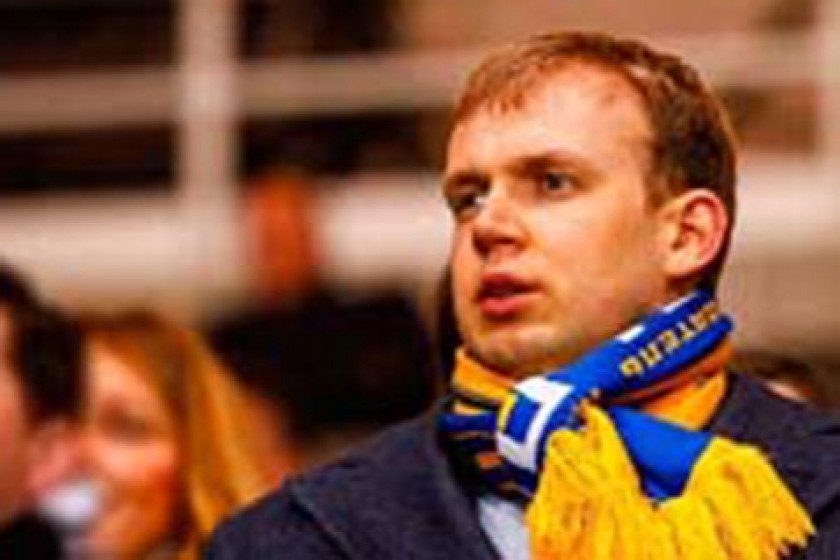
How Ukraine’s Newest Media Mogul Has Dealt With The Press
By OCCRP
As an investigative reporter for Forbes Ukraine, Sevgil Musaieva is used to people threatening her or trying to bribe her. But last year, as she and her colleague Oleksandr Akymenko investigated how a once-obscure young Ukrainian businessman mysteriously became a prominent multimillionaire, they became frightened enough to ask their publisher for a bodyguard.
“We were in panic because all the sources were telling us: don't write this story,” says Musaieva. “And it (the panic) still lingers,” chimes in Akymenko, her partner.
Vladimir Fedorin, chief editor of Forbes Ukraine magazine until July, confirmed that the journalists “were pressured obscenely” by associates of Serhiy Kurchenko, the target of the journalistic investigation.
Kurchenko would not be interviewed for this story. But he has told others that journalists have nothing to fear from him and has denied any threats.
So who is Kurchenko? And where did he come from? The unlikely young multimillionaire rose to national prominence in just a few years following the election of President Viktor Yanukovych in 2010.
At the time, Kurchenko’s companies were winning lucrative government tenders to buy liquefied gas at a discount, and the companies’ gasoline trade was ballooning. Such a speedy rise in Ukraine often suggests high government connections.
Musaieva and Akymenko, both 26, took on the first comprehensive investigation of Kurchenko's business, spending months untangling webs of seemingly unrelated companies, knocking on the doors of their directors and plowing through databases to find the hidden patterns in business schemes.
The resulting report, “The Gas King of All of Ukraine”, came out last year on Nov. 12 on Forbes Ukraine's website. A version of the story was published in the December print edition of Forbes magazine and posted online. The two stories have collected over 300,000 hits on the forbes.ua website to date.
Fedorin, chief editor of Forbes Ukraine magazine until mid-2013, says Kurchenko's associates who came to meetings to answer some of the journalists' questions repeatedly warned them not to pursue the story.
It was not the first time Forbes staff said they were threatened by a Kurchenko-related company. Leonid Bershidsky, the then-chief editor of the online version of Forbes, says the publishing company also received “official threats of legal prosecution that arrived from the group Gaz Ukrainy 2009,” the predecessor of Kurchenko's current holding.
There were good reasons for the Forbes reporters to be scared: attacks on journalists, including investigative journalists, really happen in Ukraine. In 2011, an investigative journalist was shot in the head in Ukraine. Another found the door of his home set on fire.
According to the latest report on freedom of speech, published in August by the local media watchdog Institute of Mass Information, in the first seven months of 2013 there were 29 incidents of attacks and beatings of journalists, 80 cases of interference in journalists’ performing their duties, 19 cases of pressure and threats and five instances of journalists being detained.
Last June, the journalists were shocked to find that the subject of their investigation had bought Forbes and 50 other brands in UMH Group, one of the nation’s leading media companies. The reported $340 million deal was announced in June. Kurchenko is expected to take control next spring, when the final payment is made.
The change in ownership prompted the exit of Musaeva, Akymenko and some of their colleagues, including Fedorin, from the magazine.
Kurchenko has denied threatening the journalists attempting to investigate him. In an interview for Forbes published on July 1, Kurchenko said that at the time his company had outsourced communication, and if anyone was at fault for pressuring journalists, he would “punish the guilty.” He did not respond to requests to comment for this story.
Kurchenko says he has big plans for the media company. He has pledged to invest $100 million into his new business. He also promised to preserve editorial independence of its news publications.
In a statement explaining the purchase, Kurchenko said: “We are looking for profitable and promising Ukrainian media assets. UMH is one of them. We’re interested in the holding becoming an attractive business asset.”
But many of the journalists who quit or got forced out were uncomfortable working with an owner that their own reporting suggested was close to President Viktor Yanukovych.
One of the nation’s leading media watchdogs says the skepticism is justified. Natalya Ligachova, head of Telekritika in Ukraine, said the purchase of Forbes Ukraine “is a sign that oligarchs are trying to take over everything, and of course they’re tempted by the international formats that have a lot of prestige.” Ligacheva said the potential loss of Forbes as a source of reliable information would remove one of the few remaining independent outlets in Ukraine.
Write a comment