 Videos
 Photos


The Necessity to Shift the Emphasis of the Struggle
 Looking towards the 95th anniversary of the Armenian Genocide Is the recognition of the Armenian Genocide an end or a means? A majority would certainly answer “a means” without thinking twice about it. Consequently, as the recognition of the Genocide is not an end in itself, the counter to the denial of any genocide is thus not simply the recognition of that genocide, but, through that recognition, the punishment (even if in moral terms, as in our case) of the perpetrator and the restoration as far as possible of the rights (including the property) of the victims.
Is it possible for merely the recognition of a genocide to restore justice as long as the perpetrator or the heirs of the perpetrator continue to enjoy the fruits of the crime? What is more, the heirs who enjoy the fruits of the crime are not simply the descendants of the perpetrators, but are complicit in the crime. One must therefore address certain questions that arise in this regard: a) Is it that the territorial rights of the Republic of Armenia and the property rights of Armenians, as well as moral losses, could be restored only through the recognition of the Armenian Genocide, or is there any other way to do so?; b) What exactly is the scale of the rights and property in question? 1. Genocide is classified as a crime against humanity. Perhaps it is the worst kind of crime against humanity, but nevertheless, as far as responsibility is concerned, it is equivalent to other crimes against humanity. It is clearly codified by international law that, “… extermination, enslavement, deportation, and other inhumane acts committed against any civilian population, before or during the war …” (Article 6 (c) of the Charter of the International Military Tribunal, [Nurnberg Tribunal] annexed to Agreement for the Prosecution and Punishment of the Major War Criminals of the European Axis ("London Agreement"), 8 August 1945) are considered to be crimes against humanity. It is an undeniable fact; the Turks, whereas denying the Armenian Genocide, do accept that their forebears deported the Armenian civil population of the Ottoman Empire. 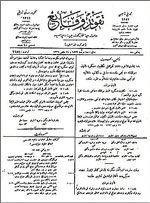 The Tehcir Law, which was the basis of the Armenian deportations, has been preserved. The law passed the Ottoman parliament on the 27th of May, 1915 and came into force on the 1st of June, 1915 upon its publication in the Takvim-i Vekayi, the official gazette. The official designation of the law was “Regulation for the settlement of Armenians relocated to other places because of war conditions and emergency political requirements”. It is necessary to point out here that any pretext or excuse does not free a state which has carried out a deportation – and that too, through an authority which has acted criminally – from its responsibility and from its obligation of providing corresponding reparations to the victims. In the Armenian case, the crime of the Turkish state is additionally burdened by the clear policies of the state during the deportations designed to maximise deaths among the deportees. 2. There are three tiers to issue of the rights and property of the Armenians: national or state, community or organised groups, individuals or private. The first level is quite evident. There is a internationally-binding decision in place which lays out the frontier between the Republic of Armenia and Turkey. I have had the opportunity to discuss the territorial rights of the Republic of Armenia, primarily based on the arbitral award of US President Woodrow Wilson of the 22nd of November, 1920, and so I shall not discuss this matter at present. Without downplaying the political necessity of the recognition of the Armenian Genocide in as widespread a manner as possible, it is noteworthy that, from a legal perspective, as far as the title of the Republic of Armenia is concerned, that is to say, for the restoration of territorial rights, the recognition of the Armenian Genocide is not a required precondition at all. The territorial rights of the Republic of Armenia are recognised apart from the fact of the Genocide. Similarly, for the restoration of communal and individual property rights of Armenians as well the recognition of the Genocide is not a criterion. It is important to clarify this point: there is no statute of limitations on property illegally seized from Armenians, as the violation of a law is continuous. In all cases where property has been seized without equivalent compensation – that is, in violation of the law – current possession cannot serve as the basis of legal title. An appraisal of the property illegally seized from Armenians is a complicated issue. Although some work has been carried out in this regard, our perceptions on this front are still very limited. For example, a majority, or perhaps even the entirety, of the 33 tonnes of gold (over a billion US dollars today) transferred in 1916 alone by the Ottoman Empire to the Reichsbank in Berlin was illegally seized from Armenians (Shavarch Toriguian, The Armenian Question and International Law, Beirut, 1973, pp. 107-8). To this day, Turkey has not revealed the names and funds of Armenian-held accounts in various banks of the Ottoman Empire and also branches of foreign banks in Turkey. It is as difficult at this stage to provide evidence for property, to estimate the costs of and pursue compensation for the losses individual assets, as it is easy to do so for the communal level. As the Ottoman Empire was structured on the basis of national/religious communities and the Apostolic Armenians were all included in one Ermeni millet, their churches, monasteries and schools were documented by the Armenian Patriarchate of Constantinople. There are various accounts available today, including the statements issued by the Armenian delegation to the Paris Peace Conference in 1919. Perhaps the most comprehensive estimates are by Raymond Kevorkian and Paul Paboudjian (Raymond H. Kevorkian and Paul B. Paboudjian, Les Armeniens dans L’Empire Ottoman a la veille du Genocide, Paris, 1992), as they used the unpublished archives of the Patriarchate. According to their figures, adherents of the Armenian Apostolic Church had 2,538 functioning churches, 451 monasteries and almost 2,000 schools. This does not include the houses of worship or schools of the Armenian Catholic or Armenian Protestant communities of the Ottoman Empire, nor the Armenian properties of the Kars, Surmalu and Batum regions of the Russian Empire. In summing up the above, one can draw the following conclusions. It is not at all necessary that there be a universal recognition of the Armenian Genocide in order to assert the rights of the Armenians. The deportation of the civilian Armenian population and the obligation to compensate the losses of the deportees or their heirs brings about as much of a responsibility for the Turkish state as does the fact of the Genocide. The rights of Armenian community of the Ottoman Empire were codified as per the laws of the country in place at the time and all the subsequent illegal seizures by the Turkish state did not deprive the Armenians of those rights. Illegal occupation does not constitute a legal basis of the transfer of property rights. The laws and decrees of the Turkish Republic during 1926-1927 aimed at the occupation of the property of religious minorities cannot serve as a legal basis because they were in violation of the international obligation borne by the Turkish Republic by articles 38-45 of the Treaty of Lausanne. Those obligations were not subject and are not subject to change or dismissal, as they bear the status, as per Article 37 of the same treaty, of a fundamental law (like a constitution). If Turkey views its future in the European Union, as it has so often declared, then it has to accept the values of the EU. Alongside other things, Turkey must be ready to bear responsibility for its own acts and those of its predecessor state. It must return the illegally-seized property to its rightful owners. It must forego the occupation of the territory of other states. It must cease its coercive and threatening rhetoric. Ara Papian Head of the Modus Vivendi Centre 5 April 2010
Write a comment