 Videos
 Photos


On Borders and Sovereignty or, One More Necessary Clarification
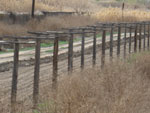 According to information from the defence forces, in the period ranging from the 27th of February to the 5th of March, the cease fire was violated on the Karabakh-Azerbaijan line of contact between the opposing forces around 240 times by the other side, during the course of which more than 1200 shots were fired (NKR Defence Forces Press Service, 5 March 2011)
For diplomats, politicians, and bureaucrats, words are one of the main tools used in their work. They convey their interests and they communicate with society with the means of words. Accordingly, then, any negligence or outright mistakes are unacceptable.
The Nagorno-Karabakh Republic (NKR) considers itself an independent state. Let it be so, even though I, for my part – taking into account the Preamble to the Constitution of the Republic of Armenia as well as the clauses in Armenia’s Declaration of Independence – consider it to be a part of Armenia. But that’s not what this is about. In either case, official statements must utilise different phrasing than what they have today.
Whether the Nagorno-Karabakh Republic is an independent country or part of the Republic of Armenia, then it does not have a line of contact with Azerbaijan but state borders. Consequently, the shots fired from Azerbaijan towards the NKR were not in violation of the cease fire at the “line of contact between the opposing forces” but were attacks on the state borders of the NKR through the means of violating a cease fire agreement.
Let us recall that, as per international law, a border is “a line which determines the limit of the territorial sphere of jurisdiction of States or other entities having an international status” [M. Bothe, Boundaries, Encyclopedia of Public International Law, ed. R. Berhardt, v. 1, Amsterdam, 1992, p. 443).
That is to say, if we are to utilise the wording “line of contact between opposing forces or armies”, then we are accepting that the line runs between two opposing territories within the same sovereignty, which happen to be under the control of two separate armed groups, as, for example, one finds today a “line of contact between opposing forces” in Libya between the pro- and anti-Gaddafi forces.
Ara Papian
Head of the Modus Vivendi Centre
5 March 2011
According to information from the defence forces, in the period ranging from the 27th of February to the 5th of March, the cease fire was violated on the Karabakh-Azerbaijan line of contact between the opposing forces around 240 times by the other side, during the course of which more than 1200 shots were fired (NKR Defence Forces Press Service, 5 March 2011)
For diplomats, politicians, and bureaucrats, words are one of the main tools used in their work. They convey their interests and they communicate with society with the means of words. Accordingly, then, any negligence or outright mistakes are unacceptable.
The Nagorno-Karabakh Republic (NKR) considers itself an independent state. Let it be so, even though I, for my part – taking into account the Preamble to the Constitution of the Republic of Armenia as well as the clauses in Armenia’s Declaration of Independence – consider it to be a part of Armenia. But that’s not what this is about. In either case, official statements must utilise different phrasing than what they have today.
Whether the Nagorno-Karabakh Republic is an independent country or part of the Republic of Armenia, then it does not have a line of contact with Azerbaijan but state borders. Consequently, the shots fired from Azerbaijan towards the NKR were not in violation of the cease fire at the “line of contact between the opposing forces” but were attacks on the state borders of the NKR through the means of violating a cease fire agreement.
Let us recall that, as per international law, a border is “a line which determines the limit of the territorial sphere of jurisdiction of States or other entities having an international status” [M. Bothe, Boundaries, Encyclopedia of Public International Law, ed. R. Berhardt, v. 1, Amsterdam, 1992, p. 443).
That is to say, if we are to utilise the wording “line of contact between opposing forces or armies”, then we are accepting that the line runs between two opposing territories within the same sovereignty, which happen to be under the control of two separate armed groups, as, for example, one finds today a “line of contact between opposing forces” in Libya between the pro- and anti-Gaddafi forces.
Ara Papian
Head of the Modus Vivendi Centre
5 March 2011
If you found a typo you can notify us by selecting the text area and pressing CTRL+Enter
Write a comment