 Videos
 Photos


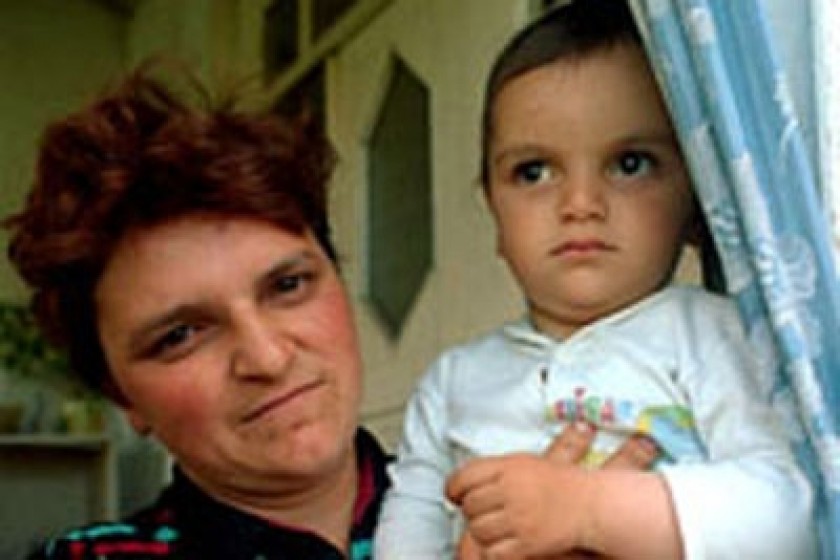
IMCI: Giving Armenian children a healthy start in life
Eighteen days after his birth, rapid breathing concerned a young infant's mother so much that she immediately sought medical attention. With a temperature of 38.5 degrees centigrade, the doctor diagnosed Hovik, now five months old, with pneumonia.
Thanks to early intervention, a life was probably saved. Years earlier, however, the story might have been different.
When Armenia declared its independence in 1991, few realized that expenditure on social services, and health in particular, would be drastically reduced. Still suffering from the devastating effects of earthquake and war, infant mortality rose alarmingly in the post-soviet Republic.
In 1998, official statistics reported that one third of children that died from pneumonia in Armenia had not received any treatment in the twenty four hours preceding their deaths. In 2001, according to the Armenian Ministry of Health, over twenty percent of infant deaths occurred at home or on the way to hospital.
In response to this situation, UNICEF decided to implement a strategy known as the Integrated Management of Childhood Illnesses (IMCI) in Armenia . Since 1996, the strategy has been successfully implemented in over eighty countries.
After orientation meetings held in October 1999, training for IMCI began in May 2001. The following year, additional training was carried out in Martuni, a district situated in Armenia 's north eastern Gegharkunik region which, until recently, had one of the highest rates of infant mortality in the Republic.
"This is a highland region," says Dr. Lena Hovannisian, Senior Pediatrician and Deputy Director of the Polyclinic in Martuni. "The winters are very harsh and last seven or eight months. There is no industry and living conditions are very poor."
By consulting a chart that conforms to international standards but which was adapted for use in Armenia , nurses can identify the most common symptoms of illnesses that children under the age of five might suffer from and can respond to their immediate needs.
"First the nurse checks if any symptoms are listed in the red section of the chart because these are the serious problems," explains Hovannisian. "Then they check the yellow section which lists conditions that can be treated without hospitalization if the proper medicines are prescribed. Finally, symptoms that can be treated at home without medicines are listed in green."
Another important component has been to raise awareness among parents themselves -- especially in a region where conservative traditions still play an important role in family life. In the past, some mothers would seek medical treatment only upon the advice of other family members rather than on the recommendation of trained medical professionals.
Now, mothers feel empowered enough to make decisions based on all that they have learned from IMCI.
"Before the program, mothers would take up our time with questions and concerns but now they know how treat their children if they display minor and less serious symptoms, " says Karine Grigorian, a District Pediatrician and Trainer for IMCI,
"Medical personnel are now very self-confident and competent," adds Dr. Hovannisian, "The number of unnecessary hospitalizations has even decreased because nurses can identify if and when it's possible to treat a child at home." There have been other improvements as well. For example, the number of children suffering from acute dehydration has been reduced significantly.
According to Hovannisian, the reduction in the number of cases of acute dehydration is almost entirely down to the introduction of Rehydron and other drugs provided free of charge by UNICEF for IMCI in the first year. Immunization with vaccines incorporated into the National Immunization Schedule provided with UNICEF support has also played an important role.
"If you went to the hospital a few years ago, you would see about ten children suffering from dehydration. Now, thanks to IMCI and Rehydron, it's unlikely that you'll see any. The introduction of Rehydron was really a revolution."
"Before the program there were many serious cases here," agrees Karine Manoukian, a nurse in the village of Zorakar on the outskirts of Martuni. "So serious was one case of dehydration in a three year old that the girl's parents thought that she would die. By chance, we ran into the parents and thanks to IMCI, could administer the correct treatment in time."
But IMCI has also resulted in other less visible achievements.
"Another change has been that for many years we were unable to expand our knowledge and acquire new skills," says Manoukian. "IMCI has helped us upgrade both our knowledge and skills as well as encourage our own professional growth. Now we feel like real pediatricians."
Onnik Krikorian / UNICEF Armenia
Write a comment