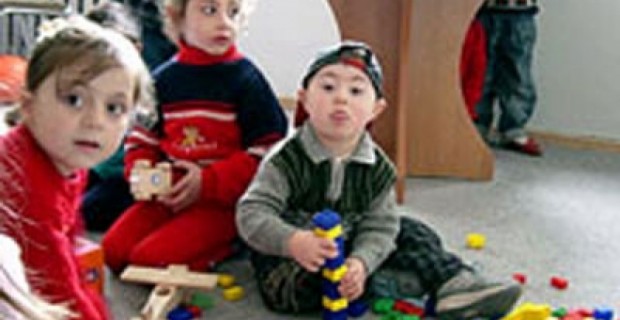
According to official statistics, there are over 8,000 children with disabilities living in the Republic of Armenia . In part the legacy of the soviet-era but also the result of the present socio-economic situation, many of these children have been isolated from society and are excluded from mainstream education.

Human rights are no abstract notion. They are always concrete and specific in content. But when we speak about human rights, we tend to mean, for some reason, political and civil rights. We forget that human rights have a specific economic content as well, and that the violation of individual economic rights is one of the main factors hindering the development of civil society.

In response to our recent articles on the Armenian College in Calcutta , we received the following letter from a reader in Bangladesh , who adds, "You can publish what I wrote in Hetq but I don't want to harm anyone. Please see that the article does not harm the children and the Armenian families of Calcutta." We reprint the letter in its entirety, with minor changes for the sake of clarity.

"A tree saved my life. It was a thick tree - I hid behind it and all the shell fragments went into the tree. The tree was torn up and I managed to escape. It was a strong tree, it was a strong mahogany; it was torn up, but it saved my life," Vahe says. Since then he has worshipped trees. He suffered a head injury during the war and has been disabled ever since.
 Videos
 Photos


