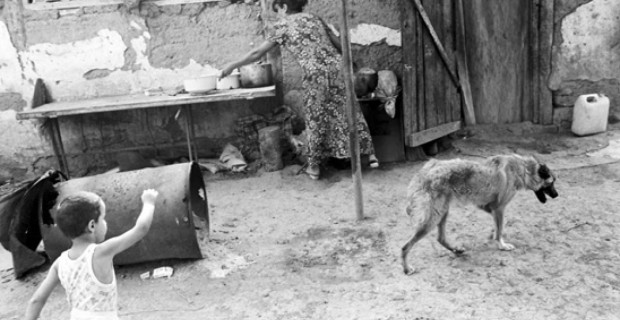
Ara Oshagan has also been photographing in Nagorno-Karabagh for the past 7 years for a book project with his father, well-known author, Vahe Oshagan. The book is entitled "The Spirit of Karabagh" (Karabaghi vokin) and will be published by Edition Paranthese in Marseille, France in 2007. Oshagan's photos from Karabagh have been featured in Photo District News and have won an award from the prestigious Visions 2001 National Photographic...

They are trying to restore contacts between Yerevan and Baku

The floor plan included in the September 2002 Certificate of Ownership of the Proshyan village school clearly showed three structures – the school building, the boiler room and a partly constructed building.

The village of Meghradzor is located fifteen kilometers northwest of the city of Hrazdan, on the left bank of Marmarik River. With population of 2,500, it's larger than other villages in the area.

Arakyul is one of the ancient villages of Karabagh. After the liberation movement, in the result of joint efforts of soviet soldiers and Azerbaijani all the Armenians living in the village were deported. Nothing has been left from the village. The only memory is the church built in the early 20 th century which Azerbaijani couldn't manage to destroy.

In Hadrut I was looking for people with interesting background. I learned about the one growing fir-trees of whom the people of Hadrut used to tell smilingly – “Yes, he is our occupant”. The word “occupant” sounds unpleasant and I could not imagine whom I was going to meet there.

Aradjamugh, a new village in the Hadrut region, was built at the initiative of the Tufenkian Foundation. Settlers have now occupied eighteen houses in the village.

More that 340 people of Hadrut Region fell victims during the Artsakh war. Nearly 30% of its area has been ruined and burnt several times, but the people of Hadrut liberated itself through heavy sufferings.
 Videos
 Photos


