 Videos
 Photos


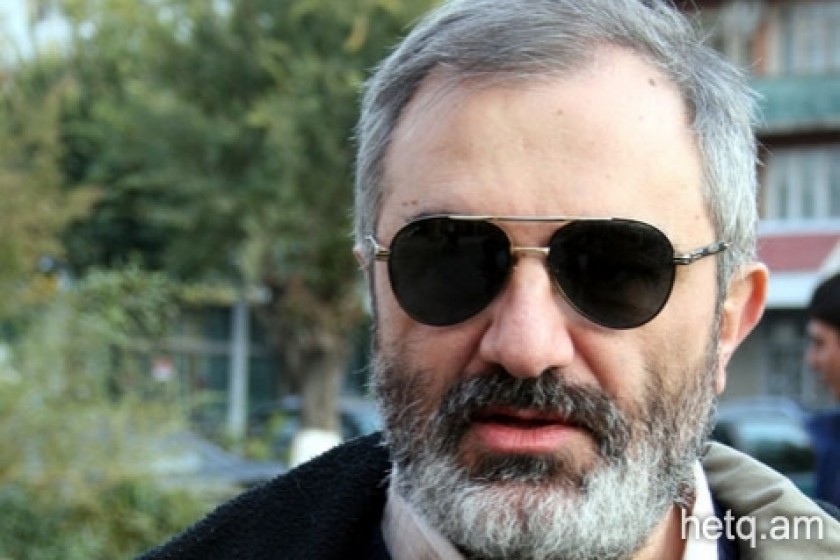
The Looming Demographic Catastrophe, the Ruling Regime and the Question of Armenia’s Future Existence – Part V
Alec Yenikomshian
Characteristics of Armenia’s System
Before attempting to present an alternative system that lends itself to the current conditions in Armenia, it is first necessary to find the answer to the following two questions.
1. Why is it, in contrast to many other nations where the presence of a wealthy privileged class comprising a tiny majority does not rule out the existence of a majority middle class and where the two can co-exist, that in Armenia (and similar countries), in the conditions where there’s a tiny wealthy class, it’s impossible for the majority of the population to develop to the level of the middle class and where the coexistence of the two is ruled out?
2. Why is it that in Armenia (and similar countries), in contrast to many countries where regime change takes place peacefully and without serious confrontation, is the ruling group of the privileged not only ready to use brute force and the spilling of blood to prevent the attempts those political forces enjoying popular support to attain power through legal means, but that these authorities do not even willingly make concessions to another faction of the same system’s elite and attempts to constantly hold on to power.
As in the case of almost all social manifestations, here too, the role of subjective factors, including political culture, is not insignificant. But the decisive factors are the objective ones. Finding the correct answers to the above is dependent on the weighing up of several conditions. In countries that have travelled on the centuries long path of capitalist development, the surplus value derived from economic activity on an international scale and the forms of such activity, and consequently also profit, has usually been so large that it has afforded the possibility to ensure the elite with super-profits and, for the most part, to ensure a middle class lifestyle for the majority of the population.
Using financial, informational and many other means, the privileged class of these countries has created such a system that ensures its continuous presence at the helm of power.
For this reason, this class does not feel the need to execute control of the country directly. Rather, this is carried out by proxy, via the intervention of political parties and professional politicians. Power is periodically transferred to different representatives of the same class, whose views don’t diverge all that much. The majority middle-class, from a socio-economic perspective, is mostly well-off and thus doesn’t complain about the system nor does it show signs of rebellion.
Consequently, in such countries it is possible to realize a western “democratic” system. In contrast to these countries, in those located at the periphery of the world capitalist system, including Armenia , the extent of surplus value, and consequently profit, derived from economic activity is much lower, due to the internal logic of the development of that global system, as well as due to the level of the historical stage these countries have reached in their capitalist development.
Such a small amount isn’t enough to satisfy the avarice of the elite and at the same time to create normal conditions for the entire populace. Furthermore, in countries like Armenia, where the classical capitalist relations have only recently been established, the accumulation of capital, surplus value and profit is realized from the activities taking place within, at the expense of local resources and labor.
Such a situation does not allow for the creation of a middle class comprising a numerical majority alongside a smaller monopoly class. In countries such as ours, the interests of the economic elite and the common citizen can only but clash. In the situation created, one of the sides must give way. And since state power, that is monopoly on violence, rests with the elite, the people are forced to give way (except when it is possible to overturn the balance of powers).
This is the reason why western-style democracy doesn’t work in such countries, since it would signify the loss of control by the privileged class. For isn’t a fact that in free conditions the disgruntled people would not allow those who are the reason for their poverty to attain power?
And without power, the latter would be stripped of their economic monopoly. This is the reason that in such countries, authority is either directly dictatorial or authoritarian; a veiled democracy. In addition, the relative restricted possibilities (and fields) of ensuring super-profits does not allow all representatives of the economic elite to guaranteed super-profits as they would like.
This is why an intense struggle takes place to control super-profits from the exploitation of relatively restricted resources and labor amongst those groups of the same elite. The interests of these groups contradict each other.
Consequently, in contrast to the above noted democratic countries, where political power is transferred from the “A” faction of the elite to faction “B” without essentially threatening the interests of “a”, and, by extension, the economic elite hands the country’s political controls to professional politicians, in these countries, that threat truly exists and makes it impossible for control of the country to be passed to professional politicians. The political and enforcement levers of the country are directly (not through intermediaries) are maintained by ruling faction at the time, unavoidably giving birth to the fusion of economic interests and political power. Here, we can make several essential conclusions:
1. Given the present conditions in Armenia, the interests of the minority monopoly class and the rest of the populace are objectively at odds. Due to this situation, the creation of a majority middle class, alongside this minority, remains impossible. Thus, a change of the system is required.
2. The slogan demanding “a free market competitive economy”, given Armenia’s conditions, is self-deception, and in many case a falsification. If it ever were to succeed (and the present elite faction would fight the process tooth and nail, it would add to the number of the privileged, at the expense of the amount of wealth at the disposal of the currently privileged; but it cannot resolve the problems faced by the country. What Armenia needs given its present situation is a market economy under conditions of a serious role assumed by the state and the public sector, as well as of a clear social orientation.
3. The main problems and critical issues that have surfaced in Armenia are not the result of the system’s “extreme”, “radical” or “incorrect” practices. They stem from the system’s internal essence and objective traits. It is the system itself that is the true cause of these problems and issues.
4. The issues and problems facing Armenia are not simply the result of this or that individual. Regardless of the individual or this or that faction, they derive from the dominant system’s very being.
5. In the conditions of such a system, to speak about the achievement of democracy, the respect of human rights, the rule of law, the separation of economic interests from political power and other such notions, is absurd and self-deception. The realities existing in these sectors aren’t only due to the absence of a healthy political culture. The manifestations that exist are inseparable components of the system and fully lie within its internal logic. They cannot be changed on an individual basis. The system must be change in totality.
6. When it comes to issues considered of national import, the approaches of the economic /political elite cannot but follow the logic of their supreme interests inherent to the system. First, one must understand that the most critical national issue we face today is the state of affairs dominant within the country.
Why? - Because if it continues, it will surely lead to the extinction of Armenia and the Armenian nation. When it comes to the remaining national issues, Artsakh, Genocide ramifications, diaspora, cultural, educational, the approaches of the elite are conditioned by its overriding concern to protect its interests and the value system it professes. To be in the opposition solely in terms of “National’ issues, is self-deception at best and fraudulent when you come right down to it.
Write a comment