 Videos
 Photos


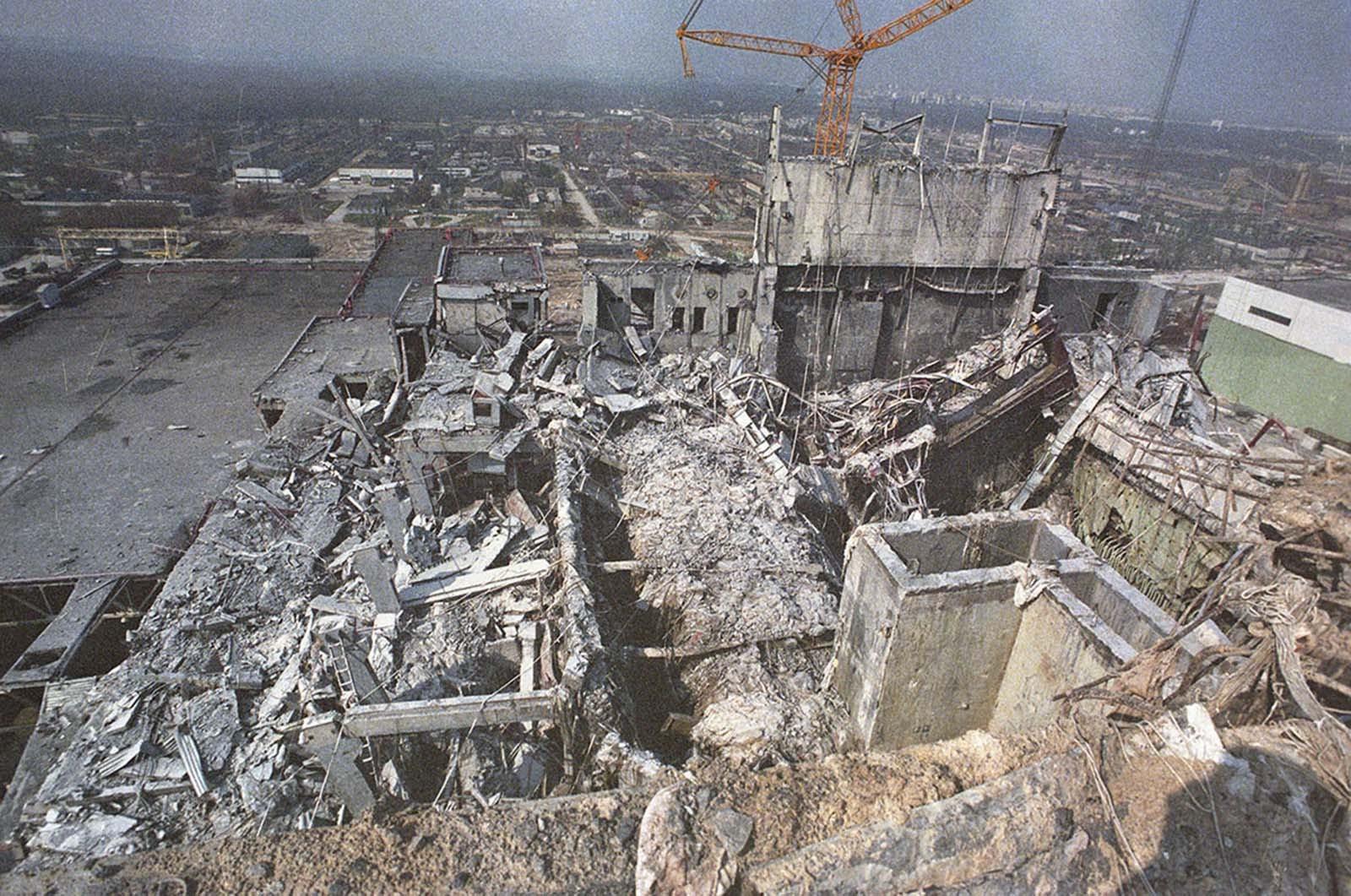
The Victims of Chernobyl
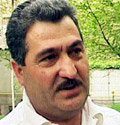
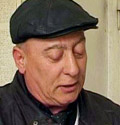
"I don't know how to look my daughter in the eyes when she asks me, 'When I have a child, will it be disabled too?' What am I supposed to say?" asked Vazgen Gyurjinyan.
Vazgen was forced to go to Chernobyl in 1986, as part of the team cleaning up after the nuclear power plant disaster there. He had to return to Yerevan within a few months, however, because he suffered a heart attack while working there. Over the next few years, the effects of the radiation on slowly became clearer and clearer. His body began to bloat - Vazgen left for Chernobyl weighing 68 kg and now weighs twice as much. He has been granted second-degree disability status for life, and has two children, one of whom is also handicapped, genetically inheriting the disability from her father.
The Gyurjinyan's main source of existence is Vazgen's pension of 14,700 drams a month. But Vazgen needs heart surgery and his daughter, an outstanding undergraduate student, faces expulsion due to unpaid tuition fees. Although those disabled as a result of the Chernobyl incident have the right to a number of provisions, including free medical care and medication, the reality of the situation is quite different. "Last year, when I had a heart attack, I was taken from a polyclinic to the Republican Hospital. The doctor said, 'I know that you are supposed to receive medical care at the expense of the State, but if you don't pay me I won't set up your I.V. drip.' Now I need $ 5,000 for my heart surgery. What am I supposed to do? Where am I supposed to get that money from?" asked Vazgen.
Both of Vazgen's daughters are students at the Agricultural Academy. All his efforts to request a discount in tuition for at least one of them have been in vain. "I told them, 'My daughter is disabled, at least take that into consideration,' but they ignored me. Now my daughter, who is an outstanding student, faces expulsion due to unpaid tuition. Are children to blame if they are born disabled? The damage done by Chernobyl has affected them too, and nobody knows how many generations will inherit this," Vazgen continued.
 |
 |
 |
 |
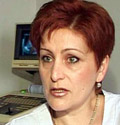 |
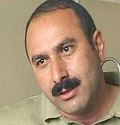
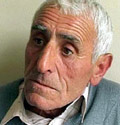
| Vazgen Gyurjinyan | Manuk Poghosyan | Rafik Avetisyan | Norik Manaseryan | Karine Asryan |
"They have ignored us, at least let them not neglect our children." This is the request to the government made by Vazgen, and all the others like him who were taken to work in that high radiation zone by force or guile.
From 1986 to 1990, around 800,000 people, including 3,000 Armenians, were part of clean-up operations following after the nuclear accident in Chernobyl. Some were taken there by force; others had fallen prey to trickery or secrecy. All of them returned from Chernobyl with disabilities, suffering from a wide range of physical or mental disorders. 1,500 of the 3,000 Armenians received disability status for life, while 400 of them, mainly children, have died. The children of those who have survived were mostly born with various disabilities.
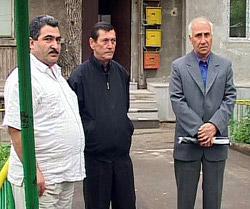
"It was a duty we had to perform; otherwise we would have been accused of treason and never been allowed to work again. There was a general lack of information back then, and many people were not aware of everything that was happening," recalled Manuk Poghosyan. He was taken to Chernobyl from Kiev, where he was undergoing military service. Manuk was particularly incensed by the fact that those who had participated in this task at the cost of their health and were deserving of hero status were now completely ignored. In his words, they were "third class citizens."
Rafik Avetisyan, a resident of the Aragatsotn village of Mastara, who was tricked into going to Chernobyl directly from his workplace through a signed order, never imagined that he would return to his native village with third-degree disability status.
"Now nobody is paying any attention to us; wherever I go to state my case they say, 'You shouldn't have gone to Chernobyl then.' Do I have to have no legs for people to recognize me as disabled? I've been hit by many X-rays, too. Although they tricked me and took me there, at least they looked after me when I returned. I used to get travel papers twice a year from work and get treatment at spas."
The Avetisyan family's only income is Rafik's pension- 9,000 drams a month. His son is unemployed, and Rafik's three grandchildren, who have lost one of their parents, are all left to his care.
"We wear many layers of clothing even during the summer heat, because we feel cold. It's as if we have no blood. We've been left to fend for ourselves. At least I have some friends, who help me buy medication," said Norik Manaseryan, who has first level disability status, showing the medicines he recently procured. One drug cost 16,000 drams, the other 32,000 drams. Just the medication for his stomach ulcer, which he needs to take twice a year, costs twice his 18,000-dram pension.
In the past, those who were part of clean up operations after the Chernobyl catastrophe enjoyed many privileges - they could use public transport for free and the State provided them with quality medical care free of charge. There were special shops for them, and they were taken to spas for medical treatment every year. Today, many of the victims of Chernobyl, especially those who live in provincial regions and are financially insecure, die alone and unnoticed.
The Center for Radiation Trauma and Burns of the Ministry of Health is the only place in Armenia where the victims of Chernobyl receive treatment. Karine Asryan, director of the department for diagnostic service and outpatient supervision, said that 3,000 workers from the Chernobyl clean-up operations were registered as their patients, and the annual number of people receiving in-patient or outpatient care reached 500-600. Asryan explained that the state had outlined a sum of 138,000 drams for each treatment session, with around 20% of the total spent on medication. But, she said, these patients are especially sensitive to radiation and the disease is getting more difficult to treat each year. Besides that, poor socio-economic conditions also worsen the course of the disease. Asryan also mentioned that 90 of the registered patients at the center were children of other patients - 30% of these children have inherited physical defects. Since there are no pediatricians at the center, most of the children are sent to other polyclinics with which agreements have been secured for their treatment.
Despite all this, both doctors and the victims of the effects of this radiation know deep down that they are only delaying the inevitable - the diseases resulting from Chernobyl are incurable.
The Iristyan family, who live in Echmiadzin was also affected by the Chernobyl catastrophe. Their second child was born with congenital defects and only lived one day. Their third child, Grigor, is seven years old, and dreams of becoming a doctor and having many cars, like the doctor in the next village.
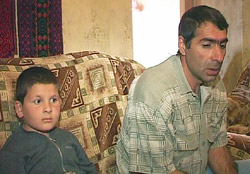 |
| Grigor and Simon Iritsyans |
Grigor's father, Simon Iritsyan, worked at Chernobyl as a driver for six months. He developed a stomach ulcer there, underwent surgery, and returned home disabled. Simon's wife and child are also disabled, and his mother is retired. Simon receives a disability pension from the government, but no other support. The family gave up trying to get help from any state agency in 1997, after enduring months of bureaucratic red tape. He has second-degree disability status now, but his main concern is the health of his son Grigor and the fear that the ill health the child periodically faces is a result of the effects of radiation from Chernobyl.
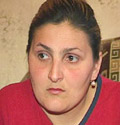
Simon's wife, Anushik, said that they were first concerned when Grigor fell ill with pneumonia at the age of four and then it recurred a year later, and when he later complained of pain in his legs. "We don't know the main cause yet. His blood tests in Echmiadzin were clear, and they could not explain the mystery either. We can't go to Yerevan, because the expenses would be too high, and we don't have that much money," she said.
 |
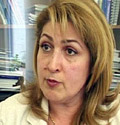 |
| Anushik Iritsyan | Jemma Baghdasaryan |
Staff at the Armenian Ministry of Labor and Social Issues assured us that the status of Chernobyl victims had been equalized with those of disabled war veterans.
Jemma Baghdasaryan, head of the Committee for the Issues of the Aged and Disabled at the Ministry, said that a majority of the victims had served in the army earlier and were considered army veterans, thus being subject to the law regarding those undergoing military service for Armenia and their families. Mrs. Baghdasaryan assured us that the disabled army veterans had a number of privileges including 4,500 drams aid for transport, gas and water supply. They also receive free medical care and medication.
 Those whose lives largely depend on medication do not see much progress in their condition. The only organization dealing with the health and social concerns of victims of the Chernobyl disaster and other nuclear accidents and tragedies is an NGO called the Chernobyl Association. The organization was founded by people who worked in the clean-up operations after the catastrophe. Approximately 2,000 people are registered with the organization, 1,500 of whom have disability status of one degree or another.
According to NGO President Gevorg Vardanyan, they have appealed to Gagik Mkheyan, president of the permanent parliamentary committee for social, health and ecological issues, as well as the Ministry of Labor and Social Issues, for the acceptance of a law on the social protection and health rehabilitation of citizens who are victims of radiation through Chernobyl and other nuclear accidents. Although the Ministry of Labor and Social Issues had not replied to the organization in writing, Jemma Baghdasaryan's evaluation of the situations suggested that they had not found it suitable to accept such a law there. According to her, most of the stipulations in the bill for the law proposed by the organization are already covered by other laws.
Gayane Hakobyan
Comments (1)
Write a comment