 Videos
 Photos


Restoring Ancient Armenian Tomes: Yerevan’s Matenadaran Specialists at Work
Anna Khaninyan restores rare books in urgent need of care at Yerevan’s Matenadaran, the Mesrop Mashtots Research Institute of Ancient Manuscripts.
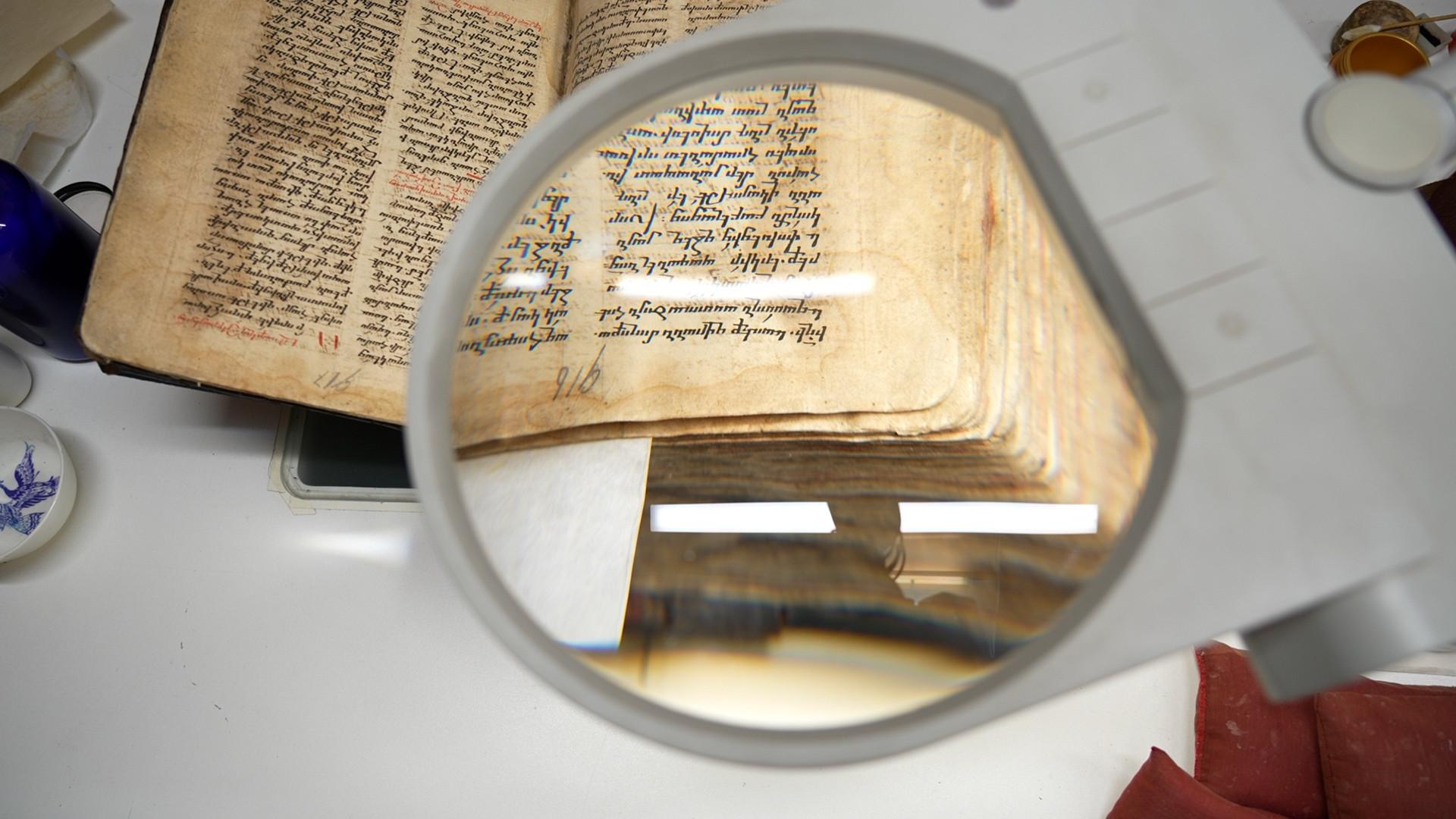
Her current project is the lectionary of the Armenian Apostolic Church - known as the Jashots Girk – a compilation of biblical passages that is read during the church’s liturgical celebrations.
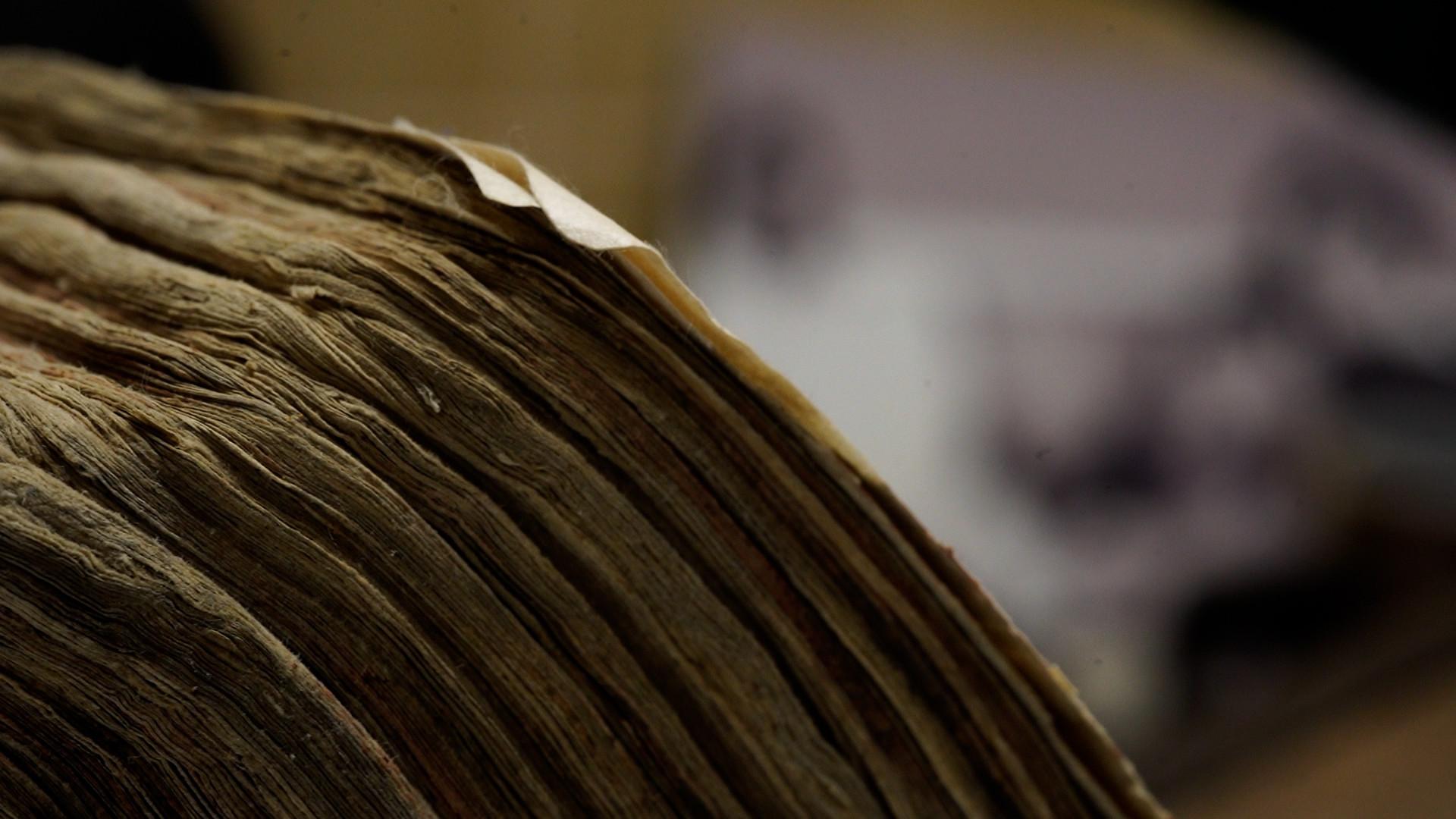
The book in front of her, dating to 1785, is damaged: some parts of the wooden binding are missing, the threads connecting the binding to the pages are torn, and the leather is worn.
The Jashots Girk was first published in book form in Venice, in 1686, and has seen several editions and revisions since then.
“Every book has a different problem, one is damaged by insects, another by time, and another by people,” says Khaninyan, who moved to Armenia from Russia three years ago.
The institute’s restoration department is the final stop for books that need repair and renewal. They arrive from the depository and first go to the biochemical laboratory, where biologists examine them closely. On the lab tables, these centuries-old volumes become “patients” awaiting careful diagnosis.
Biologists take a sample to find out if the book is infected with fungi, bacteria, and what diseases it has. If a danger is detected in the microscopic domain, the book goes through a deeper disinfection stage.
The next stop is the dusting and disinfection room. Specialists using fine brushes remove the dust accumulated over the centuries. The books are then placed in a special cabinet, where the vapor of a plant-based liquid penetrates the pages, cleaning what is not visible. Recipes for the liquids are taken from old manuscripts and medical books.
Amalya Apresyan has been working at the Matenadaran since 2011. She says that she is one of the lucky ones who can not only see the written heritage up close but also touch it and work with books daily. Apresyan is also entrusted with the task of arranging the books in the vault, cleaning them of dust, and bringing them from the vault to the restoration department.
“I can’t describe what I feel. Not everyone is meant to even see them up close. I take care of them and clean them. We have such a beautiful and rich heritage. It’s a pleasure to work here,” she says.
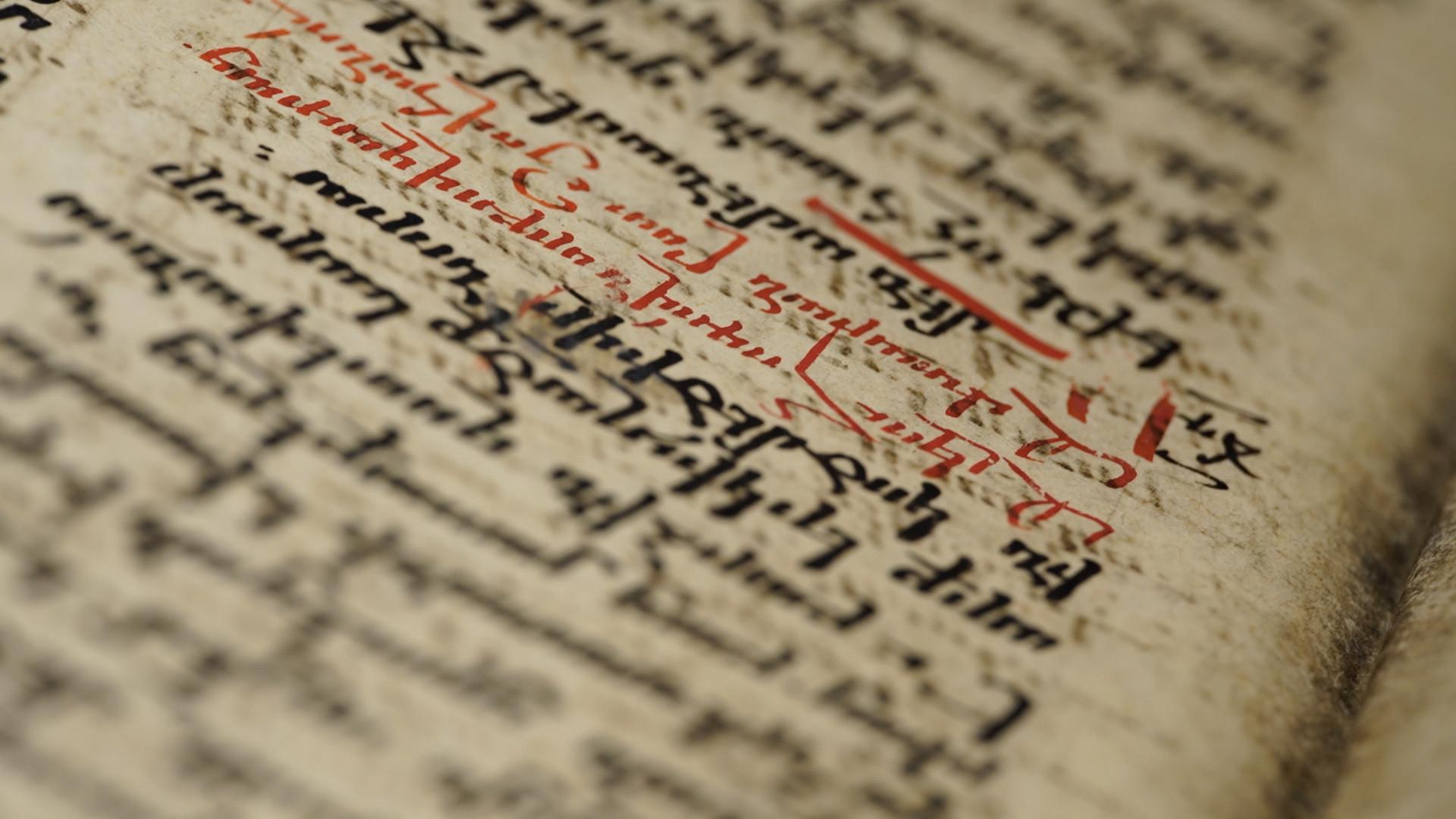
Books seem to come back to life during the disinfection process. It’s only after passing these stages do books reach the restorer’s table. Restorers often become attached to individual tomes and saying goodbye is difficult for them.
Restoration begins with research. Books, whether in print form or handwritten, are examined by the restorers. They review each book’s condition and specify the work to be done.
Missing wooden parts of the binding are made new, torn papers, and missing parts of the pages are joined using imported Japanese paper. The work is very meticulous. Restorers work very carefully with worn sheets and leather, preserving all the threads of the binding. The restored parts must be clearly distinguishable from the original so that it is clear which part has been restored. The missing parts of the text are not filled in, but Japanese paper of the appropriate thickness is glued there.
During the restoration of the book, specialists work with several materials: paper, wood, leather, thread, and sometimes metal. Restorers must possess the skills to work with all these materials. No educational institution in Armenia a degree in professional restoration. Those working at the Matenadaran are mostly painters and jewelers who love working in detail.
Many manuscripts often have illustrated, colored pages and gilded sections. They must be cleaned with extra care, sometimes only by dry cleaning, without water or additional materials, with a soft sponge, so as not to damage them.
Damaged pages are cleaned of old adhesives that were used years ago to “save” the book. There are books that were restored decades ago, but need to be restored again, since the previous restorations were of inferior quality.
Printed books are also washed. Rather than damaging the paper, water helps strengthen it, reduce brittleness, and remove yellowing. After washing, the pages are dried and, if needed, flattened under a press before reassembly and sewing begin. On the restorer’s table, the book gradually regains its original form. Restoration time depends on the extent of the damage, as well as the book’s size and thickness, and can range from several months to several years. Specialists typically work on several books at once.
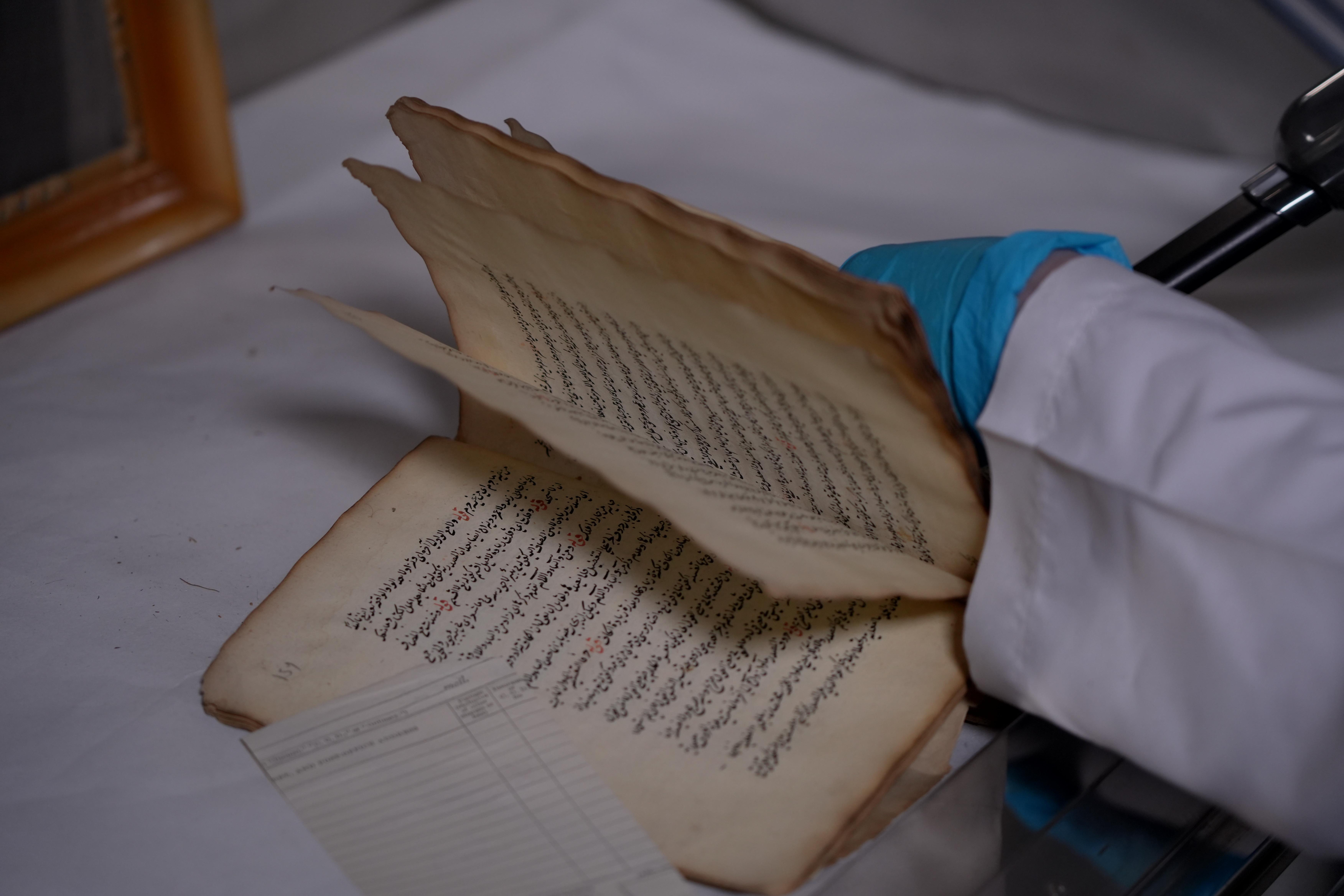
The Matenadaran also has a laboratory for the restoration of Arabic manuscripts.
Karineh Abelyan is engaged in the restoration of Arabic manuscripts. Due to the ongoing war in Syria, she moved from Damascus to Yerevan with her family in 2021, leaving everything there: her house, shop, and work. In Damascus, she was engaged in the same work in the restoration department of the National Museum of Damascus. After moving to Armenia, she applied to the Matenadaran. Since she speaks Arabic and is skilled in this field, she was entrusted with the restoration of Arabic manuscripts.
For years, the Matenadaran has used high-quality handmade Japanese paper to restore manuscripts and printed books. Because the paper is expensive, specialists save even the smallest scraps and try to reuse them.
Arthur Petrosyan and Artavazd Ayvazyan have been studying different tree species for years to understand whether it is possible to obtain paper of the same quality with Armenian raw materials. Finally, because of studies conducted with foreign partners, they found a species of citrus tree from which it is possible to obtain restoration paper.
Their dream came true on May 22, 2025, when the Armenian restoration paper workshop was opened in the Matenadaran. It now produces quality paper necessary to restore Armenia’s written heritage.
Paper production begins in winter when the trees are dormant. Thin branches of trees are collected, the bark is separated, and the branches undergo a boiling and processing stage until a fibrous mass is obtained. This mass is placed in water on special nets, where they begin to form the new paper.
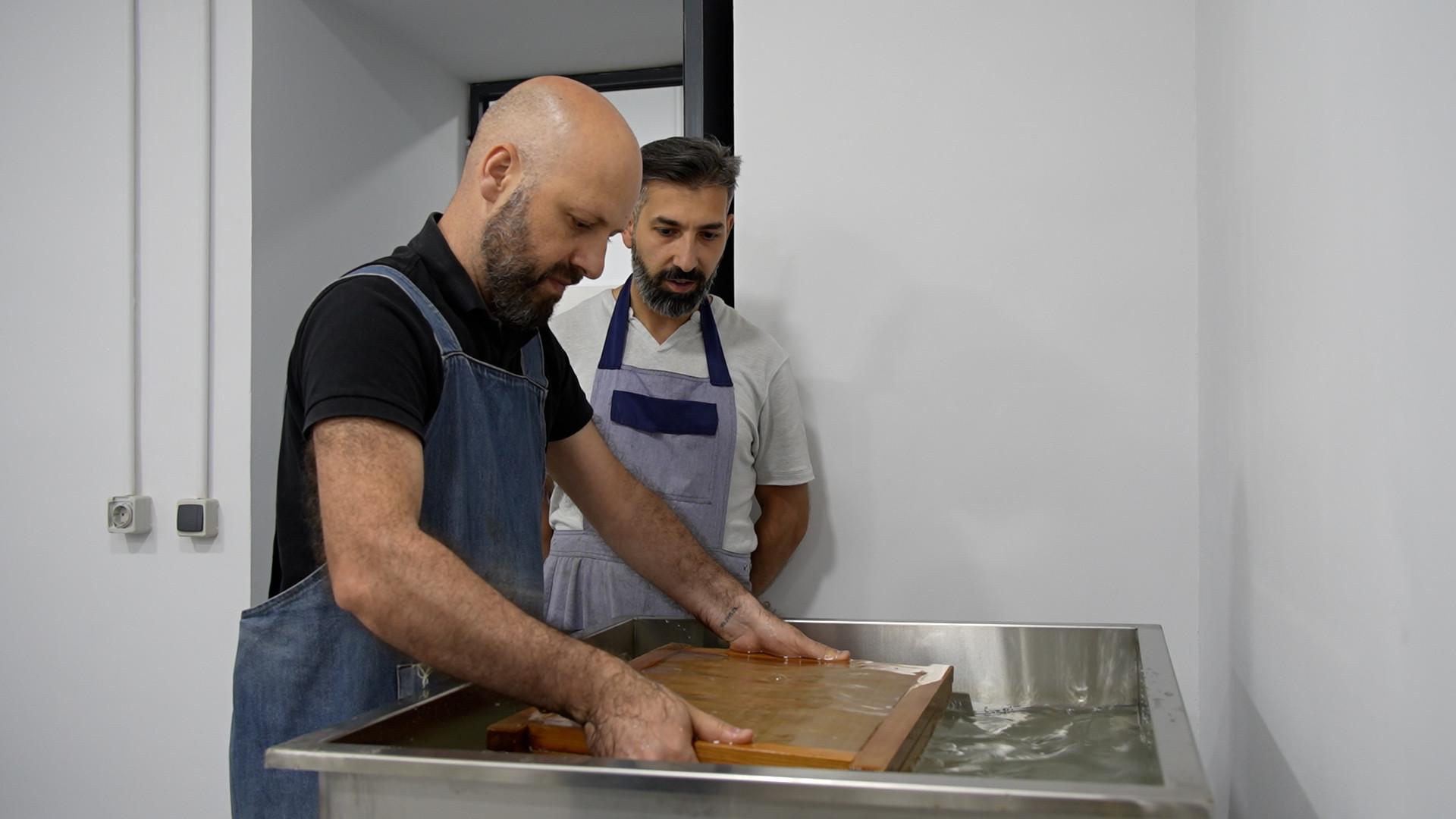
Petrosyan and Ayvazyan intend to expand production so that the Matenadaran can start exporting paper to other countries.
Write a comment