 Videos
 Photos


Ingesting Nails and Screws: Incidents of Self-Harm in Armenia’s Prisons
Incidents of self-harm continues to be one of the most serious problems in Armenia's penitentiary institutions.
Observers and experts claim that in many cases, signals of the serious mental state of prisoners are not responded to in a timely manner.
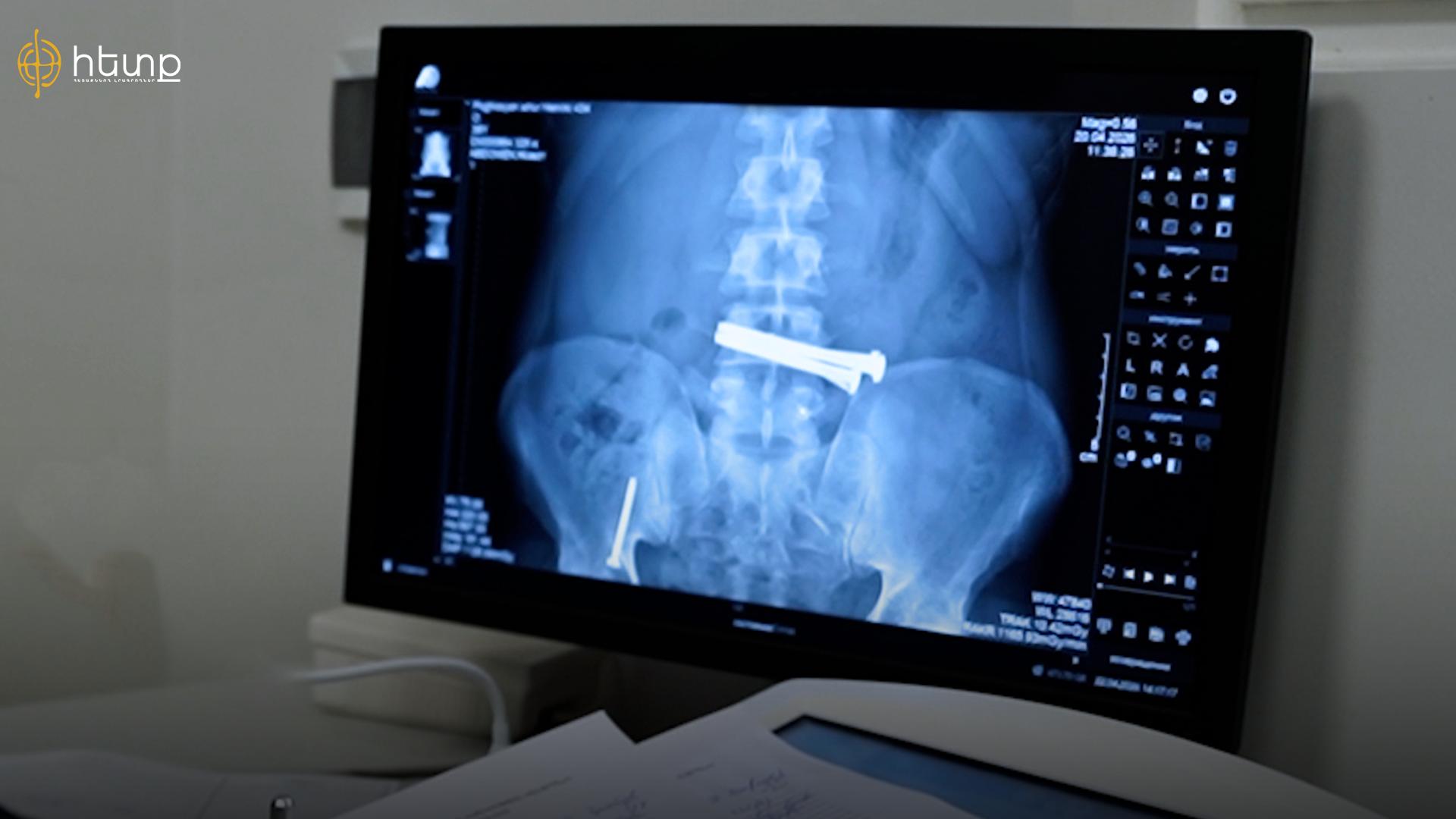
“This one is a memory stick. This one is a nail, but this last time it already came out .I counted more than twelve pieces. Here’s a screw. Look, this one is already moving. For a long time, there was no movement, it was constantly in the same position, there was no change But this last time it already showed a change,” says Anahit Grigoryan, a radiologist at the Armavir subdivision of the Penal Medicine SNCO, showing the X-ray images.
The nails, thermometer, screws and other metal objects seen in the X-ray images are not random cases. They are one of the most extreme manifestations of self-harm in Armenia’s penitentiary institutions. Although the number of people who committed self-harm in 2025 decreased somewhat, from 205 to 183, the total number of self-harm cases has hardly changed. In 2025, 617 cases were recorded, and in 2024, 626 cases. This means that the same individuals have repeatedly attempted at self-harm.
In addition to swallowing hard objects, prisoners also resort to other extreme measures. The suicide that occurred in the Armavir penitentiary in 2025 is one of the most serious examples of this. The convict serving the sentence was kept in solitary confinement for a long time, had mental health problems and had repeatedly self-harmed before, amputating eight of the ten fingers on both hands. Despite these obvious signals, he, according to human rights activists, did not receive the necessary medical and psychological support.
“It was very painful when a person cut off his fingers eight times and was not provided with proper medical care. Not only medical care, but also why not psychological support, since the work of psychologists is also valued. We constantly raised our voices, addressed letters to the relevant departments, raising the issue of the compatibility with the person's health condition. Unfortunately, it remained in the air and eventually the person committed suicide," says Shushan Khnkoyan, a member of the group of observers conducting public oversight in penal institutions.
Write a comment