 Videos
 Photos


Armenia’s Exports and Agriculture Decline in Tandem
While Armenian Economy Minister Gevorg Papoyan and his deputies repeatedly tell journalists that thousands of tons of fruits and vegetables are being exported from Armenia and talk about “capturing” new markets, these figures mean nothing unless they are compared with last year’s export data.
It remains unclear what the government and exporters, now facing a deadlock because of Russian restrictions, will be able to do in the near term. Meanwhile, both exports and agriculture are declining. However, it would be inaccurate to attribute the agricultural downturn solely to these restrictions.
At the August 27 cabinet session, Prime Minister Nikol Pashinyan highlighted “positive” economic indicators, including 6% growth in the first half of the year. Yet the double-digit decline in agriculture in the second quarter has gone largely unaddressed alongside those favorable figures.
15.7% decline in July. Exports continue to decline
According to the latest data from the country’s Statistical Committee (SC), in the first seven months of this year (January-July 2026), Armenia's foreign trade turnover amounted to US$ 11.5 billion, of which 4 billion were exports, and the remaining 7.5 billion were imports. Compared to the same period last year, exports decreased by 7.9%, while imports increased by 7.7%.
Russian restrictions on goods of Armenian origin entered their "peak phase" in May, but exports were already declining.
In 2025, exports from Armenia decreased by 36.7%, mainly due to a severe reduction or complete cessation of flows of gold, as well as other re-exported goods.
- Armenia’s Export Markets: Russia Up, EU Down
- Fudging the Numbers? Armenian Economy Minister Boasts Export Boom of Local Products
- The Offshore Roots of Armenia’s Jewelry Production and Export
The reduction continued in the first months of this year (except for February). Since May, Russian restrictions have been added to these factors. These restrictions have had a greater impact, because if they had not existed, most likely the decline from the second quarter of this year would have been smaller compared to the already reduced indicators of the previous year.
According to the latest data, in July of this year, compared to the same month of the previous year, exports from Armenia decreased by 15.7%.
At the end of April, the sale of a batch of Jermuk mineral water imported from Armenia had been banned in Russia.
In May, Russia labeled flowers grown in Armenia as “dangerous”, followed by fruits, vegetables, wine and certain types of brandy, dried fruits, etc. Threats about the price of gas intensified.
The Statistical Committee's database already had export indicators for June by product type, which can give some idea of the situation.
In January-June of this year, Armenia exported $1.2 billion worth of goods to Russia, which is a 4.2% decrease compared to the same period last year.
The decline in individual product groups is manifold. These include fish, flowers, fruits, vegetables, mineral waters, etc.
The SC does not specify, monthly, which specific countries the mentioned products were exported to, therefore we have taken the general export data as a basis. However, the statistics of previous years prove that these are products whose main export market is Russia.
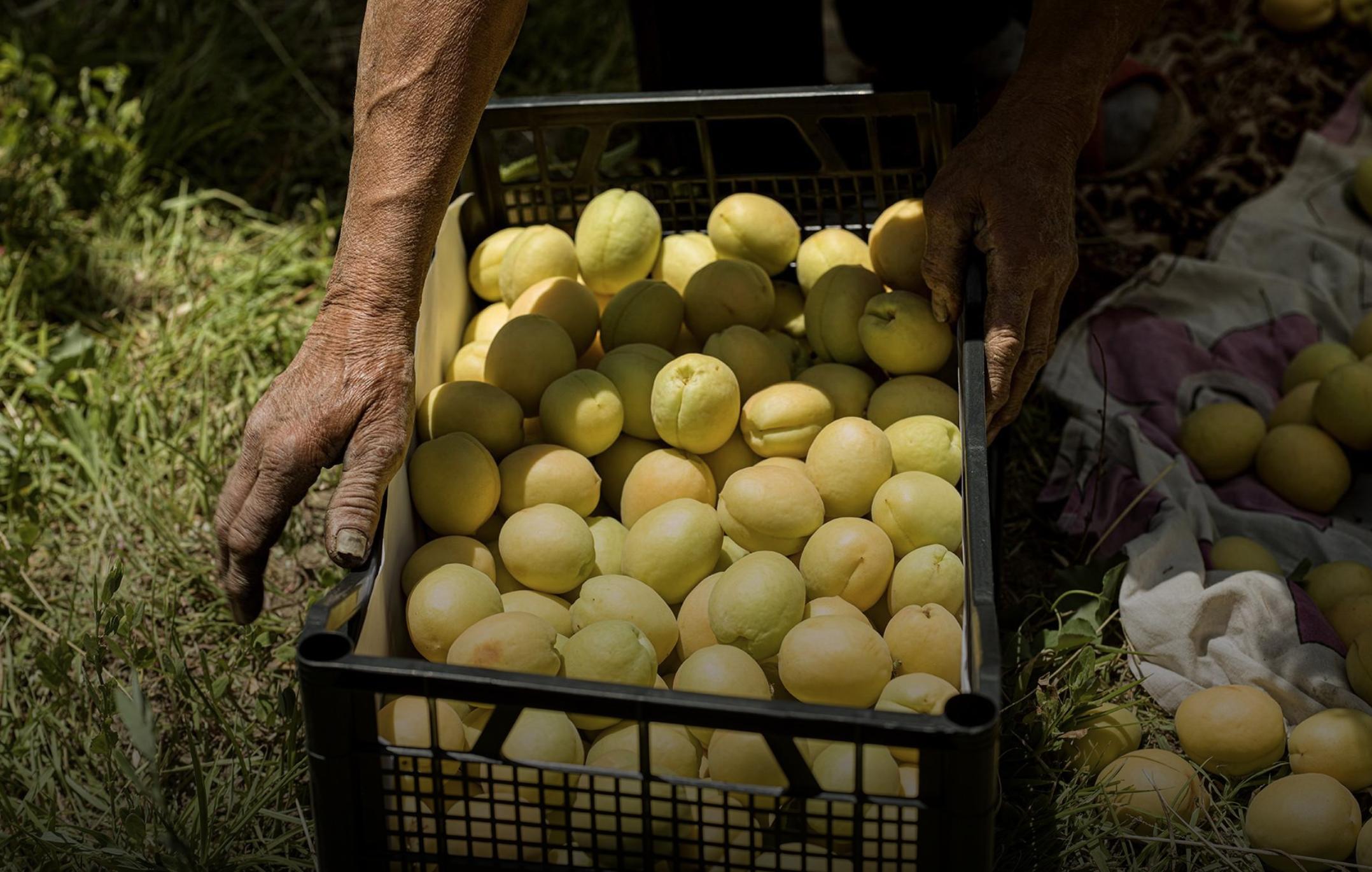
For example, in the first half of this year, Armenia exported apricots, cherries, cherries, hornbeams, and plums worth $4.8 million, which is five times less than in the first half of last year. These items are exported under the same large product group. The main portion is exported in June.
Fish products are also in the news. At first glance, if we look at the statistics, more fresh or chilled fish was exported in the first half of this year than in the same half of last year. However, this was mainly due to the first three months of the year, a clear decline was recorded in June. If in June last year, fresh or chilled fish worth $3 million was exported, then in June this year, only $2,500.
For nearly all the products mentioned above, the decline was driven mainly by sharp reductions in June. Exports of products not covered by the main restrictions and still shipped to Russia have not declined, particularly brandy.
A few days ago, the Ministry of Economy announced that starting in September, Armenia is expected to export up to forty tons of fresh fruits and vegetables per week to the UAE. Attempts to enter new markets and state support are regularly announced.
The latest data from the Statistical Committee summarizes June of this year by product group. What the government and business entities managed to do in July and August will be seen in the upcoming data.
Armenia’s Central Bank also records the current situation and risks in the export and agricultural sectors. In the latest monetary policy report, CB analysts emphasized that Russia’s tightening of import standards for Armenian exporters could lead to a weakening of income and demand in Armenia. It could also have a direct deflationary effect due to a surplus in certain markets (for example, tomatoes and fresh fish).
Agriculture sector recorded a 15.3% decline in the second quarter
As can be seen from the data, most exported goods are agricultural. Naturally, the Russian restrictions on the export of Armenian agricultural products had a significant impact on the second quarter.
But is this decline in agriculture due solely to those restrictions?
According to the SC, in the first quarter of this year, a 1.6% decline was recorded in the agricultural sector, and in the second quarter the decline significantly accelerated to 15.3%.
Economist Aghasi Tavadyan notes in his analysis that the restrictions applied are a fact and have a tangible negative impact.
However, the data show that the decline cannot be attributed solely to the ban since it had already begun in the first quarter. The ban appears to have only accelerated an existing downward trend.
“The competitiveness of the agricultural sector has been declining for years due to cheaper imported goods. The appreciation of the dram also had its impact, leading to an increase in the price of local products both in the domestic and foreign markets. In addition, there is a logistical dependence on the supply of fertilizers (mainly on the Russian one-way route),” says Tavadyan.
In the second quarter of this year, compared to the same period last year, Armenia’s economic growth (GDP growth) amounted to 6.7%.
Agriculture is the only sector where a decline was recorded (15.3%), which restrained overall economic growth.
The largest growth was recorded in the construction sector - 20%. Trade and services follow, with a growth of 7.7%, and industry - 6.4%.
Although the growth rate of construction is higher, trade and services contribute the most to economic growth, as their volumes are many times higher than construction.
Write a comment