 Videos
 Photos


The Spelling of Sovereignty: Armenia’s Future Depends on Reclaiming Its Classical Script
By Ohan Chekmechian
The debate over Armenian orthography is not a mere linguistic technicality; it is a battle for the soul and continuity of a fragmented global nation.
Since the Soviet regime forcefully imposed reformed spelling rules in the 1920s, the Armenian language has been structurally severed into two distinct typographic worlds. Today, as Armenia navigates a hyper-connected yet geopolitically precarious landscape, a systematic return to Traditional (Classical) Orthography—the standard developed over centuries and preserved by the Diaspora—is not a nostalgic retreat. It is a vital, forward-looking strategy to unify our people and restore the intrinsic logic of our language.
Reconnecting a Fractured Global Nation
The 1922 and 1940 Soviet spelling reforms successfully erected a psychological and literary barrier between the Republic of Armenia and its massive global Diaspora. Currently, an Armenian student in Yerevan and a student in Los Angeles or Beirut struggle to fluidly read each other’s publications. A simple surname like Սարգսեան (Sargsean) becomes Սարգսյան (Sargsyan) in the Republic, while foundational names like Յակոբ (Yakob) are phonetically flattened to Հակոբ (Hakob).
This divide locks Armenia's citizens out of a vast treasury of their own heritage. Massive archives of literature, historical documents, and theological texts produced over the last millennium—as well as modern Western Armenian literature—are written in classical orthography. Reaffirming a single spelling standard instantly dissolves this century-old artificial barrier, signaling to the Diaspora that they are equal stakeholders in a singular, borderless Armenian cultural matrix.
Restoring Linguistic Logic
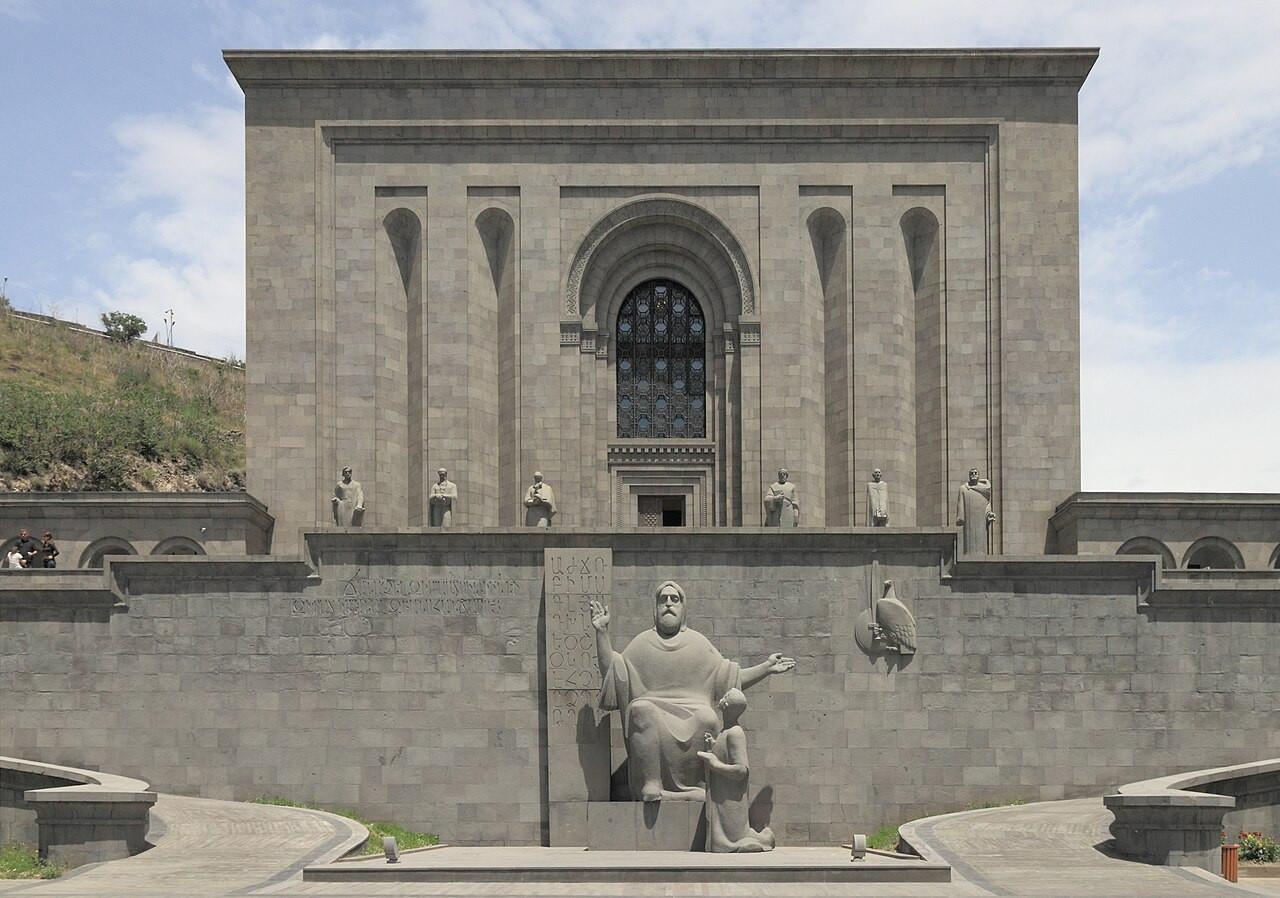
The Soviet distortion of Armenian spelling operated on a hyper-simplified principle: "write the way you speak." This political agenda increased rapid literacy at the expense of linguistic depth, stripping the alphabet of its profound etymological architecture. The alphabet created by St. Mesrop Mashtots in 405 AD was designed with a perfect symbology where letters carry inherent roots and historical trajectories.
Soviet reforms flattened this complexity by dismantling ancient diphthongs and eliminating key characters. The total removal of the letter «Ւ» (yiw) permanently severed the structural connection between Armenian words and their Indo-European roots. Concepts like liberty—historically spelled ազատութիւն (azatut'yun)—were stripped of their anatomy and rewritten as ազատություն. Similarly, letters like «Է» and «Օ» were banned from the insides of words, transforming historically grounded terms like խօսել (khosel / to speak) into the phonetically generic խոսել.
Returning to classical orthography restores the internal logic of the language, making it more intuitive to deduce the meaning of unfamiliar words through their visible etymological components.
Healing the Scars of Soviet Engineering
Language is the ultimate vehicle of state control. The Bolsheviks explicitly used orthographic reform across Soviet republics to detach captive nations from their pre-revolutionary pasts, isolating populations from religious, classical, and nationalistic literature.
For Armenia, maintaining the reformed orthography means submissively preserving a tool of colonial engineering. True decolonization and sovereignty require the active reclamation of national institutions. Reinstating classical orthography is a profound act of historical justice, signaling that modern Armenia answers to its own millennial heritage rather than the administrative dictates of a long-collapsed totalitarian empire.
A Pragmatic Path Forward
Critics argue that reverting to classical orthography would cause widespread confusion and immense economic costs. However, these logistical hurdles are entirely manageable through a phased, generational transition, similar to successful language updates executed in Germany and Israel.
Armenia can implement a strategic roadmap:
- Dual-Orthography Transition: Allow both spelling systems to coexist in official documents, media, and signs for a designated decade.
- Educational Integration: Introduce classical spelling incrementally, starting with primary school classrooms so the next generation grows up fluid in the original script.
- Digital Adaptation: Leverage modern AI and digital translation tools to instantly convert existing digital texts into classical script, minimizing practical friction.
Language is the perimeter wall of Armenian identity.
In an era where geopolitical borders are constantly threatened, reinforcing our cultural borders is a matter of national security. Returning to classical orthography is an investment in Armenia's long-term resilience—a definitive step toward building a culturally unified, etymologically grounded, and historically vindicated global nation.
Write a comment