 Videos
 Photos


Armenian Government to Subsidize 2,000 Tons of Unsold Areni Grapes for Brandy Production
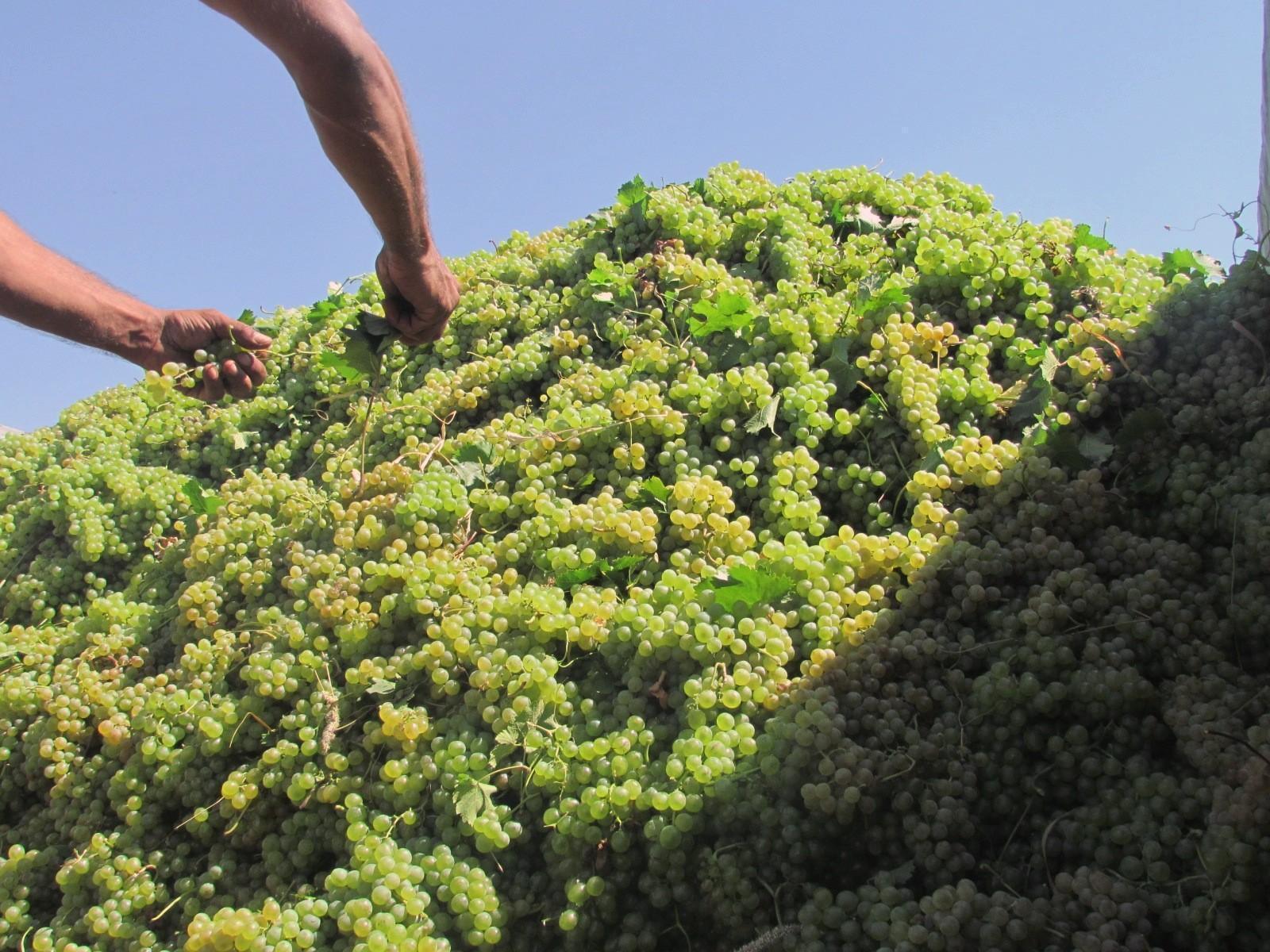
YEREVAN — The Armenian government has introduced a draft proposal to step in and subsidize the procurement of approximately 2,000 tons of unsold Areni-variety grapes from the Vayots Dzor Province this year. Developed by the Ministry of Economy following an urgent request from the Vayots Dzor Governor's Office, the measure aims to secure buyers for a critical surplus threatening local farmers.
If completely executed under the program's terms, the state will allocate roughly AMD 140 million (approximately US$389,000), directly from the government’s reserve fund.
Plunging Demand Triggers Surplus
A newly submitted draft decision, titled "On Approving the Measure for Organizing the Procurement Process of Areni-Variety Grapes for 2026," sheds light on structural issues suffocating the domestic market. According to the Ministry of Economy, Armenia's wine production plummeted to about 8 million liters in 2025—an 18.5% drop (1.8 million liters) compared to 2024. Winemaking required roughly 2,800 tons of grapes to hit that benchmark.
The ministry attributes this steep decline to a compounding reduction in wine consumption both internationally and inside Armenia, leaving factories holding massive stockpiles of finished products from previous years. Consequently, the demand for fresh winemaking grapes has bottomed out, hitting Vayots Dzor’s signature Areni variety the hardest.
Out of a total estimated harvest of 5,400 tons of Areni grapes in the province this year, only 3,400 tons are accounted for via internal consumption or preexisting winery contracts. This leaves a 2,000-ton excess with nowhere to go.
Turning Wine Grapes into Brandy Spirit
To rescue the harvest, the ministry proposes redirecting the 2,000 tons toward brandy spirit production. However, because Vayots Dzor has relatively low yields, production costs run prohibitively high. While premium Areni grapes typically command a market procurement price of around AMD 230 ($0.64 ) per kilogram, grapes intended for brandy spirit pull in far less—currently hovering around AMD 135–140 ($0.38–$0.39) per kilogram.
To bridge this massive gap, the state will provide a flat subsidy of AMD 70 ($0.19) per kilogram.
Under the strict terms of the draft, state support will target economic entities that procure at least 800 tons of Vayots Dzor Areni grapes, provided they pay the farmers a minimum baseline of AMD 210 ($0.58) per kilogram. Companies meeting these conditions will receive the AMD 70-per-kilo subsidy across their entire volume.
To prevent systemic abuse, the draft explicitly excludes any grapes harvested from land plots owned or leased by the processing business itself. It also bars procurement from land cultivated by the company’s founders, any shareholders controlling over 10% of the firm, or their immediate family members (parents, spouses, and children).
Government authorities note that the 800-ton minimum requirement was deliberately structured to prevent standard wineries from tapping into the funding, ensuring the program does not distort fair competition within the specialized wine sector. Provincial governors’ employees will closely monitor collection operations.
Financial Support and Contract Extensions
Because the Ministry of Economy lacks unallocated funds in its current budget, the AMD 140 million ($389,000) package is requested as a direct rollout from the government's reserve fund for the final quarter of 2026.
Simultaneously, a parallel proposal is moving through government tracks to extend the final deadline for signing grape procurement contracts to November 15, 2026. The extension is engineered to give purchasing companies the necessary time to lock down emergency loans so they can take on the distressed harvest.
The change alters an existing state program that subsidizes interest rates on agricultural raw material loans. Normally, loan amounts are capped based on contracts finalized before August 1. However, agricultural reviews revealed that most grape growers in Vayots Dzor were operating completely without contracts this season.
While processors are reportedly willing to sign new contracts to clear out the remainder of the fields, they require urgent credit backing to facilitate the transactions. Officials estimate that commercial businesses will need around AMD 270 million ($750,000) in total additional credit lines to process the 2,000-ton surplus. The Ministry of Economy stated that servicing these subsidized loans will not cause significant long-term liabilities, and will be absorbed by allocations slated for the 2027 budget and the 2027–2029 medium-term expenditure framework.
Write a comment