 Videos
 Photos


Custom Treatment
Editor’s Note: The following is an investigation conducted by the Washington-based Organized Crime and Corruption Reporting Project, a Kyiv Post partner. The authors are Kyiv-based Ukrainian journalists working for the investigative bureau Slidstvo.info.
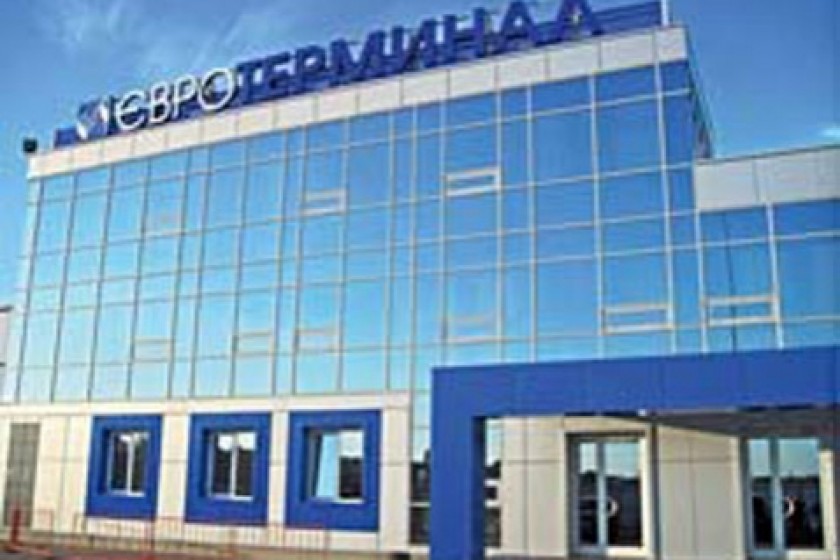
ODESA, Ukraine – A stretch of dried-up swamp on the outskirts of Odesa is where probably more cash is exchanged daily than just about any other location in Ukraine. The 50-hectare location is known as Euroterminal, a cargo and customs clearinghouse with a murky ownership structure that has support from Ukraine’s President Viktor Yanukovych, who helped get it started.
Soon after the new terminal was built in 2011, government officials created a new Southern Customs branch at the private terminal. Some of the country’s imports of food, consumer goods and other essentials delivered through Ukraine’s largest sea terminal now go through this private business.
Ukraine’s state customs service, notoriously corrupt and cumbersome, has been one of the sorest points for Ukrainian businesses. According to the latest Ease of Doing Business in Ukraine report published annually by the World Bank, Ukraine’s customs service is among the most difficult to deal with in the world, scoring a dismal 145th out of 185 economies surveyed for ease of trade across borders.
it is not clear if importers still technically have the right to continue using the state-owned sea terminals for clearing their cargo. OCCRP reporters independently called the office at the sea port and were told all customs must now be cleared through the Euroterminal. The website, however, still indicates customs can be done at the sea port.
Regardless, many complain privately that they are pressured by customs officers into using Euroterminal. And that is what has importers scratching their heads. The new terminal doesn’t solve any of the existing problems and introduces new ones like higher fees. It also shifts revenues from the state into private hands.
Dmytro Gambeev, head of an Odesa-based firm that trades ceramic tiles, chose the state-owned sea terminal to undergo customs clearance procedures because it was cheaper. But it didfn’t turn out to be easier.
Clearing customs formalities recently took Gambeev two days, instead of the four hours as required by the legal code. The businessman even filmed his interaction with officials of the southern customs office which blocked his cargo. He says they suggested that he complete his paperwork at the Euroterminal. Only after the video was posted on YouTube and Gambeev complained directly to the customs’ main office in Kyiv did his shipment get clearance.
“At Euroterminal, you pay $100 just for them to open the gate. Then you pay $400 to transport your cargo from the port to the terminal. When I did custom clearance at the port, there was no ‘extortion’ like that,” Gambeev said.
According to Yuri Vaskov, the director of the state-owned Odesa Commercial Sea Port, Euroterminal has received millions of dollars in fees. The seaport’s current annual turnover reaches 20 million tons of cargo.
But now an estimated 15 to 30 percent of the containers daily go through the new private terminal. These fees, according to an investigation by reporters for the Organized Crime and Corruption Reporting Project (OCCRP), end up in the bank accounts of the offshore firm that controls Euroterminal. Ownership is hidden deep behind a chain of lawyers and proxies and it is not clear who is benefitting from the company.
Euroterminal management wouldn’t provide any financial information, although customs brokers estimate that one container going through customs via Euroterminal brings around $100 to $500 in revenue to its owners in unloading, weighing, storage and other fees. Currently, Euroterminal processes around 300 containers daily meaning that Euroterminal’s annual revenues could easily reach $20 million.
And that revenue is set to increase as, according to Vaskov, Euroterminal is currently undergoing a major expansion to boost its capacity.
Surprisingly, Vaskov does not mind the situation where the state enterprise loses business. Vaskov says he’s happy for Euroterminal. “It only helped diversify cargo traffic, so the capacity of our port only increased,” Vaskov said.
The decision to award a private company the right to clear imports through customs was made by President Viktor Yanukovych personally.
On April 8, 2011 Yanukovych instructed former head of Ukraine’s Customs Ihor Kaletnyk to assist in the opening of such a terminal, according to the Presidential Administration. Seven months later, Kaletnyk personally showed off the newly built terminal to the president. PRESIDENT PIC

All this prompts a question: How did this business get lucky enough to win the support of the president in capitalizing on huge revenue from cargo?
Write a comment