 Videos
 Photos


President of Armenia’s Chamber of Advocates - “We must free ourselves from self-seeking judges executing orders from on high”
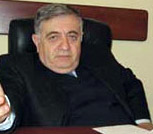 Mr. Ruben Sahakyan, President of Armenia’s Chamber of Advocates, responds to reader questions
Anoush – How many attorneys have been investigated by the Ethics Committee of the Chamber of Advocates in 2008 on conduct related matters and what types of decisions were passed as a result? During the same period how many attorneys were disbarred from practicing the law?
R. Sahakyan – There is a disciplinary committee within the framework of the Chamber of Advocates that reviews complaints brought against individual attorneys. “On the basis of the RoA law regarding attorneys and violations of attorney conduct rules, disciplinary procedures in the case of 18 attorneys were enacted in 2008. Petitions for these procedures were presented by citizens, attorneys and judges. In some cases, the committee has found that the attorney hasn’t violated the rules but there are others in which the committee, after a thorough examination of the facts, has uncovered gross violations of the law. As a result, some 12 attorneys have been officially reprimanded and in one case, severely reprimanded. Four attorneys had their licenses to practice terminated for not paying their membership dues in a timely fashion.
Hrayr – Proof of the massacres of Armenians that took place in Sumgait on February 26, 1988, really didn’t reach international tribunes in the proper way and, as a result, those events weren’t properly evaluated. Furthermore, documentary evidence on the case hasn’t been collected in one central location. Trials took place in Russia and that’s where the documentation has remained. To date, why hasn’t the Armenian government (in my view it’s the responsibility of the foreign ministry) seen fit to obtain this material in an attempt to have the Sumgait Armenian massacres recognized as a case of genocide on the part of international tribunals?
R. Sahakyan – Yes, the criminal cases that were begun surrounding the Sumgait events were split up according to the individual perpetrators and sent to various regional courts in the USSR for examination. I participated in one of those court cases that took place in the city of Sumgait in 1988. I have the hand written copies of the trial material. At about the same time another trial was taking place in Moscow in which attorneys Ruben Rshtouny and Polina Shaposhnikova participated. They also possess copies of the criminal case files. The court material of the above two cases was at the heart of Samvel Shahmouradyan’s book. Court cases surrounding these criminal events also took place in other Russian courts and you are totally correct that these materials weren’t gathered in one location. As to why, I cannot say. I agree that the foreign ministry should probably get involved in the matter since these materials are actually located abroad.
Attorney – 1) At the time of your election to the post of president you promised to organize reviews of specific cases in the Chamber. How many such reviews have you organized? 2) During your years of legal practice how many cases have you been involved in where, in your opinion, the judge has handed down an illegal verdict or sentence? In such cases, what steps do you take? 3) Is it true you are a member of the Dashnaktsutyun (ARF)?
R. Sahakyan – Yes, I made that promise. To date, we have conducted four such reviews, with the participation of other bodies in the legal profession and court system. The issues for presented for review are very pivotal in terms of the establishment of a judicial system and a common position has come about regarding certain issues, via the guidance of both attorneys and judges. The Chamber of Advocates has held press conferences regarding its position when illegalities have occurred in certain cases. Review are also periodically organized by a club linked to the Chamber, where attorneys review infringements made by judges in specific cases as well as thorny legal issues that arise during court trials. I have been practicing law for the past twenty-four years. Naturally, I haven’t kept statistics regarding the number of sentences that I viewed as unjust. I have brought complaints to various tribunals – the Court of Appeals and Cassation (formerly the Supreme Court). I have gone to the press regarding this issue and have given numerous interviews. Rarely, in these cases, have I “forgiven” those at fault and done nothing. Due to my actions, the term of one judge wasn’t renewed. It was due to other reasons, of course, but it was a famous case and wound up in a book written by a legal specialist. No, I am not a member of the ARF but I support the party.
Rouzan – There are instances when attorneys dupe their clients. Has the Chamber received such complaints from the public and what happens to such complaints?
R. Sahakyan – Such grievances are received by the Chamber and in most cases disciplinary action are initiated. The disciplinary committee prepares a file and the evidence supplied with the complaint is studied in detail. If the evidence is found to substantiate that an infraction has occurred the attorney at fault receives a disciplinary punishment, either a reprimand or a severe reprimand. Such cases have occurred during all the years that of my tenure as Chamber President. Naturally, in the opinion of American and European lawyers, the number of disciplinary procedures in Armenia is quite small. However, the reason for this is the low level of our society’s familiarity with the law. Frequently, ordinary citizens cannot gauge when a lawyer is breaking the rules or not. In addition, citizens rarely follow up on such matters by petitioning the appropriate bodies.
Liana – 1) What measures does the Chamber take to inform the public and attorneys regarding its activities? 2) At the time of your election, you promised to set up a school devoted to the practice of the law. What steps have been taken in this regard? 3) Under the guise of reform, the National Assembly has periodically implemented changes to the judicial statutes. However, later on it turns out that they are more regressive in nature than progressive. Do attorneys participate in the review of the law, and if so, in what manner?
R. Sahakyan – We have been publishing the magazine “Advocate” for over a year now in which the activities of the Chamber of Advocates is covered. It publishes the positions of leading bodies of the legal system regarding a host of issues, decisions adopted, the accomplishments made by attorneys, examples of a positive work ethic and other topical information that allows individual attorneys, throughout the country, to have a better understanding of the work carried out by the Chamber. Attorneys are in constant contact with the Chamber through its website as well. But there remains much to be done in this direction. Presently, we are working on creating an improved informational system that will allow attorneys to more efficiently utilize the resources in the Chamber via the internet. The creation of a school devoted to the practice of the law remains one of our top priorities and I am hopeful that with European institutional assistance it will become a reality this year. I am in total agreement with you regarding the so-called “reforms” which merely serve to create added confusion to our already complicated system. Oftentimes the reforms are implemented on a subpar professional level; they are executed in haste and based on the expediency of the moment. Attorneys are incorporate in the process but the approach must change. Legislative changes must be drafted by legal specialists and the finished draft bill must be presented to all interested parties. Nevertheless, during the past year a number of attorneys have actively participated in the reform of the legal statutes. Based on their petitions the Constitutional Court has found that several clauses I the statues were anti-constitutional in nature. These cases served as the basis for the National Assembly to reform the legislative statutes and even to envisage changes to the judicial structure.
Astghik – On a personal level, what does the legal practice mean to you in terms of a profession? Why did you decide to pursue such a profession?
R. Sahakyan – I wouldn’t go so far as to say that I dreamt about becoming a lawyer. There came a point in my work in the legal field when I decided to enter the field of advocacy and I’m happy that I did so. I believe that the role of this profession will greatly expand not only in the judicial-legal system but in all walks of life.
Yeva – Mr. Sahakyan, wouldn’t you say that the time has come for a punitive sanction to be set down in intra-governmental legislation regarding those judges whose unjust decisions lead to outside courts handing down judgments against Armenia demanding compensation for which the Armenian taxpayer must ultimately pay out of their pocket. Don’t you think such a measure would serve as an additional incentive for judges not to be so dependent on the executive branch?
R. Sahakyan – I would really like to see the European Court of Human Rights pass more such judgments whenever possible. Such decisions would serve as a wake-up call to our government and would obligate it to bring a semblance of order to our judicial system and would afford the possibility for our courts to operate independently. The situation existing in our courts today is appallingly shameful. We must free ourselves from self-seeking judges executing orders from on high. Many of these judges believe that if they don’t follow the directives of the prosecutors they’ll be punished. Luckily, alongside these judges we also are blessed with unassuming judges who never carry out such special orders. These decent judges are few in number, but the fate of the judicial system rests on their shoulders.
Write a comment