 Videos
 Photos


A Talk with Osman Okkan; Director of the documentary film
 Premiering in Armenia as part of the "Golden Apricot Film Festival" is the documentary film "Murder File - Hrant Dink".
The haunting 80 minute film, the work of directors Osman Okkan and his late wife Simone Sitte, sheds light on the events leading up to the murder of Armenian journalist Hrant Dink in January, 2007. The documentary, produced in 2009 in Germany, also touches on the uneasy relationship between Armenians and Turks and the ongoing trial that has exposed the criminal activities of "Ergenekon", Turkey’s "deep state".
Osman Okkan kindly agreed to visit the offices of "Hetq" and answer a few questions regarding the film, his visit to Armenia and Armenia-Turkish relations in general.
What prompted you to shoot a film focusing on Hrant Dink?
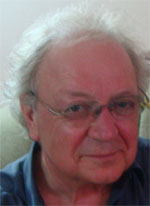 For many years, after leaving Turkey, I worked as the director for the European "Arte" cultural TV station's documentary film department. Our department was involved in producing films regarding the problems faced by Turkish society. We produced a number of cultural and historical films about Turkey. I started to shoot the last film with my wife Simone Sitte, but sadly she passed away in 2006. The film was about the population transfer between Greece and Turkey in the 1920's. Large numbers of Greeks from Turkey were sent to Greece who, however, were citizens of Turkey. The reason for their eviction was that they spoke Greek. About 500,000 Greeks were evicted. This was interesting for us and started us to investigate the plight of minorities in Turkey, including that of Armenians.
The Turkish state doesn't encourage a confession of its historical crime by Turkish intellectuals. Won't the Turkish government prohibit such an initiative? What does the future hold in this context?
I believe that we must show cautious optimism in this regard. First, let’s realize that the Turkish state and the Turkish government are two different things. The state also includes the military forces. The government is just one part of the Turkish state. During the past few years the difference between the two has become more pronounced. The government's policy towards Jews and other minorities has become more tolerant that that of the traditional state. They are trying to create a dialogue with Turkey. I should say that this government is more tolerant regarding issues of the past. In addition, there's the matter of European Union membership, and this is something that fosters hope for the future with us intellectuals.
During recent years, Islamic and religious factors have played a larger role in Turkish society. In your opinion, what will be the result of this increased Islamist influence?
This is a very complex matter because I believe that the majority of the Turkish populace is very religious. I don't foresee any dangerous act or attitude from the Islamists. Let me point out that they have democratic customs. This is a new experience for Turkish society; being Muslims and also able to me modern and value democratic principles.
As to what will be the public's mentality and general thought process is another matter. I believe that the primary function of political leaders is to raise the level of the individual's and the public’s consciousness regarding these questions. The truth of the Armenian Genocide isn't chronicled in official Turkish history. This is truly a shameful page for our society.
A large segment of Turkish intellectuals actually accepts the crimes of its state and supports asking for forgiveness. Is there another segment of intellectuals that opposes such a position?
I believe that the movement of intellectuals is very helpful since people are starting to think about the Armenian Question. A majority of Turkish intellectuals are friends of Hrant Dink and treated him well. Regarding the Genocide, they shied away from expressing an opinion, which isn't technically incorrect. This movement and petition is the best method to raise public consciousness.
Was the film specifically produced to be shown in the "Golden Apricot Festival" or does it pursue other aims?
The film was requested and financed by the "Arte" TV station and was shown in France and Germany in April. It was very well received. The organizers of "Golden Apricot" invited us to show it here as well.
Is this your first visit to Armenia? What are your impressions of the country?
I've been here before to shoot certain segments of the film. I've noticed that Armenian society is quite emotional, young and in the process of developing.
In your opinion is Armenian society ready for dialogue?
Turkish and Armenian societies are quite identical, possessing the same mentality. I believe that the sooner Turkish society accepts its guilt and feels ashamed of what it has done, the easier it will be to create dialogue. The essential problem is to get people talking to one another, to get them to recognize one another. This is what I have come to feel while in Armenia. I have also felt the kindness of the people here and that they want to help in whatever way possible.
Ani Hovhannisyan
If you found a typo you can notify us by selecting the text area and pressing CTRL+Enter
Write a comment