 Videos
 Photos


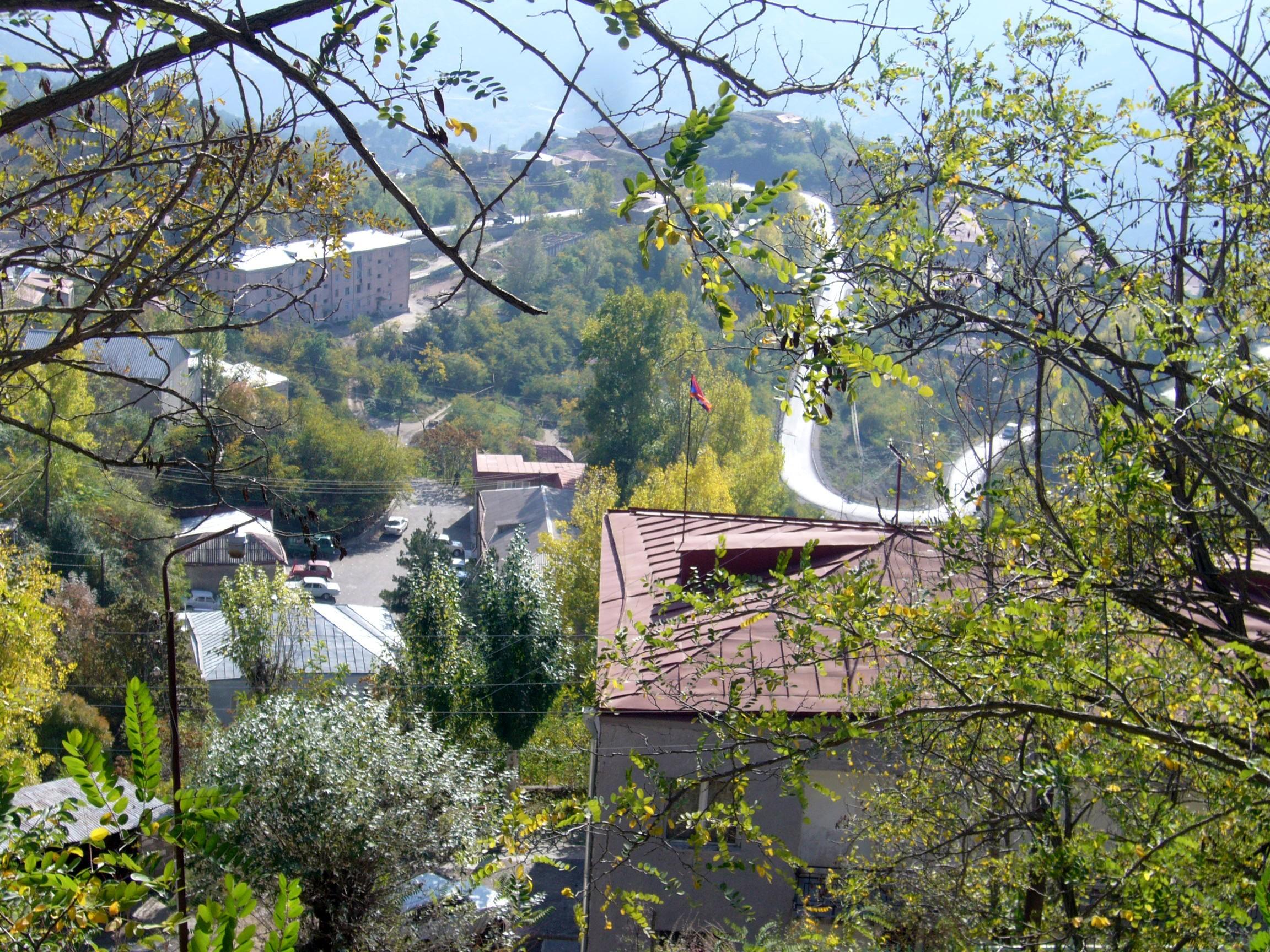
Kashatagh - Attempts to Correct the Situation
During the past few months the NKR Government has been paying comparably more attention to the region of Kashatagh. This is born out by the recent visit of NKR Prime Minister Ara Harutyunyan to the region.
During his meeting with community leaders and representatives of educational, health and other institutions, it was noted that government financed work to supply gas, improve the water distribution system and repairs to specific roads in the regional center of Berdzor would be completed this year.
Issues of immediate concern for Kashatagh residents are the repair of the region’s internal roads, the electrification of individual communities and telephone service.
The Most Pressing Issues in the Region Will be Tackled First
During the meeting the Prime Minister noted the scarcity of government resources and certified that the state would assist in correcting the severest of problems in the region. He mentioned that work would be expanded in apartment construction, gas supply systems and the agricultural industry. Various credit programs will be introduced to help incentive the local economy as well. A road construction company will be set up in the region that will immediately set about to repair all damaged roads. Prime Minister Harutyunyan stressed that, “The creation of jobs in Berdzor will be a prime focus of the government.”
The Administrative Director of Kashatagh, Ernest Ghevondyan, said that he’s noticed a rise in the amount of resources allocated to the region during his almost one year on the job. “When I first started as Director the forecasted level of state capital investment to Kashatagh was about 433 million drams. During that same year an additional 300 million drams was allocated which allowed us to carry out extensive irrigation work in 2007. We also built new homes, supplied electricity to nine villages and did some inter-village road repairs.” During the interview Mr. Ghevondyan underlined the fact that all this had a positive influence on the level of confidence the people had in their officials.
As in all other regions of the country various agricultural projects were implemented here as well. For example, villagers were given credits with which to purchase seed for sowing, fertilizer and funds to improve topsoil conditions.
They Still Haven’t Given Up Hope About Getting Light
The region, which is presently made up of 53 communities and 94 settlements, has a village electrification project underway. The Administrative Director states that 90% of the regions residents are now supplied with electricity and that this figure will rise by 5-6% in 2008.The villages of Verinshen, Himnashen and Vazgenashen, in the region’s northern tier, are still waiting to be hooked up to the power grid. The only light these village residents enjoy either comes from a gas lamp or a small battery-powered lantern. During our conversation with the villagers it was apparent that they were overjoyed by the news of possibly getting electricity this year by the gleam in their eyes.
Mr. Ghevondyan believes the solution of the electrification issue will spur resettlement in the region since newcomers want to settle in villages with power. He confessed to us that 40% of those who had left the region did so due to the lack of electricity and that a total of some 200-250 million drams was needed to rectify the situation.
In Kashatagh today there are still some 20 settlements without power. Some of these are tiny hamlets with only 2-3 resident families. Mr. Ghevondyan believes that only 8-10 of the settlements should be supplied with power and that, from an economic standpoint, it would make no sense to electrify the rest since they are too small and far removed.
There had been much discussion regarding infrastructural efficiencies of scale when some villages are far removed from one another and as a result some villages have been expanded. Overall this scheme has resulted in a drop of villages in the region from 71 to 53.
There is Still a Need for Doctors and Teachers
Mr. Ghevondyan confesses that, “Last year we put out a call for doctors but the response was poor. However, I’m glad to say that last year for the first time we had a midwife, a surgeon and a general practitioner.” They also advertised for teachers and after two days they received some 114 telephone calls. In the end, 21 teachers came to the area.
Kashatagh’s medical establishments are also in trouble, The necessary conditions for normal operation don’t exist - there’s a lack of equipment and other medical apparatus. After taking all this into account, the NKR Government recently decided to allocate 1.4 million drams from the state reserve fund to the Ministry of Health in order to furnish the new dental clinic in Berdzor.
“Large Families Bring Me Great Joy”
Despite all these hardships people still live here and “wring bread from stone”. 43 year-old Marat Mazulyan, a resident of the village of Vaghazin with 11 kids, says that she places great hopes on bee-keeping to keep her family going. “I’ve slowly increased the number of bees and maybe I’ll be able to get a car in a few years. It’s tough to get around these villages without a car. But I’ll never leave since I really like it here.”
Marat’s immediate concern is her house that she bought for $700 three years ago. “It’s in a terrible state; there’s no floor or roof. After applying to the new Regional Director, they allocated some repair funds. We’ll take care of the rest.”
There are many families like hers in the region.While there is only one family with more than fifteen children, there are 64 families with five or more kids. Mr. Ghevondyan proudly beams that, “I derive my greatest pleasure when I see large families.” He goes on to say that within the past 5-6 years the region has experienced a population increase of 200 for the first time and that now there are more people moving in than leaving. Those new migrants can take advantage of some 12 special dispensations. They are allocated a home, a one time grant, a small ten year loan at .5% and a rebate towards their utility bill amounting to 60 kilowatts. The Regional Director says that after ten years the home becomes the private property of the resident family. Mr. Ghevondyan concluded by saying the number of those wishing to resettle here greatly outnumbers the homes we can afford to provide them with.
Write a comment