 Videos
 Photos


ACNIS Holds Roundtable Discussion Assessing a New Report on Artsakh and the Peace Process
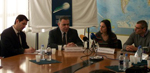 The Armenian Center for National and International Studies (ACNIS) hosted a roundtable discussion on December 10 assessing a new report on the Nagorno Karabakh peace process and analyzing the recent OSCE Astana summit. The roundtable, hosted jointly between ACNIS and the London Information Network on Conflict and State Building (LINKS), was attended by nearly 50 participants.
The guests consisted of representatives from international organizations and the diplomatic community in Yerevan, including from the United Nations and the OSCE, the Indian and Lithuanian ambassadors, and officials from the Brazilian, Romanian and U.S. embassies, as well as a number of leading experts and analysts from the office of the Armenian president and other state bodies and ministries, and representatives from civil society and the media.
LINKS Executive Director Dennis Sammut released the findings of a survey his organization conducted examining the opinion of Armenian political parties and leading political figures on the Nagorno Karabakh conflict. The 93-page LINKS report was based on a series of face-to-face interviews with Armenian politicians and political parties conducted in June 2010.
ACNIS Director Richard Giragosian stated that the study was timed with the launch of a new LINKS program entitled “Karabakh: The Big Debate,” during which the organization will “contribute to creating space for more discussion on the Karabakh issue in the region and beyond.”
The “second part of the study, reflecting the views of Azerbaijani political parties will also be published shortly,” he added.
LINKS Executive Director Dennis Sammut then explained that “this study maps out the declared positions of the political parties and helps the reader to understand the domestic political context in which the Karabakh negotiations are taking place.
He went on to note that although report’s findings “demonstrated the many entrenched and established views on the issue, the survey also brought out many interesting views of the Armenian political elite on both the nature of the conflict, as well as the conflict resolution process.”
Sammut then pointed out that what was “particularly interesting, was the broad support of Armenian politicians for civil society contribution to the peace process” and noted the “broad consensus amongst Armenian politicians that any settlement of the Nagorno Karabakh conflict needs, first and foremost, to take into account the views and the welfare” of the Armenians of Karabakh.
The survey also demonstrated “broad, though not unanimous, support for the Minsk Process as the best available format for negotiations of the settlement of the conflict,” with most political parties seeing “no alternative to the Minsk process.”
The report further confirmed that the “broad consensus (was) that Turkey could not play a role because of its outright support for Azerbaijan,” although many “political leaders want more EU engagement with the conflict settlement process and some expressed disappointment at the lack of proper EU engagement with the process.”
Sammut also noted that “many parties expressed the view that the authorities in Stepanakert should be a party to the negotiating process.”
Following the presentation of the report’s findings, Armen Torosyan, an expert from the opposition Heritage Party faction in the Armenian parliament, then assessed the recent OSCE summit and articulated his party’s recent legislative initiative calling for the Armenian recognition of the independence of the Mountainous Karabakh Republic.
After Torosyan, ACNIS Senior Analyst Manvel Sargsyan provided an analysis of the overall course of the OSCE peace process seeking to reach a resolution of the Karabakh conflict.
The Armenian Center for National and International Studies (ACNIS) hosted a roundtable discussion on December 10 assessing a new report on the Nagorno Karabakh peace process and analyzing the recent OSCE Astana summit. The roundtable, hosted jointly between ACNIS and the London Information Network on Conflict and State Building (LINKS), was attended by nearly 50 participants.
The guests consisted of representatives from international organizations and the diplomatic community in Yerevan, including from the United Nations and the OSCE, the Indian and Lithuanian ambassadors, and officials from the Brazilian, Romanian and U.S. embassies, as well as a number of leading experts and analysts from the office of the Armenian president and other state bodies and ministries, and representatives from civil society and the media.
LINKS Executive Director Dennis Sammut released the findings of a survey his organization conducted examining the opinion of Armenian political parties and leading political figures on the Nagorno Karabakh conflict. The 93-page LINKS report was based on a series of face-to-face interviews with Armenian politicians and political parties conducted in June 2010.
ACNIS Director Richard Giragosian stated that the study was timed with the launch of a new LINKS program entitled “Karabakh: The Big Debate,” during which the organization will “contribute to creating space for more discussion on the Karabakh issue in the region and beyond.”
The “second part of the study, reflecting the views of Azerbaijani political parties will also be published shortly,” he added.
LINKS Executive Director Dennis Sammut then explained that “this study maps out the declared positions of the political parties and helps the reader to understand the domestic political context in which the Karabakh negotiations are taking place.
He went on to note that although report’s findings “demonstrated the many entrenched and established views on the issue, the survey also brought out many interesting views of the Armenian political elite on both the nature of the conflict, as well as the conflict resolution process.”
Sammut then pointed out that what was “particularly interesting, was the broad support of Armenian politicians for civil society contribution to the peace process” and noted the “broad consensus amongst Armenian politicians that any settlement of the Nagorno Karabakh conflict needs, first and foremost, to take into account the views and the welfare” of the Armenians of Karabakh.
The survey also demonstrated “broad, though not unanimous, support for the Minsk Process as the best available format for negotiations of the settlement of the conflict,” with most political parties seeing “no alternative to the Minsk process.”
The report further confirmed that the “broad consensus (was) that Turkey could not play a role because of its outright support for Azerbaijan,” although many “political leaders want more EU engagement with the conflict settlement process and some expressed disappointment at the lack of proper EU engagement with the process.”
Sammut also noted that “many parties expressed the view that the authorities in Stepanakert should be a party to the negotiating process.”
Following the presentation of the report’s findings, Armen Torosyan, an expert from the opposition Heritage Party faction in the Armenian parliament, then assessed the recent OSCE summit and articulated his party’s recent legislative initiative calling for the Armenian recognition of the independence of the Mountainous Karabakh Republic.
After Torosyan, ACNIS Senior Analyst Manvel Sargsyan provided an analysis of the overall course of the OSCE peace process seeking to reach a resolution of the Karabakh conflict.
If you found a typo you can notify us by selecting the text area and pressing CTRL+Enter
Write a comment