 Videos
 Photos


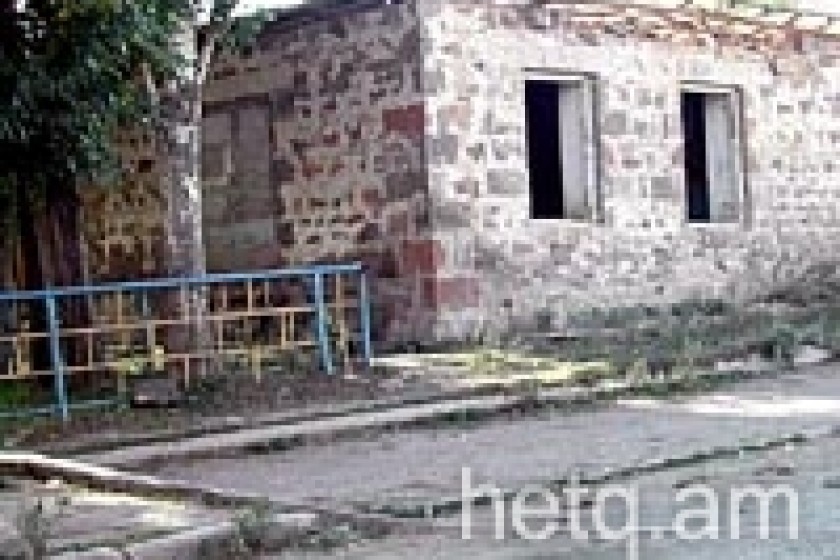
Goiter is rampant in Buzhakan
The village of Buzhakan, though less than 50 kilometers from Yerevan, is far from the amenities of civilization. There is no transportation to the village. Old and young alike have to walk for kilometers. Most cars circumvent the village because the roads are so bad-- to get to Buzakan requires genuine heroism from any driver. The hills surrounding the village are covered with forests filled with pears and apples; the wolves and hares haven’t yet fled. But life in the village is too hard for people here to spend much time appreciating nature’s bounty.
There is nobody on the street in the noonday sun-they’re all in the fields, in feverish activity. The village mayor’s office is shut tight. There is no social stratification in Buzhakan, no fancy houses. Almost all the people here consider themselves poor, from those who can’t afford to put sugar in their coffee, to those who can make ends meet, but worry about, say, paying tuition for their children in Yerevan. About 5-10% are better off - some have shops, others trade in flour. Those who have relatives in Russia or elsewhere who support them are considered wealthy, too. Some villagers have tried to monopolize the cultivation of privatized lands. No contracts are ever signed, but they take over land from the very poor who can’t cultivate it, in exchange for money or sacks of flour.
Since Soviet times Buzhakan has been known for rampant thyroid disease, or goiter. Like elsewhere in Armenia, the cause is the lack of iodine in the water. A few years ago a group of doctors from Yerevan came to examine local residents, including school children, and discovered that most of them had had the disease at various stages of their lives. According to Ovsanna, a local nurse, 70 people are known to suffer from goiter and many more have never been examined. There have been no subsequent visits by Yerevan doctors, and villagers, with their daily burden of hard work, never go for checkups unless they are seriously ill.
The forests of Buzhakan have long been known for their valuable herbs. The villagers’ ancestors possessed the secrets of herbal healing. Varduhi Manukian learned these important secrets from her mother and grandmother, and treats those in need free of charge. The sixty-year-old woman is the only person in the village who inherited this knowledge-she keeps on collecting herbs, but cannot keep up with every one. When people have goiter, they go to Varduhi and she gives them lentil-sized seeds to take, but this alone can’t solve the problem.
There are other regions, too, like Lori, Siunik, and Shirak, where goiter is widespread. The best way to prevent the disease is to use iodized salt. But villagers are uninformed, and they continue to use course salt, which is un-iodized. Moreover, says Hasmik Manukyan, an endocrinologist at the Arma Medical Center, a survey conducted in the regional shops shows that villagers also buy Iranian and Ukrainian salt -also without iodine-- because it is 20 drams cheaper.
“First of all, we must completely prohibit the import of that kind of salt, since the entire territory of Armenia, with minor exception, is considered a nidus of goiter,” Manukyan says.
And of course villagers should be informed so that they can protect their own health. But endocrinologists are rare guests in the countryside, unavailable even for consultations on such simple preventive measures. Experts maintain that thyroid disease can contribute to physical and mental underdevelopment, and, what is worse, poses a danger to reproductive functions. Examinations of children in Buzhakan schools last year revealed that 70 % suffered from some form of thyroid malfunction.
Karine Danielyan
Write a comment