 Videos
 Photos


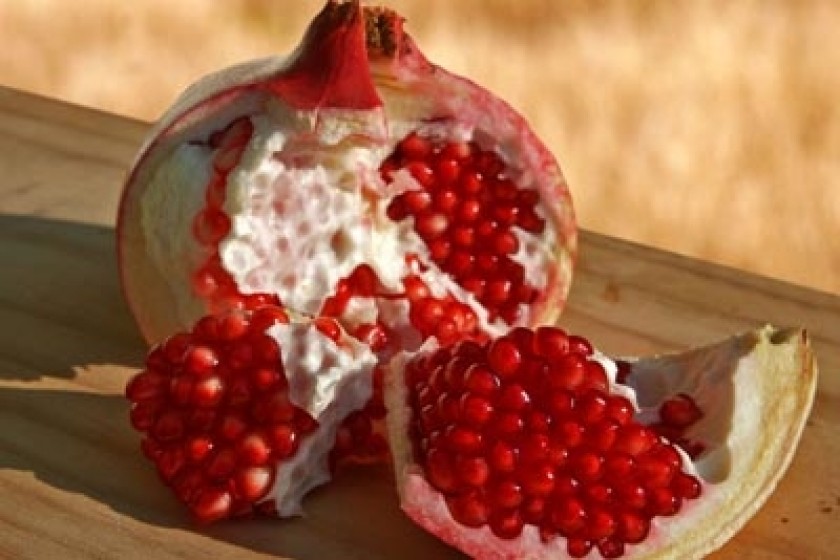
The pomegranate symbolizes new life
Artemis is from Australia. She had visited Armenia several times during the Soviet era, and again in 1988 when the Karabakh movement began. In 1992 Artemis settled in Karabakh. She used to accompany foreign journalists, as a translator. Now she is the World Christian Organization representative in Karabakh. In 1999 she met Armond Tahmazyan, an Iranian-Armenian, in Stepanakert. “We met, we had the same interests-- I loved old things, handicrafts, too. We decided to open a store. We weren’t married yet-- we were friends. For the 1700th anniversary of the adoption of Christianity in Armenia, Lady Cox organized a pilgrimage. A hundred of us, fifty of whom were foreigners, walked from Lachin to Gandzasar. And on the way we decided to get married,” Artemis says. After their marriage, Artemis and Armond opened the Nreni (pomegranate) souvenir shop in Stepanakert.
“It’s something I’d wanted to do for a long time, but in the Diaspora I couldn’t get anything going. I couldn’t see any future in whatever I did, my heart and mind were here,” Armond says. “In Iran, you couldn’t leave the country without serving in the Army first, so as soon as my service was over, I came to Karabakh. I had already learned all about Artsakh. Within a short period of time I made close friends-I had a circle of friends and I felt that I belonged here. I had found the homeland I was longing for, and I made the decision to stay here. We started this business, and saw the results. I mean, I felt like I was doing something, every little thing I did seemed to matter, and it gave me spiritual satisfaction,” he explains.
“When we decided to open the store we didn’t know who made handicrafts in Karabakh, we brought some products from Yerevan. Then little by little the locals started to come to the store. One would bring wooden goods, another paintings, another antiques from his home to sell. And we would give them advice about what to make. The goal is to sell their products and help them and, of course, to keep the store going.”
“Why did you name your store Nreni?” I asked. Armond answered right away, “Pomegranate means new life, and in Artsakh new life has begun. So that’s what we decided to call our store. If you want to move, you hammer a nail in the center and move around it, and we have hammered our nail and are moving around it with many goals - to help the disabled, for spiritual satisfaction, to earn our living,” he said.
And Artemis added, “We thought that we shouldn’t be the only ones to profit from the store. There are bedridden war veterans who can’t make money. We have some people who do very nice handicrafts-- Mkhitar, who were wounded in Shushi, and Narine. We started a course in the rehabilitation center to help them develop their skills, and we’re already selling Mkhitar’s sculptures. We don’t add anything to the price the disabled put on their work, we sell it for their price. When foreigners come and find out who makes the work, what purpose it serves, and that we don’t take a percentage, they’re really happy to buy the things.”
All tourists and guests, even official delegations who come to Karabakh, visit Nreni. “When they come to Karabakh most people want to buy something handmade in Karabakh, that they can’t buy anywhere else. Something that will remind them that they were in Ganzasar, for example, or Shushi,” Artemis continues.
The locals, too, visit Nreni. They think it’s a museum, and they come to look at the antiques. Teachers even bring school children.
Armond is a goldsmith. He has a workshop behind the store where he makes jewelry. He has decided to give visitors a chance to see how goldsmiths work, and he wants to bring equipment so other people can work there, to develop jewelry-making in Karabakh. “There are good jewelers here in Artsakh but I want to change our style a little bit, to make pieces with an ancient feel. There are old drawings, and we can also take old Armenian designs from khatchkars, and use them to make necklaces and other jewelry. And the main thing is, I’ve been studying a long time to make models of say, Ganzasar and Dadivank, and to make khatchkars using the local precious and semi-precious stones, for something new to have in the store, ” Armond says.
Armond believes that every Armenian should take part in the economic reconstruction of Karabakh. “I say, come, this is our country, let’s develop it with our own hands. We can’t wait while somebody else does the work and then come to take the fruit. Let’s sow the seeds, and reap the fruit.”
Tigran Saroyan
Write a comment