 Videos
 Photos


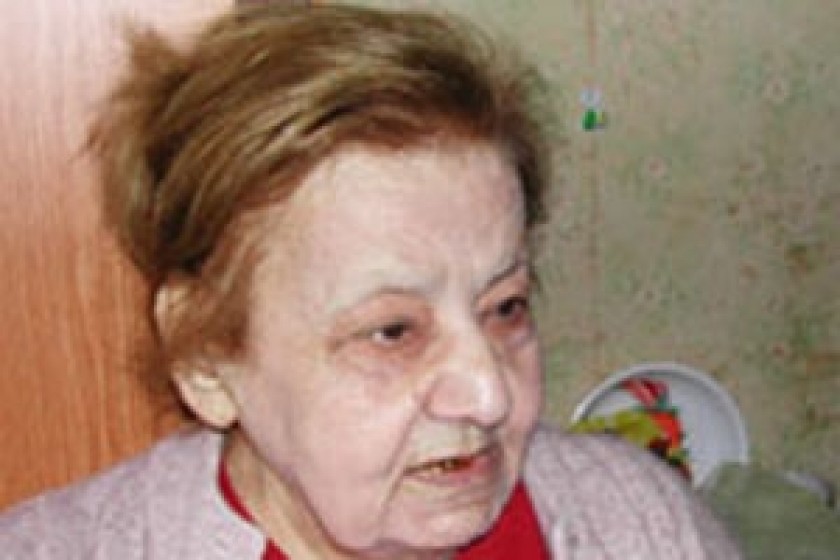
From War to an Old People's Home
Anahit Vardanyan
"It was an ordinary day. We were working as usual, treating our patients, when suddenly we were told that the war was over - the Germans had surrendered." 78-year-old Seda Ovcheyan feels the same happiness today as she repeats the words that heralded victory, and the start of a free and peaceful life. She lived with her brother and parents in Baku and was seventeen when the Great Patriotic War, as WW II was referred to in the USSR, began.
She remembers that it was possible to avoid being drafted-all you had to do was be nice to the draft commissar, and many people were.
"We were well off, but my mother was a little thrifty. I had decided to take our carpet to the draft commissar, so that they wouldn't send me to the battlefront. That was always possible, you know. A small bribe, or a good contact, and you could avoid being drafted."
This World War II veteran spent her youth in some of the flashpoints of the war. Along with others her age, she provided first aid to the wounded in tents that were just a few kilometers away from the front. "We would go three-four kilometers up, towards the front, and bring back the wounded from the battlefield. We helped in all sorts of ways; it seemed unimportant what our official responsibilities were. What mattered was that we helped the wounded. After our first aid, they were taken to hospitals - of course, if they weren't bombing us at that point."
Seda Ovcheyan remembers the war as a nightmare. Her own daring and fearlessness surprise her today. The death of her friends hardened her heart. "The war was very educational for me. I went as an inexperienced girl, and returned an independent person. There were guns firing everywhere, bombs exploding, rockets would light up the sky. I don't know why they didn't scare me. Maybe it was because I was very young. It was horrible; people were dying all around you. You would see someone in the morning, and in the evening he would be no more."
After the war, everyone and everything became precious to Seda. She could keep in touch with friends only through letters. "I had lots of friends from the war. It seemed for awhile that we couldn't live without each other, but life drew us apart the same way it had brought us together."
After the war, Seda Ovcheyan continued her medical career at a hospital in Baku. She wanted to go to medical school, but because that would have required nine years, she received only a basic medical education. The government rewarded her wartime service with a car, a telephone, and a medal. "Now, looking back, what value did any of that have, anyway?" she asked. "The war had already done its dirty work. I'm sure you understand... who would marry me, for example? Girls who had gone to war were not accepted in the same way. I didn't marry, didn't have children. That miserable war..."
This World War II veteran marked the 60th anniversary of VE Day at the home for the elderly in the Fourth Village, where she's been living for eight years now. Seda Ovcheyan traveled a long road to get here - the war in Karabakh, the death of her brother and mother, violent expulsion from Baku... When she reached Yerevan, a distant relative took her in, but couldn't keep her for long, neither could she live alone. Her journey ended in this old people's home.
Write a comment