 Videos
 Photos


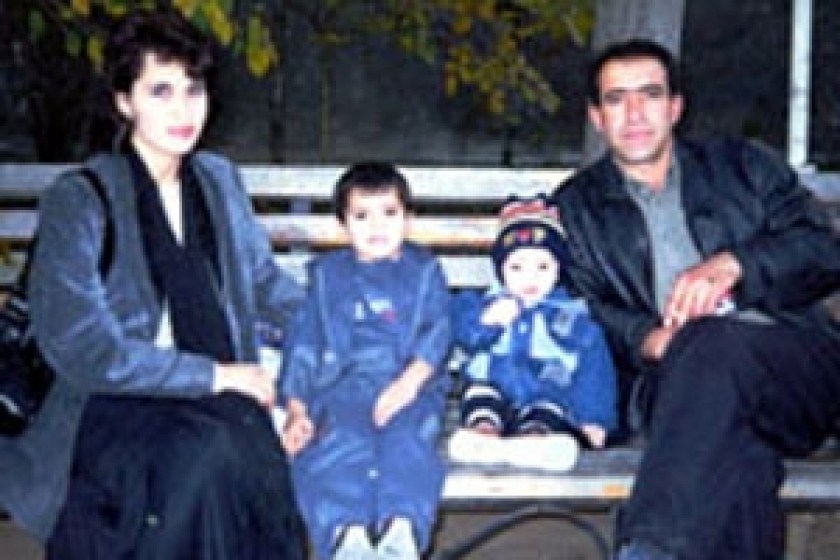
The villages of Martuni are being abandoned
One week ago, the Hovhannisyan family departed from the village of Vaghashen in the Martuni region in Gegharkunik Province. They are one of many families who, unable to live in their native villages, are abandoning their homeland. For the last seven years, Levon Hovhannisyan, the father, has been traveling to Russia’s Krasnodar region for work. “I am away for eight or nine months; I return for the winter. At the beginning of spring, we go and work until late autumn. There are many Armenians in Krasnodar , there are many from our village too. I feel good there; we’ve created a familiar neighborhood, a tiny homeland, the only thing tormenting me is my yearning for my family. I can’t stay away from my family anymore, but I can’t quit my job there, either. We were only dragging out the days in the village, but we can live a normal life in Krasnodar,” Levon said.
Levon’s three children are still young (only the oldest goes to school), and he is determined to send his children to a Russian school. “I can’t stay here, if only for the reason that my children would get an Armenian education,” he said.
The oldest child, Gor, was happy to be leaving. He wants to become a pilot one day, but he could never reach that goal here. Five-year-old Narek excitedly said, “My dad said that he would take me to Yerevan to ride a carousel, but he never did. I’ll see lots of carousels there.”
Levon’s wife has also been waiting a long time for this. She feels that although it will be difficult to live in a strange place, the move will allow the family to both be together and lead a better existence.
Grandma Sirun, Levon’s mother, bid her son’s family good-bye with tears in her eyes: “My other son, my Armen, left five years ago, and now my Levon is leaving. I’ll be alone in the village. I don’t know how I’ll live without my grandchildren. What if I can’t bear it?”
Gegharkunik’s Martuni region is being emptied family by family. Nine families left in March 2005 alone. According to the local government’s statistical data, the majority of those departing are between the ages of ten and forty-five. In the 1970s and 1980s, teenagers made 40% of the population, but because of this mass exodus the current percentage has dropped to 28%. Furthermore, the percentage of inhabitants over the age of 60 has increased from 8% to 14%. And within the last five years, the ratio of women to men has gone up 1.5 times.
In the 1990s, the majority of those departing were from the cities, but in the next fifteen years or so, predicts Khojabekyan, and ethnographer with the National Academy of Sciences, interstate migration will gain momentum in the rural regions as well. “There’s a growing trend toward large-scale farming, or agro-business. And villagers are left with plots of land that are too small to live off.”
According to the statistics, in 2004, 353 people left the region and only 128 returned. In the first quarter of 2005, 114 left and 42 returned. “The statistics from recent years are not promising; emigration from the Martuni region is clearly visible. People are leaving as soon as they can. Just within the last five years, the population has seen a dramatic change; in 2000 there population was 94,500; today it’s 91,043,” said Araik Yeghiazaryan, head of Gegharkunik’s Statistical Administration. It is unsettling that Armenian migration is entirely one-sided: emigration, but no immigration.
Besides international migration, there is intercity migration. Armen Movsisyan’s family has been in Yerevan since 2001. In Martuni, Armen was the vice-president of Gegharkunik’s tax inspection agency; today, he’s the tax inspector in Zeitun.
“I earn less than I used to, but I’m convinced that there are more opportunities for my children here,” Armen said. “I came here for my children.”
The people who are still living in the village communities long to move away, too, but simply lack the means to do so.
Karine Ionesyan, Karine Hunanyan
Journalism students, YSU
Write a comment