 Videos
 Photos


Azerbaijan Defies ECHR Rulings as CoE Ministers Stop Short of Tougher Action
The European Court of Human Rights has so far upheld nine of the applications filed by Armenia against Azerbaijan. While eight of the judgments have entered into force, Azerbaijan has not complied with any of them.
The judgment of June 16 2015 in the case of Sargsyan v. Azerbaijan has not been implemented, and the case is under enhanced supervision. Although many years have passed since the judgment, the individual and general measures have not yet been fully implemented. The issues of effective compensation for the loss of property and access to the applicant’s former home and property have not been resolved.
The judgment in the case of Makuchyan and Minasyan v. Azerbaijan and Hungary was delivered on 26 May 2020. The Azerbaijani authorities had acknowledged the violation of the applicants’ rights and had assured that they would take all necessary measures to prevent the recurrence of similar violations. However, no action has been taken in this regard.
The Committee of Ministers of the Council of Europe (CM) adopted an interim resolution on individual measures during its consideration of the case at its 1,531st session in June 2025. The CoE stated that despite the Committee’s repeated calls, four years after the judgment entered into force, the Azerbaijani authorities had still not provided any information demonstrating tangible progress towards the requested individual measures.
The CM called on the Azerbaijani authorities to fulfil without delay the unconditional obligation to pay the legal and other costs awarded to the applicants’ representatives. The CM demanded that they confirm without delay that the letters published on the Aliyev presidential website in support of the pardon and release of the criminal had been removed. It also demanded that he not hold any public office.
(Ramil Safarov, an Azerbaijani army officer, was convicted of the 2004 murder of Gurgen Margaryan, a lieutenant of the Armenian Army. During a NATO-sponsored training seminar in Budapest, Safarov broke into Margaryan's dormitory room at night and axed Margaryan to death while he was asleep. – Hetq)
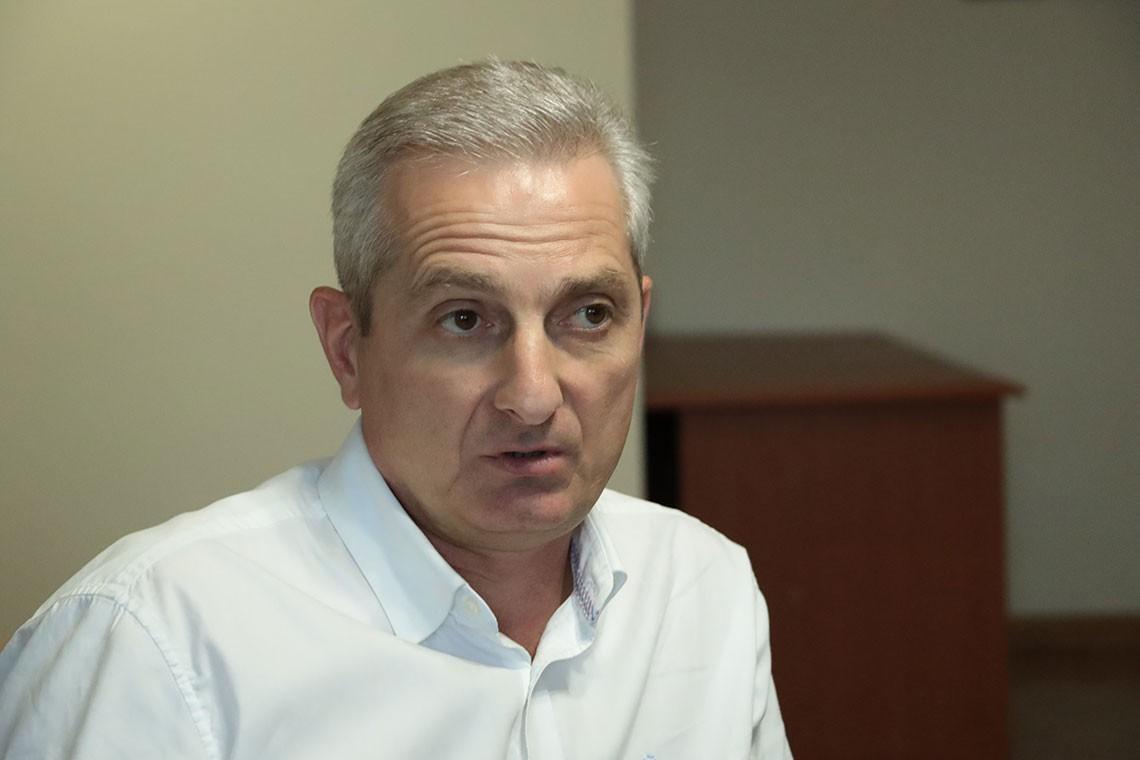
Four of the nine applications upheld by the ECHR were filed by Ara Ghazaryan.
- Saribekyan and Baliyan v. Azerbaijan, the judgment entered into force on September 7, 2020,
- Narayan and Others v. Azerbaijan, the judgment entered into force on June 24, 2024,
- Ghazaryan and Bayramyan v. Azerbaijan, the judgment entered into force on May 1, 2024,
- V.T. and Others v. Azerbaijan, the judgment will enter into force on September 18, 2026.
The judgment in the last case, V.T. and Others v. Azerbaijan, was delivered by the ECHR on June 18 of this year. It is the first judgment in the cases of the April 2016 four-day war. The ECHR has ruled that Azerbaijan violated the right to life of an Armenian soldier and the prohibition of torture (decapitation and mutilation). International law experts consider this judgment to be an important precedent for complaints filed to protect the rights of victims of the 2020 Artsakh War. In this case, the court ordered Azerbaijan to pay 90 thousand euros in compensation to the victim’s relatives.
The Azerbaijani government has not submitted an action plan or report in the cases of Narayan and Others v. Azerbaijan and Ghazaryan and Bayramyan v. Azerbaijan. A plan or report are documents that states submit to the Committee of Ministers to show the actions taken to implement the judgment.
In the case of Ghazaryan and Bayramyan v. Azerbaijan, the Azerbaijani government submitted a report on December 19, 2024, indicating that compensation in the case is expected to be paid in the near future. However, it has not taken any action.
“We have sent the necessary information to the representative of Azerbaijan at the ECHR in the case of Saribekyan and Baliyan v. Azerbaijan to provide compensation, but we have not received a response,” said Ghazaryan.
In order to ensure the implementation of four ECHR judgments: Saribekyan and Baliyan v. Azerbaijan (entered into force on 07/09/2020), Badalyan v. Azerbaijan (entered into force on 22/10/2021), Khojoyan and Vardazaryan v. Azerbaijan (entered into force on 28/02/2022) and Petrosyan v. Azerbaijan (entered into force on 28/02/2022), the Committee of Ministers has adopted three decisions.
As we can see from the course of the cases, Azerbaijan also ignores the decisions of the CM to ensure the implementation of the judgments. Hetq asked Ghazaryan what other means are there to influence Azerbaijan, whether the Committee of Ministers has used all possibilities to ensure the implementation of the ECHR judgments.
Ghazaryan stated that during the supervision of the implementation of the judgment, the CM can adopt interim resolutions. If the state does not implement the judgment for a long time and does not respond in any way, and if the CM considers that the state refuses to implement the final judgment in the case, it can apply to the European Court by a decision adopted by two-thirds of the votes of the representatives entitled to participate in the sessions of the CM, so that the court can determine whether the given party has really failed to fulfill its obligation.
Ghazaryan says that the CM has not yet applied to the European Court with any of the judgments in the 'Armenia v. Azerbaijan' cases. “Violation proceedings are initiated in exceptional circumstances. In the Saribekyan case, we have submitted quite a few petitions to the EC, but the CM has not yet considered them,” said Ghazaryan, an international law specialist who filed the complaint.
The decision to refer the case to the European Court is made in the form of an interim resolution. In this case, the CM recognizes a violation of Article 46 of the European Convention. The European Court issues a judgment, which enters the execution stage by joining the main case. For example, the cases of Kavala v. Turkey or Ilgar Mammadov v. Azerbaijan.
In recent years, Azerbaijan has periodically announced its withdrawal from the Council of Europe. The last time Azerbaijani President Ilham Aliyev announced this intention was on July 13, 2026, but has not taken any practical steps. However, does leaving the Council of Europe exempt this state from all obligations, including the obligation to implement the ECHR judgments? In response to our question, Ghazaryan stated that formally leaving the Council of Europe does not exempt Azerbaijan from fulfilling its convention obligations. The European Court continues to make judgments and decisions on all submitted complaints until leaving the Council of Europe.
Ghazaryan pointed out that that Russia has suspended its membership in the Council of Europe since September 16, 2022 and has declared its membership in the Convention null and void. The European Court is examining all applications submitted until September 16 and continues to make decisions and judgments against Russia to this day. The CM exercises control over the implementation of cases, but does not have any effective mechanism in this regard.
Hetq asked Ghazaryan whether, in general, the CoE has the leverage to enforce its decisions.
He noted that the leverage in terms of implementing the judgments of the European Court is the one listed above. In addition, the CM can cooperate with PACE or the Secretary General of the CoE. In 2024, PACE Protocol No. 2527 decided not to ratify the credentials of the Azerbaijani parliamentary delegation due to ongoing concerns about Azerbaijan’s failure to fulfill its commitments in the areas of democracy, human rights and the rule of law since its accession to the Council of Europe in 2001.
PACE highlighted a number of serious problems, including unfair elections, the lack of independence of the judiciary, restrictions on media freedom and issues related to the humanitarian situation in Nagorno-Karabakh. “This decision will remain in force until Azerbaijan confirms compliance with the requirements of the procedural rules,” Ghazaryan told Hetq.
Instead of eliminating these violations, Azerbaijan has chosen not to participate in the work of OACE, refusing to submit the credentials of its parliamentary delegation for 2025 and 2026.
Ghazaryan referred to Article 7 of the Statute of the Council of Europe, according to which any member of the Council of Europe may withdraw from the it by formally notifying the Secretary General of its decision. The withdrawal of a member takes effect at the end of the current financial year if the notification is made during the first nine months of that year, and at the end of the following financial year if the notification is made during the last three months.
Azerbaijan has not yet sent an official application to the Secretary General. Ilham Aliyev announced on July 13 that the Secretary General of the Council of Europe, Alain Berset, had called him in the wake of Azerbaijan’s announcements to withdraw from the Council of Europe and asked him not to withdraw from the Council of Europe, trying to find solutions.
Write a comment