 Videos
 Photos


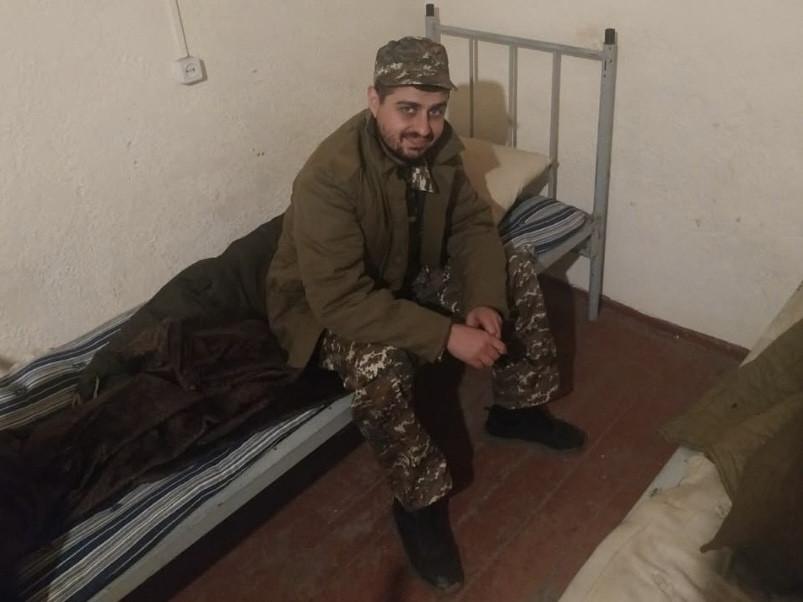
Frontline Memories: Chaos, Courage, and the Fight for Shushi in 2020
This is the second in a series of stories told by 2020 Artsakh War vets now being treated at Yerevan’s Soldier's Home Rehabilitation Center (also known as Zinvori Tun). Narek Vardanyan, a vet himself at the center, is gathering and recording their recollections of the war. (Part 1)
On the morning of September 27, 2020, thirty-year-old Karlen Shagoyan buttoned his jacket and prepared for another ordinary day navigating the streets as a taxi driver. But the morning broadcast shattered the routine: a large-scale war had erupted in Artsakh.
Instead of turning the ignition of his car, Karlen reached for his military service record. Driven by an instant, unyielding instinct, he walked straight to the local military commissariat to volunteer. The officials there told him to go home and wait for a phone call. He couldn't wait.
By September 28, Karlen was no longer a civilian behind a steering wheel. He had joined a volunteer detachment hastily assembled in his hometown of Abovyan, bound for the unfolding conflict.
Guarding a Daughter's Sleep
Leaving was a quiet heartbreak. "As I was leaving home, my eyes fell upon my daughter sleeping peacefully in her crib," Karlen recalls. "My first thought was, 'How can I leave my two-year-old daughter and go?'"
The answer came to him in the silence of the room. He realized that the only way to truly secure her future was to defend the border. "By being in Artsakh, I would actually be better able to watch over my daughter's sleep." With that conviction, he stepped out the door.
By that very evening, Karlen and his fellow volunteers arrived in the Artsakh capital, Stepanakert. The war was no longer a distant news report; it was their immediate reality.
Chaos, Food Crates, Close Calls
The early days of the deployment moved with a disorienting, frantic speed. On September 29, at the Tsor military unit in Stepanakert, the volunteers were issued AKM assault rifles, ammunition, and military uniforms. Curiously, the uniforms differed sharply in color and style from the standard attire of the Armed Forces—a detail that would nearly cost them their lives.
The next day, a fleet of civilian buses transported the detachment to the village of Maghavuz in the Martakert district. That night, between 400 and 500 volunteer fighters took shelter inside the local school. The facility became a makeshift command center. Civilian vehicles arrived in waves, unloading crates of food and cigarettes donated by a mobilized public. Under the direction of an older man who took charge of organizing the chaotic scene, Karlen and his comrades established guard posts and began standing watch.
But the fog of war almost proved fatal. While on duty, local soldiers mistook the volunteer detachment for enemy forces due to their non-standard uniforms. Weapons were raised, and fingers tightened on triggers.
"Fortunately, they asked, verified that we were Armenians, and held their fire," Karlen says, recalling the terrifying moment of near-fratricide.
Fire on the Heights
The brief respite at the school ended on the evening of October 2. Moving under the cover of darkness, the detachment was led through dense forests and open fields, marching toward the strategic heights of Varankatagh (Lulasaz).
By approximately 4:00 AM, the volunteers reached the rugged terrain. The chaos deepened when their guide and commander vanished along the way. Marooned on the mountain, they were greeted by another detachment leader, "Aro from Kornidzor," who integrated the forty new men into the defense system of the 6th Defensive District.
"We were told to head into the nearby forests before daybreak," Karlen remembers. They didn't make it on time. As the first rays of dawn broke over the ridge, a brutal artillery barrage rained down, causing immediate casualties. The unit fractured—some ducked into the trees while others began a desperate retreat toward the Maghavuz school. By midday, Karlen was back where he started, but the reality of the war had fully set in.
Enduring the Invisible Enemy
On October 5, the volunteers were relocated to an artillery unit in Horatagh. Ordered into a basement, Karlen spent the night listening to the terrifying symphony of exploding shells and shattering glass. Up to that point, it was a war fought against ghosts; they had endured endless shelling without ever seeing a single enemy soldier.
Three days later, KamAZ trucks evacuated them to Alashan. Seeking refuge from the falling iron, Karlen and his comrades built a rudimentary wooden shelter in the dense woods. But as the days dragged on, isolation took its toll. Rumors began to spread like wildfire through the trees. “They’re taking us to be slaughtered—we’re going home,” some whispered. Panic splintered the unit, and fractured groups began to desert. Karlen’s close companions scattered—one was pulled into another unit by a relative, while another, Nzhdeh, left to help out at a bakery in Getavan.
By mid-October, Karlen crossed back home through Karvatchar. He held his daughter again and rested his aching body. But the quiet of home felt wrong while the front lines were still burning. Within days, he began searching for a way back. He tracked down Nzhdeh and another comrade, Norayr. When no military transport could be found, the three men took matters into their own hands: they piled into Norayr’s civilian car and drove back into the warzone.
By October 20, they returned to Alashan, only to find an empty camp of officers. The troops had been moved deep into the forests of Metz Shen. They tracked down Senior Lieutenant T. Vanyan of the 12th Company, begged to be let back into the fight, and abandoned Norayr's car by the side of the road.
The Charge for Shushi
The true crucible arrived at the dead of night on November 5. At 2:00 AM, under a torrential downpour, the booming voice of Major Gavrush Harutyunyan shattered their sleep: "Alarm!"
Major Gavrush, a revered native of Stepanakert, ordered his men into the backs of Ural and KamAZ trucks. The convoy tore through the rain at breakneck speed. Mid-journey, Gavrush ordered them to disembark and line up in the dark. The mission was clear, desperate, and monumental: they were advancing to retake the fortress city of Shushi.
"Gavrush was one of those exceptional commanders who boosted our combat spirit through his demeanor and courage," Karlen recalls.
Before they could even reach the city, the ambush hit near a roadside gas station. Automatic weapons and machine-gun fire ripped through the air. The volunteers scrambled out of the trucks, diving for cover into thick blackberry bushes.
"Charge!" Gavrush roared, sprinting directly into the gunfire alongside a group of young conscripts.
What followed was a frenzy of close-quarters combat. Special forces and regional units flooded into the meatgrinder. The ground was littered with the fallen and the wounded; Norayr immediately began driving the injured to the rear. Next to Karlen, an enemy sniper bullet tore through a machine gunner's shoulder. Karlen patched the wound, sent the man back, and watched as another soldier took over the weapon.
Surrounded by a sea of abandoned weapons, Karlen picked up a discarded assault rifle and opened fire. "There were so many weapons around me that I didn't even need to change magazines—I would simply grab another rifle," he says. Under heavy fire, they counted to three, made a desperate dash across an open, exposed field, and miraculously survived, retreating to Krkzhan.
Tears in the Dark
By November 7, Karlen was dug into a trench in Krkzhan, standing guard on the outskirts of Stepanakert. That afternoon, Armenian artillery opened a massive, coordinated barrage on Shushi. For Karlen, watching Major Gavrush operate an AGS grenade launcher amidst the thundering salvo, it was a moment of profound hope. "That was the happiest day of my life—my heart swelled with pride at that salvo."
But the pride was short-lived.
On November 9, Karlen was asleep in a makeshift basement barracks when Nzhdeh shook him awake.
"Wake up, the fighting is over."
Karlen stepped out of the dark basement into the crisp air. In the distance, across the valley, Shushi was illuminated not by Armenian artillery, but by the celebratory gunfire and triumphant shouting of the enemy.
The taxi driver from Abovyan stood in the quiet, watching the lights of the lost city dance in the dark, as tears rolled down his cheeks. He had survived the war, but the peace felt heavy.
Comments (1)
Write a comment