 Videos
 Photos


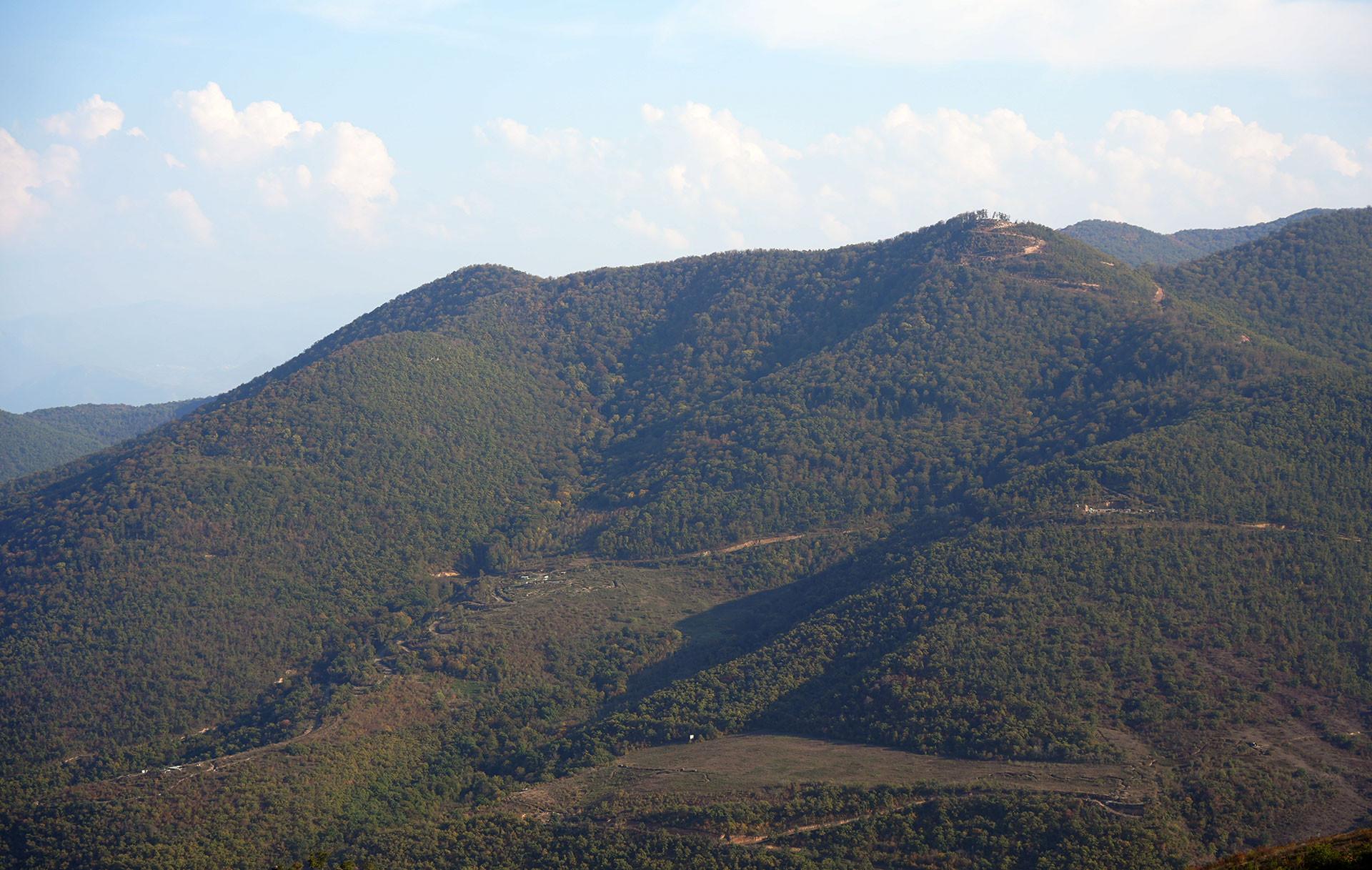
Ecocide on the Frontier: How Border Militarization is Destroying Armenia's Shikahogh Reserve
Editor’s Note: The following article explores an unfolding environmental and humanitarian crisis on the southern border of Armenia, constructed from overlapping investigative timelines.
The scale of the destruction inside the state reserve was first brought to light by Hetq journalists Vahe Sarukhanyan and Marine Martirosyan in a comprehensive exposé on October 26, 2026. The two traveled directly to the volatile Syunik region, conducting on-the-ground interviews with local biologists, municipal leaders, and local residents to document the immediate threats to their lives and livelihoods.
Days later, Agence France-Presse (AFP) published an international follow-up report written by Mariam Harutyunyan who was one of twenty local and foreign reporters who visited the area. This synthesized report integrates direct testimonies with the broader geopolitical framing established by the subsequent international coverage.
An Ecosystem Under Siege
While diplomats in distant capitals work toward a formal peace treaty, a quiet crisis is unfolding along the rugged, forested borders of southern Armenia. In the Syunik region, the Shikahogh State Reserve, established in 1958, has become an unexpected casualty of geopolitical maneuvering, leaving local villagers caught between environmental degradation and a profound sense of insecurity.
The 12,100-hectare reserve is a critical haven for rare oak and beech forests, ancient yew trees, and endangered wildlife like the Persian leopard and brown bear.
Following progressive border advancements since the 2020 Artsakh War, Azerbaijani forces have secured strategic positions deep within sovereign Armenian territory. Local officials told AFP and Hetq that over twenty-one square kilometers (2,100 hectares) of land near the villages of Nerkin Hand and Tsav have been occupied. As Sarukhanyan and Martirosyan detail in their Hetq report, this expansion encompasses roughly one-sixth (1/6) of the entire Shikahogh State Reserve.
The consequences for the local ecology have been swift and severe:
- Unregulated Clearing: Wide military supply paths are being carved directly through the dense woodlands. Local authorities note that timber is being clear-cut indiscriminately, completely bypassing protections for species listed in Armenia’s Red Book of endangered flora.
- Imminent Natural Disasters: Local officials warn that the massive loss of deep-rooted forest trees in this mountainous terrain risks triggering devastating landslides, mudflows, and severe soil erosion. Kapan Deputy Mayor Marat Harutyunyan highlighted the impending danger to Hetq:
"Usually, natural disasters follow such heavy deforestation. What keeps the soil grounded? The trees, the forest. If they are gone, we can expect heavy soil erosion and landslides."
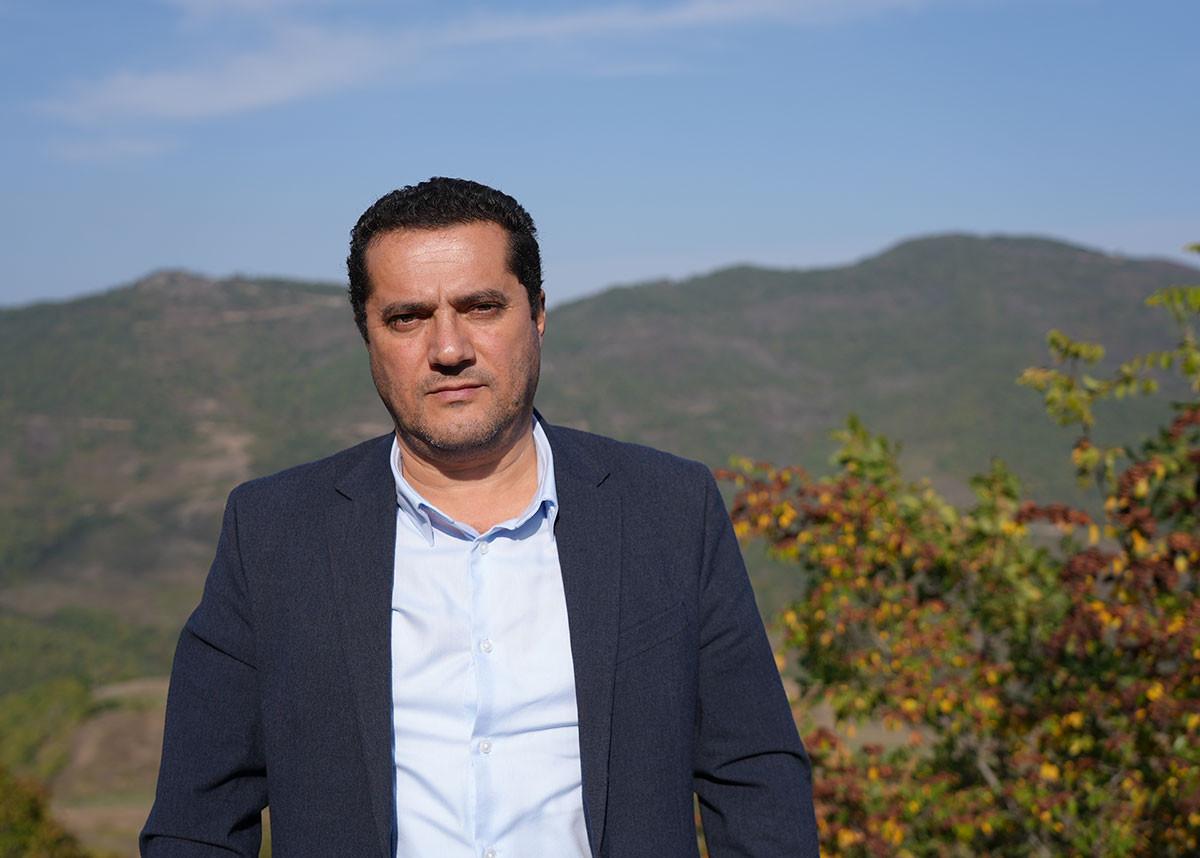
Marat Harutyunyan
- Devastation of Rare Wildlife: The occupied zone historically served as a paramount migration corridor for rare Persian leopards, bezoar goats, and brown bears. The introduction of extensive military landmines has turned the reserve into a death trap.
- Maimed Fauna: Biologist Harut Aghatelyan shared a devastating account from his time in the reserve with Hetq:
"A mother bear that had lost both legs was rolling around to move, feeding her cubs. The animal had become terribly emaciated... It is presumed that the bear lost her limbs as a result of a landmine explosion."
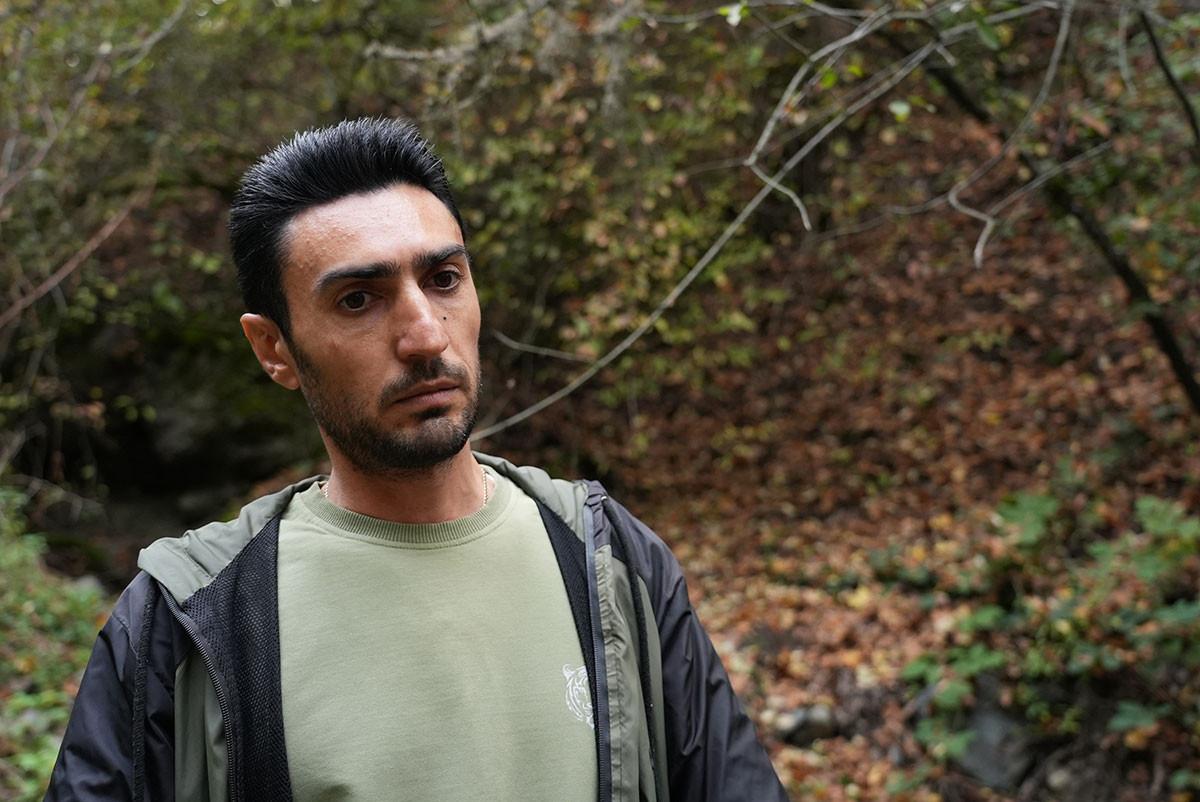
Harut Aghatelyan
- Mined Migration Paths: Armenian border guards have similarly witnessed the immediate toll of these traps on migrating herds. As documented in the Hetq exposé:
"Border guards told local villagers that they witnessed an entire herd of bezoar goats blown up on landmines while attempting to cross the area—one animal was thrown to one side, another to the other, while the survivors fled in panic."
For their part, Azerbaijani officials have dismissed allegations of territorial occupation, counter-arguing that because a formal, comprehensive border demarcation process has never been finalized in the region, the placement of their positions remains legally contested.
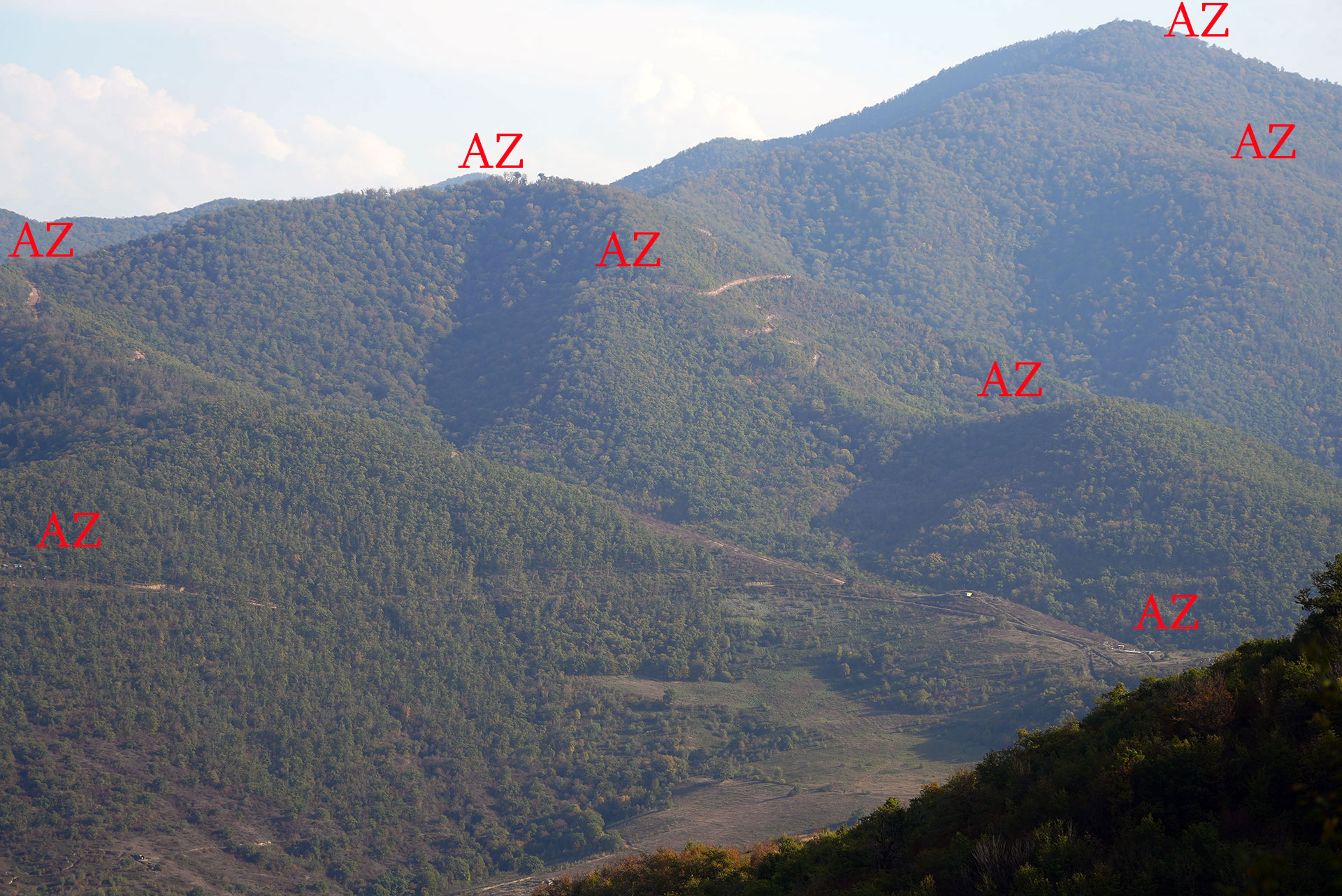
Azerbaijani occupation positions in the Shikahogh Reserve and Nerkin Hand
The Threat to Europe's Ancient Planes
The destruction is not contained to the primary reserve. Satellite mapping reviewed in Hetq's report reveals that the encroachment has advanced into the neighboring Sosu Purak (Plane Tree Grove) Sanctuary.
This 64-hectare sanctuary along the Tsav Riverbed holds immense botanical importance, housing the largest natural plane tree grove in the entire Caucasus region. The ecosystem protects over 1,000 ancient Eastern Plane trees that are 200 to 250 years old, boasting heights of up to 35 meters and trunk diameters reaching three meters. Satellite imagery confirms that Azerbaijani forces have successfully seized the narrow eastern strip of this globally unique grove, placing its centuries-old trees under direct military control.
Tactical Shifts and Insecure Infrastructure
Hetq’s field research underscores how specific geographical losses have dismantled the region's defensive and logistical stability. During the border escalations of September 2022, Azerbaijani troops captured Khachinkhut Peak (elev. 1,290 meters), the highest strategic point overlooking the valley. Standing a mere three kilometers away in a direct line from Srashen's historic 17th-century church, this peak gives military outposts an unobstructed target scope over the civilian homes below.
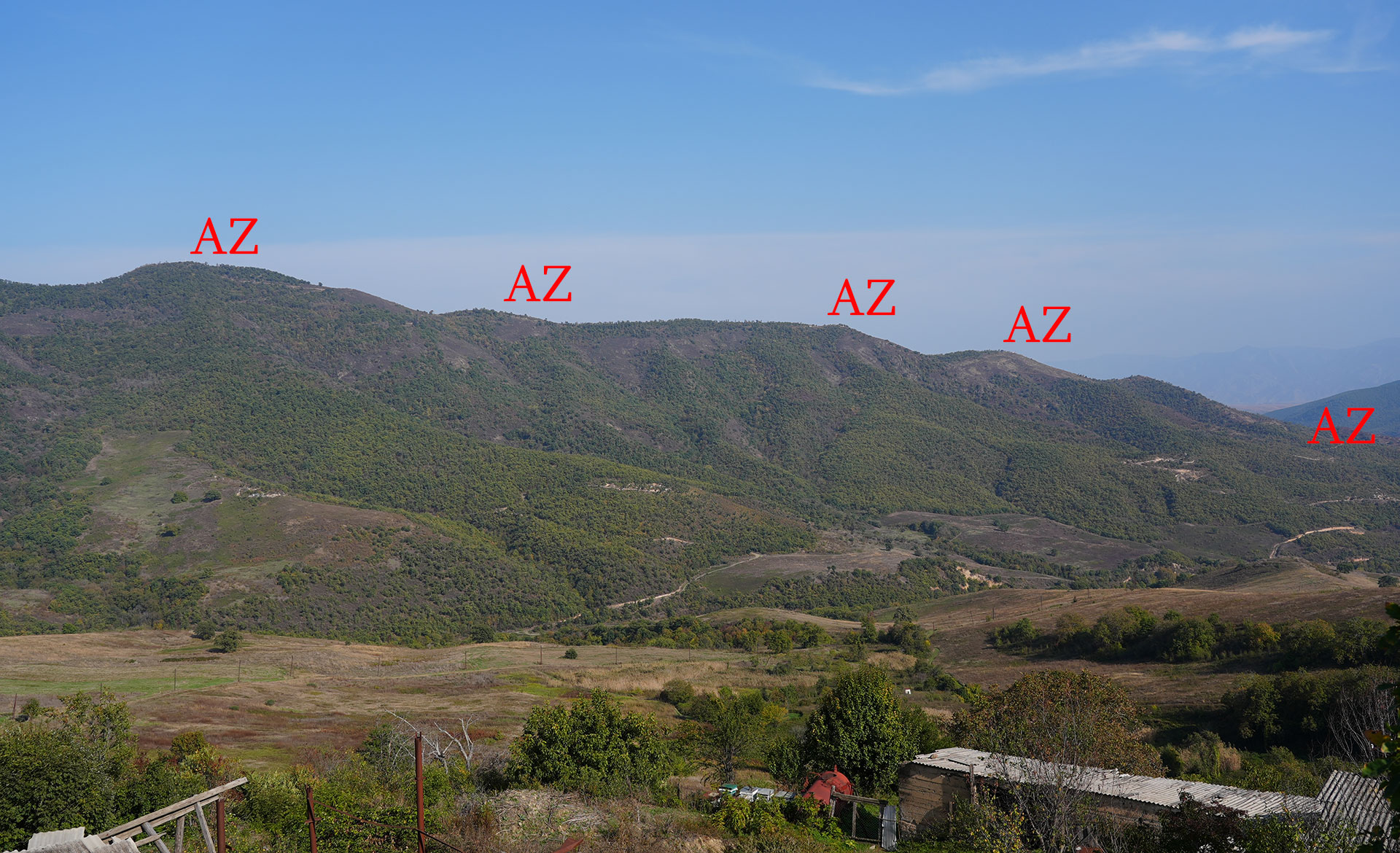
Azerbaijani positions opposite Srashen
This high-altitude visibility directly threatens national infrastructure. The regional road snaking through Kapan, Chakaten, Shikahogh, Srashen, and Tsav is the vital secondary strategic highway connecting Kapan to Meghri on the Iranian border. Because Azerbaijani outposts can now easily monitor and target passing traffic from the ridges, the Armenian government quietly downgraded this route's status in November 2023, shifting it from an "interstate highway" (M-17) to a "Republican Road" (H-63).
Erasing History and Resources
The military creep has physically consumed local history and community infrastructure. In the village of Nerkin Hand, which is now surrounded on three sides by Azerbaijani outposts, several irreplaceable cultural milestones have fallen behind the lines.
- Desecrated Heritage: A historic 19th-century cemetery and church are now cut off from the public. Furthermore, local leadership reported that a monument dedicated to World War II victims was completely demolished by occupying troops to build a military barrack.
- Seized Water Systems: Critical natural freshwater springs feeding the area were captured during the military advances, forcing the municipality to construct an entirely new water delivery system for the remaining population.
The Ghost-Hub Reality of Border Villages
The environmental destruction is deeply intertwined with a brewing humanitarian crisis for the communities anchoring the reserve. The daily reality for the remaining residents is defined by intense psychological pressure and economic paralysis:
- Vanishing Livelihoods: Traditional farming has plummeted by 90% in Srashen and Shikahogh, and dropped to zero in Nerkin Hand. Villagers refuse to harvest hay or tend to their fields out of fear of being fired upon or captured under the direct target scopes of nearby outposts.
- The Ghost of a Regional Center: 61-year-old local Vladik Aghatelyan recalls a thriving, self-sufficient era when Shikahogh village operated as a bustling regional hub equipped with its own hospital, maternity ward, telephone exchange, and a knitwear manufacturing plant. He remembers a local school bursting with 250 active students where classes ran in two shifts.
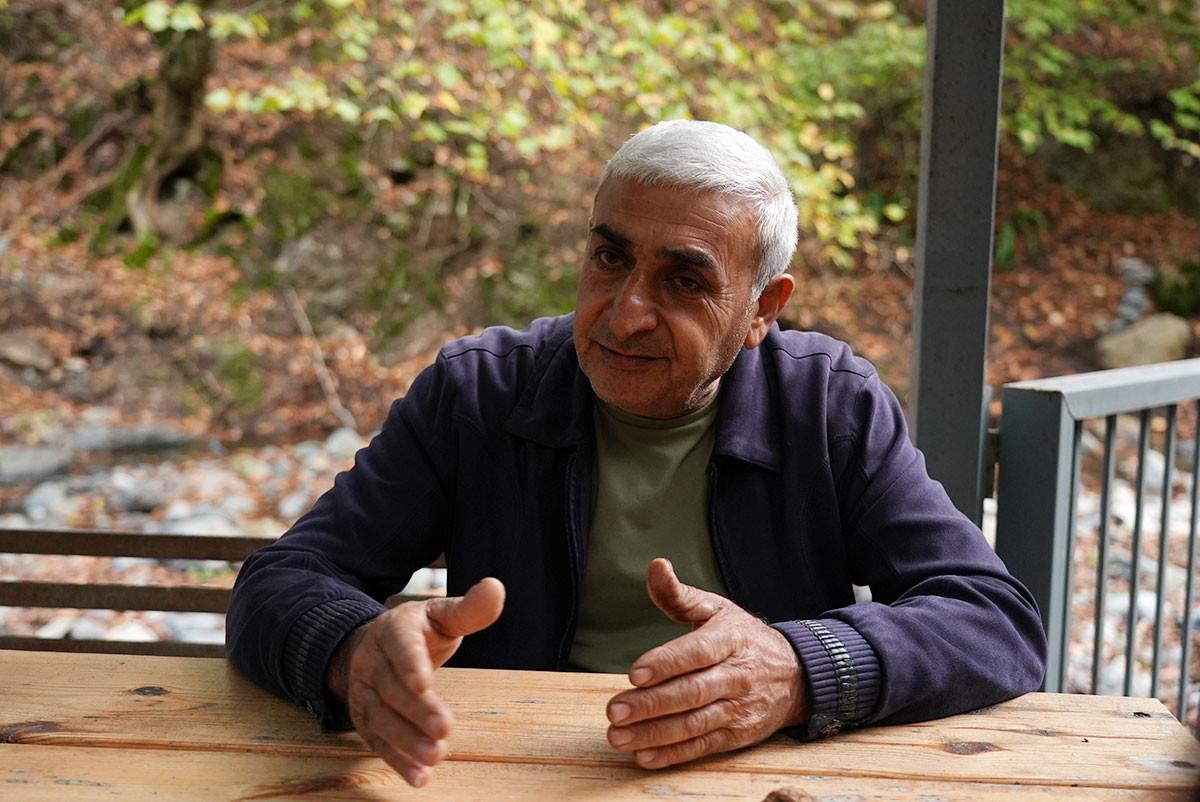
Vladik Aghatelyan
- Depopulation: Security anxieties have systematically emptied the area. Today, the local school has dwindled down to just a single enrolled 8th-grade student. The cultural club managed by Aghatelyan stands entirely empty. He laments the modern isolation, noting, "I walk nearly a kilometer from my home to the club, and I don't see a single human soul to say 'good morning' to."
- A Stolen Future: Local youth, like 26-year-old Muraz Arzumanyan, expressed deep anxiety to AFP and Hetq over the wisdom of starting families in an area where children would play under the constant surveillance of neighboring military scopes.
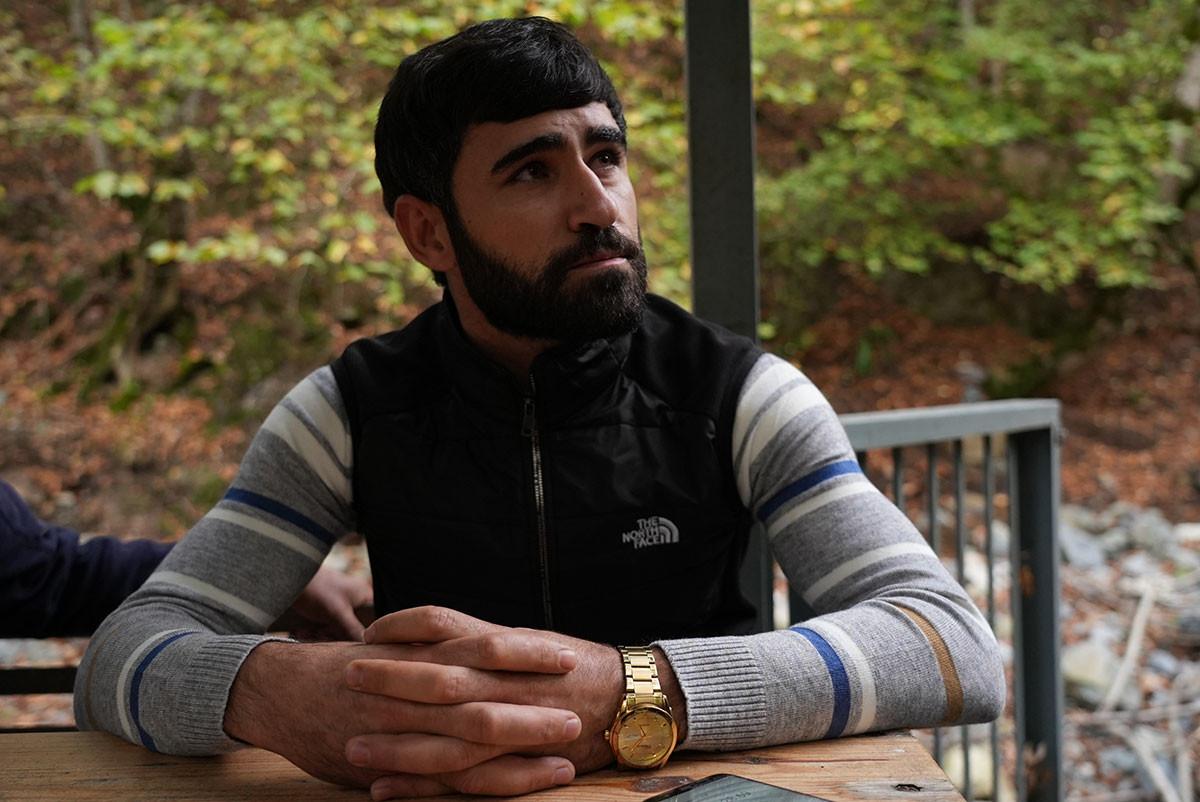
Muraz Arzumanyan
Global Eyes, Local Resolve
The crisis comes at a highly symbolic moment. From October 19 to 30, Armenia hosted the United Nations COP17 summit on biodiversity in Yerevan.
Experts and residents point out that the Armenian government has so far failed to use the platform to raise the issue of Azerbaijani deforestation and mining in Shikahogh.
Yet, amid the tension, some residents refuse to abandon the land. Biologists like Harut Aghatelyan—who continues to run a small rabbit farm in his family's generational village—refuse to leave. He and other local families continue to stay, determined to protect the ecosystem they love. For them, a true peace deal cannot just be a piece of paper signed in a foreign capital. It must mean the restoration of safety, historic landmarks, and the natural world they call home.
Write a comment