
If the Iran war has indeed begun to transform a continuously deteriorating regional environment into a still unfavorable yet more contested equilibrium, then Armenia’s principal challenge is no longer merely to endure the existing order.

The results of the Iran war do, however, introduce a change—albeit, for the moment, a limited rather than revolutionary one—into the strategic configuration of the South Caucasus.

Armenia is not a stage for old power struggles. The Church is not a throne. The diaspora is not a lever to be pulled against the Armenian voter.

Armenia’s strategic opportunities lie not in exclusive alliance-building but in gradually increasing its functional indispensability.Yerevan cannot compel external actors to adopt its priorities, but it can raise the strategic cost of ignoring them.

The Syrian Kurds lost not because they were wrong, but because their protection was conditional. Armenia now faces the same structural conditions. Sovereignty is not doomed—but it will be narrow, negotiated, and hard-won.

Armenia must adopt a special TRIPP law to safeguard its sovereign rights on the route

The government of Armenia officially announced that defense expenditures in the 2026 state budget draft will be reduced by 15% compared to the previous year.

Below, the articles are summarized in an AI-generated podcast.
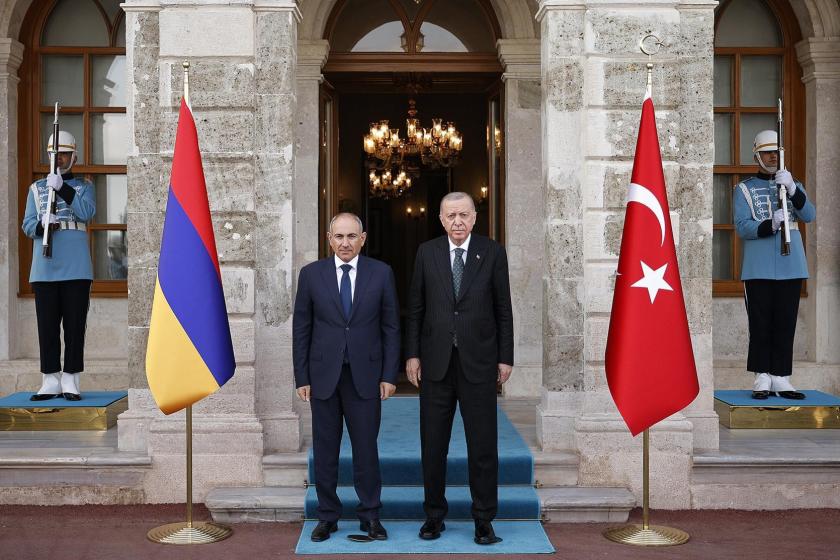
The starting point of that strategy and the first guarantee of its success is the preservation of Armenian sovereignty over Syunik and the road through Meghri (the Azerbaijan-Nakhichevan route).
 Videos
 Photos


